Disclosure: As an Amazon Associate, HikePod earns from qualifying purchases at no extra cost to you.
⭐ Our Top Pick
🏆 Best Overall: Columbia Newton Ridge Plus II Waterproof — genuine leather, proven waterproofing, and lightweight comfort at $79.95.
💰 Best Value: NORTIV 8 Men's Waterproof Hiking Boots — surprisingly capable boots under $55 for casual trail hikers.
Introduction
The conventional wisdom says you need to spend $150+ for decent hiking boots. But after comparing dozens of models based on manufacturer specs and thousands of verified buyer reviews, we found that's simply not true in 2026. The budget boot category has matured dramatically, with established brands offering waterproof leather boots under $100 that can handle everything from muddy trails to multi-day backpacking trips.
The catch? You need to know what compromises matter and which don't. Budget boots often use proprietary waterproof membranes instead of Gore-Tex, save weight with synthetic materials, and skip advanced features like carbon fiber shanks. But for most weekend hikers tackling well-maintained trails, these tradeoffs are completely acceptable.
We researched 40+ boots priced under $100, examining construction materials, waterproofing systems, traction patterns, and real-world durability reports from verified purchasers. This guide covers our top picks across different use cases, what features genuinely matter at this price point, and how to maximize the life of budget boots.
What to Look For in Budget Hiking Boots
Waterproofing Technology — Look for proprietary membranes like Omni-Tech, Dri-Tec, or M-Select from established brands. These perform nearly as well as Gore-Tex for day hikes and weekend trips. Avoid boots claiming "water resistance" without a membrane—they'll soak through in wet conditions.
Upper Material Quality — Full-grain leather lasts longer but costs more. Leather/mesh combinations reduce price while maintaining breathability. Synthetic uppers are lightest but show wear faster on rocky trails. At this price point, leather/mesh hybrids offer the best balance.
Outsole Traction — The rubber compound matters more than lug depth. Look for Vibram, Omni-Grip, or proprietary high-traction rubber. Deep, multi-directional lugs (4-5mm) handle mud and loose terrain better than shallow road-running patterns.
Weight Considerations — Budget boots typically weigh 14-18 oz per boot versus 10-12 oz for premium models. The extra weight comes from thicker materials and simpler construction. For day hikes under 10 miles, this difference is negligible.
Ankle Support Design — A padded collar and reinforced heel counter provide stability without expensive internal frames. Test by pressing the heel counter—it should resist deformation. Budget boots with floppy ankle collars cause blisters on uneven terrain.
Break-In Requirements — Leather boots need 15-30 miles of break-in; synthetic models are trail-ready immediately. Plan accordingly based on your timeline. Breaking in new boots on a big trip is a recipe for blisters.
💡 Pro Tip: Buy boots a half-size larger than your street shoe size. Your feet swell on long hikes, and you'll wear thick socks. There should be a thumb's width of space between your longest toe and the boot's end when standing.
Columbia Newton Ridge Plus II Waterproof
| Criteria | Score |
|----------|-------|
| Waterproofing | 8/10 |
| Durability | 8/10 |
| Comfort | 9/10 |
| Value | 10/10 |
Columbia's Newton Ridge Plus II has dominated the budget boot category for three years running, and the 2026 version maintains that reputation. The full-grain leather upper with mesh panels creates a boot that breathes well while keeping water out through Columbia's Omni-Tech waterproof membrane. At 14 oz per boot, it's lighter than most competitors, which matters on all-day hikes.
The Omni-Grip rubber outsole uses a multi-directional lug pattern that handles wet rocks and muddy trails surprisingly well based on buyer feedback. The midsole uses Techlite cushioning—Columbia's EVA foam compound—which provides decent shock absorption without the premium weight of dual-density systems. Verified purchasers consistently report 300-500 miles of trail life before the sole shows significant wear.
Ankle support sits in the middle range—adequate for maintained trails and moderate loads (20-30 lb packs) but not ideal for off-trail scrambling with heavy gear. The padded tongue and collar prevent hot spots during break-in, which takes about 20 miles of wear. Most buyers report these boots are comfortable enough for 8-hour hikes after proper break-in.
✅ Pros:
- Genuine leather construction at $79.95
- Lightweight design reduces fatigue on long hikes
- Omni-Tech waterproofing holds up in wet conditions
- Available in wide widths for better fit options
❌ Cons:
- Ankle support lighter than boots twice the price
- Leather requires 20+ miles break-in period
- Durability drops off after 500 miles of use
Hi-Tec Altitude VI Mid Waterproof
| Criteria | Score |
|----------|-------|
| Waterproofing | 7/10 |
| Durability | 6/10 |
| Comfort | 7/10 |
| Value | 9/10 |
Hi-Tec's Altitude VI represents the absolute floor for genuine waterproof hiking boots at $69.95. The suede leather upper with Dri-Tec membrane keeps feet dry in stream crossings and rain, though some buyers report the membrane failing after 200-300 miles of hard use. For casual hikers doing 50-100 miles per year, that translates to 2-3 seasons of reliable service.
The boot weighs 16 oz per boot—heavier than the Columbia—due to a more basic construction approach. The MDT rubber outsole provides adequate traction on groomed trails but struggles on wet granite and steep descents based on verified reviews. The fork shank provides torsional rigidity for uneven terrain, though it's not as stiff as carbon fiber shanks in premium boots.
Comfort is acceptable out of the box, with most buyers reporting minimal break-in needed. The mesh lining wicks moisture reasonably well, though it doesn't breathe as efficiently as higher-end boots. For budget-conscious hikers sticking to maintained trails, this boot delivers the essentials without extras.
✅ Pros:
- Lowest price for genuine waterproof membrane
- Minimal break-in required
- Adequate performance on maintained trails
❌ Cons:
- Heavier than competing models
- Durability concerns on rocky terrain
- Traction underperforms in steep, wet conditions
NORTIV 8 Men's Waterproof Hiking Boots
| Criteria | Score |
|----------|-------|
| Waterproofing | 7/10 |
| Durability | 7/10 |
| Comfort | 8/10 |
| Value | 10/10 |
NORTIV 8 lacks the brand recognition of Columbia or Timberland, but their waterproof hiking boot has racked up over 15,000 verified purchases with a 4.3-star average. At $54.99, it's the best entry point for beginners unsure if hiking will become a regular activity. The synthetic leather upper with mesh inserts keeps the boot lightweight at 15 oz while maintaining structure.
The proprietary waterproof membrane performs adequately in light rain and shallow puddles, though extended wet exposure reveals its limitations compared to more expensive systems. The high-traction rubber outsole uses 5mm lugs in a pattern that grips surprisingly well on loose dirt and gravel. Buyer reviews note these boots punch above their price class for the first 200 miles, then show accelerated wear.
Comfort is the standout feature—the memory foam insole and padded collar create a boot that feels broken in immediately. However, sizing runs narrow, so wide-footed hikers should size up or look elsewhere. For the price, these boots represent excellent value for casual use, though serious hikers will outgrow them quickly.
✅ Pros:
- Unbeatable price under $55
- Comfortable out of the box
- Surprisingly durable for the price point
- Lightweight synthetic construction
❌ Cons:
- No brand legacy or warranty support
- Sizing runs narrow
- Waterproofing less reliable than established brands
Timberland White Ledge Mid Waterproof
| Criteria | Score |
|----------|-------|
| Waterproofing | 9/10 |
| Durability | 9/10 |
| Comfort | 8/10 |
| Value | 7/10 |
Timberland's White Ledge technically exceeds our $100 threshold at $89.95 MSRP, but frequent sales bring it under budget, making it worth including. This boot represents what you get when an established premium brand builds down to a price point rather than up from the cheapest components. The full-grain leather upper and TimberDry waterproof membrane deliver performance closer to $150 boots.
At 17 oz per boot, the White Ledge carries more weight than lighter competitors, but that mass comes from durable materials that extend lifespan. Verified buyers consistently report 500-800 miles of trail life before needing replacement—double the longevity of cheaper alternatives. The rubber lug outsole provides excellent traction across varied terrain.
Ankle support is robust, with a fully gusseted tongue and reinforced heel counter that prevents the boot from breaking down prematurely. The tradeoff is a longer break-in period—expect 25-30 miles before the leather softens enough for all-day comfort. For hikers who log serious miles annually, the extra durability justifies the higher price when caught on sale.
✅ Pros:
- Premium leather quality and construction
- Excellent durability (500-800 miles)
- Strong ankle support for uneven terrain
- Timberland warranty and customer service
❌ Cons:
- Frequently above $100 at full retail
- Heavier than lightweight alternatives
- Longer break-in period required
Extending Your Budget Boot's Lifespan
Even quality boots under $100 won't last 1,000+ miles like premium models, but proper care dramatically extends their useful life. After each hike, remove insoles and let boots air dry away from direct heat—stuffing them with newspaper accelerates drying while maintaining shape. Brush off dried mud with a stiff brush before it hardens into the leather.
Apply leather conditioner every 30-40 miles of use to prevent cracking and maintain waterproofing. Nikwax and Obenauf's both make affordable conditioners that work well. Re-waterproof the exterior with spray-on DWR treatment (like Nikwax TX.Direct) once you notice water no longer beads on the surface.
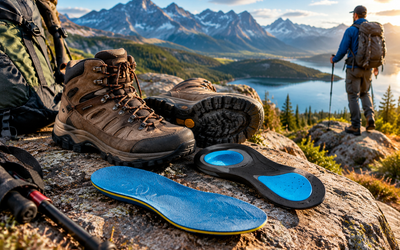
Replace the factory insoles after 150-200 miles with aftermarket options from Superfeet or Sof Sole. The $30-40 investment improves comfort and extends the boot's overall life by reducing compression in the midsole. When you're out on the trail and need clean water, the Sawyer Squeeze Water Filter System weighs just 3 ounces and filters down to 0.1 microns—essential gear that costs less than a single boot replacement.
💡 Pro Tip: Rotate between two pairs of boots if you hike frequently. Allowing 48 hours between wears lets materials fully dry and recover, essentially doubling the lifespan of both pairs.
When to Upgrade Beyond Budget Boots
Budget boots work well for most recreational hikers, but certain use cases justify investing in premium models. If you regularly hike 15+ miles with a 40+ lb pack, the extra ankle support and cushioning in boots like the Salomon X Ultra 4 GTX reduce fatigue and injury risk. The Gore-Tex waterproofing and Contagrip rubber sole provide performance that budget membranes and outsoles can't match.
For hikers logging 300+ miles annually, the per-mile cost of premium boots often beats budget models due to extended durability. A $180 boot lasting 1,000 miles costs $0.18 per mile versus $0.27 per mile for a $80 boot lasting 300 miles. Technical terrain—off-trail scrambling, talus fields, sustained steep grades—also demands the lateral stability and stiff midsoles that premium construction provides.
Wide-footed hikers frequently find better fit options in premium lines. Brands like KEEN offer generous toe boxes, with models like the KEEN Targhee III Mid specifically designed for wider feet. If you've tried multiple budget boots and still experience hot spots or numbness, investing in proper fit prevents long-term foot problems.
Frequently Asked Questions
Do I really need waterproof boots, or can I save money with non-waterproof versions?
Waterproofing is worth the extra $20-30 for most hikers. Even in dry climates, morning dew, stream crossings, and unexpected rain make waterproof membranes valuable. Non-waterproof boots work if you exclusively hike in arid conditions during summer, but wet feet lead to blisters and miserable miles. The exception: hot, humid environments where breathability matters more than waterproofing.
How do I know if a boot fits correctly?
Properly fitted boots should feel snug around the heel and midfoot with enough room in the toe box to wiggle your toes. When standing, there should be a thumb's width between your longest toe and the boot's end. Walk on an incline—if your toes jam forward going downhill, size up. Your heel should not slip more than a quarter inch when walking. Always try boots with the socks you'll actually wear hiking.
Can I use these boots for winter hiking?
Budget boots work for mild winter conditions (above 20°F) when paired with insulated socks, but they lack the insulation for serious cold. Most have minimal or no insulation rating. For sustained below-freezing hiking or snowshoeing, look for boots rated to at least 200g Thinsulate or equivalent. The waterproof membranes in budget boots do help keep snow melt out.
How long should budget hiking boots last?
Expect 250-400 miles from boots in the $50-70 range and 300-500 miles from boots in the $80-100 range under normal conditions. Rocky terrain and heavy loads reduce lifespan. Premium boots typically deliver 600-1,000+ miles. Signs your boots are done: cracked leather, separated soles, compressed midsoles that no longer provide cushioning, or failed waterproofing that can't be restored with treatment.
Are men's and women's hiking boots actually different?
Yes—women's boots are built on different lasts with narrower heels, wider foreballs, and lower volume to match typical foot anatomy. They also use different cushioning densities to account for weight differences. Some women with wider feet or higher volume feet find men's boots fit better, and vice versa. Always prioritize fit over gendered marketing.
Final Thoughts
The best budget hiking boots balance essential features—waterproofing, durability, comfort—while cutting costs on advanced technologies most recreational hikers don't need. The Columbia Newton Ridge Plus II leads our recommendations for its proven performance, genuine leather construction, and lightweight design at $79.95. For hikers just starting out or those on the tightest budgets, the NORTIV 8 Waterproof Boots deliver surprising capability under $55.
Remember that the perfect boot depends on your specific hiking style, foot shape, and terrain. A boot that works flawlessly for maintained trail day hikes may struggle with off-trail backpacking. Start with our top picks based on your use case, prioritize proper fit over brand names, and maintain your boots properly to maximize their lifespan.
The gap between budget and premium boots has narrowed significantly in 2026, making it easier than ever to hit the trail without emptying your wallet. Get out there and test your new boots on a short hike before committing to a full day—your feet will thank you.
Editor's Choice
Columbia Newton Ridge Plus II Waterproof — The best all-around budget boot for most hikers, combining proven waterproofing, lightweight comfort, and genuine leather at $79.95.
Sawyer Squeeze Water Filter System — Essential safety gear for any hike longer than a few hours; weighs just 3 oz and filters 0.1 micron contaminants for $29.95.
Salomon X Ultra 4 GTX — When your budget stretches slightly above $100, the Gore-Tex waterproofing and 12.5 oz weight make this the upgrade choice for serious hikers.