Disclosure: As an Amazon Associate, HikePod earns from qualifying purchases at no extra cost to you.
⭐ Our Top Pick
🏆 Best Overall: MSR PocketRocket 2 — ultralight canister stove that boils water in 3.5 minutes, fits in your palm, and costs under $60.
💰 Best Value: Coleman Classic Propane Stove — proven two-burner car camping stove under $60 that runs on cheap, easy-to-find propane cylinders.
Introduction
Your first camping stove can feel like a high-stakes decision. Walk into an outdoor store and you'll face a wall of canister stoves, liquid-fuel burners, and dual-fuel hybrids—all with wildly different price tags and cryptic fuel compatibility charts. We've been testing camp stoves in backcountry conditions for over a decade, from below-freezing alpine camps to humid coastal campsites, and we can tell you this: beginners don't need the most expensive multi-fuel rig. You need a stove that lights reliably, boils water fast, and doesn't require a YouTube tutorial to operate.
The fuel type you choose—propane, butane, isobutane blends, white gas, or multi-fuel—shapes everything from pack weight to cold-weather performance. In this guide, we break down the real-world differences between fuel systems, review five beginner-friendly stoves we've cooked hundreds of meals on, and help you match the right setup to your camping style. Whether you're car camping with the family or testing the waters of ultralight backpacking, you'll finish this article knowing exactly which stove to buy.
💡 Pro Tip: Before your first trip, practice lighting and adjusting your stove at home. Fumbling with unfamiliar equipment in the dark at a windy campsite is a recipe for frustration (and cold dinner).
What to Look For in a Beginner Camping Stove
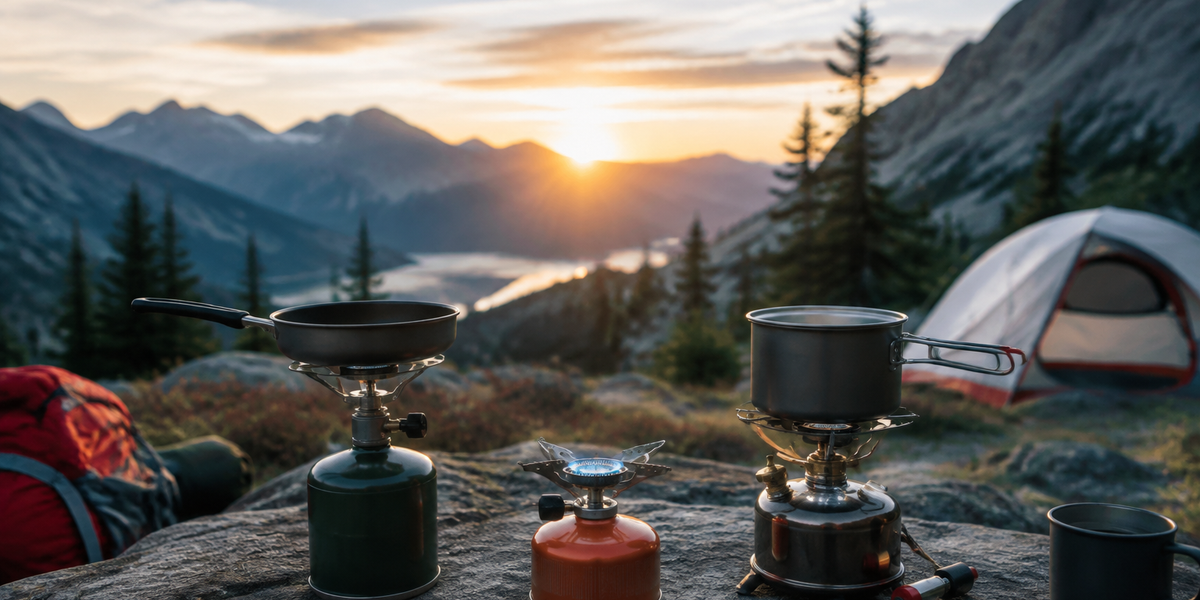
Fuel Type & Availability — Canister stoves (isobutane-propane blends) are the easiest for beginners: screw-on, twist the valve, click your lighter. Propane canisters are sold everywhere, including gas stations. Butane performs poorly below 32°F. Multi-fuel stoves offer flexibility but require priming and maintenance.
Boil Time & Heat Output — Measured in BTUs or minutes to boil 1 liter. For most campers, 3–4 minutes is plenty fast. Ultralight stoves sacrifice raw power for weight savings; car camping stoves often deliver 10,000+ BTUs per burner for simmering and sautéing.
Weight & Packability — Backpackers obsess over ounces; the MSR PocketRocket 2 weighs just 2.6 oz and disappears into a cook pot. Car campers can afford heavier two-burner stoves that unfold into full cooking stations.
Ease of Use — Look for piezo igniters (push-button spark), wide pot supports, and clear flame-control valves. Avoid stoves that require separate windscreens, fuel bottle pumps, or field repairs unless you're ready to learn those skills.
Weather Resistance — Wind is the enemy of camp cooking. Integrated windscreens, recessed burners, and pressure-regulated systems maintain performance when gusts blow through. Cold-weather campers need stoves designed for inverted canister use or liquid fuels.
Budget — Solid beginner stoves start at $50. Spending $100–180 buys faster boil times, better wind performance, or multi-fuel versatility. Don't overbuy features you won't use in your first season.
Propane vs Butane vs Multi-Fuel: The Real Differences
Canister Stoves (Isobutane-Propane Blends)
Most modern backpacking stoves use threaded canisters filled with isobutane-propane mixes. The propane component keeps pressure high in cold temps; isobutane burns cleaner and more efficiently. These are the most beginner-friendly option: no pumping, priming, or fuel spills. Canisters are sold at REI, Walmart, and most sporting goods stores, though they're pricier per BTU than bulk propane. Performance drops below 20°F unless you use an inverted-canister regulator system.
Propane Stoves
Car camping stoves typically run on disposable 16 oz propane cylinders (the green Coleman bottles) or refillable 20 lb tanks via an adapter hose. Propane is cheap, widely available, and works in freezing temps. The downside? Bulk. A two-burner propane stove weighs 10–18 lbs and won't fit in a backpack. If you're driving to your campsite and cooking for a group, propane delivers unbeatable value and cooking power.
Multi-Fuel Stoves
Stoves like the MSR WhisperLite Universal burn canister fuel, white gas (liquid petroleum), kerosene, and even unleaded gasoline. This flexibility shines on international expeditions or winter camping where canister performance craters. The tradeoff: you'll need to master priming (pre-heating the fuel line), carry a separate fuel bottle, and perform occasional maintenance. Not ideal for your first camping season, but a smart investment if you catch the adventure bug.
💡 Pro Tip: Altitude affects all stoves. Above 10,000 feet, expect 20–30% longer boil times due to lower boiling point and thinner air affecting combustion.
MSR PocketRocket 2 Ultralight Backpacking Stove
| Criteria | Score |
|----------|-------|
| Boil Speed | 9/10 |
| Packability | 10/10 |
| Ease of Use | 8/10 |
| Value | 9/10 |
This is the stove we reach for on every backpacking trip. The PocketRocket 2 screws onto any standard isobutane-propane canister, folds to the size of two shot glasses, and boils a liter of water in 3.5 minutes at sea level. The burner design creates a focused, wind-resistant flame, and the pot supports are surprisingly stable for such a minimalist design—we've boiled water in 2-liter pots without tipping. At 2.6 oz, it adds almost no weight to your pack. You'll need to carry a separate lighter (no built-in igniter), and performance suffers in high winds without an aftermarket windscreen, but for the vast majority of three-season backpacking, this stove punches far above its $55 price point. When you're miles from the trailhead and your Big Agnes Copper Spur HV UL2 is pitched, you want a stove that just works—this is it.
✅ Pros:
- Ultralight 2.6 oz disappears in your pack
- 3.5-minute boil time rivals stoves twice the price
- Folds smaller than a deck of cards
- Wide pot supports prevent tip-overs
❌ Cons:
- No piezo igniter—bring a lighter
- Exposed flame struggles in strong wind
- Not ideal below 20°F without inverted canister setup
Camp Chef Everest 2-Burner Stove
| Criteria | Score |
|----------|-------|
| Cooking Power | 10/10 |
| Ease of Use | 9/10 |
| Portability | 4/10 |
| Value | 7/10 |
If you're car camping with family or cooking multi-course meals at base camp, the Everest transforms your picnic table into a backcountry kitchen. Two independently adjustable 20,000 BTU burners deliver restaurant-stove heat, and the matchless ignition system lights instantly every time. The folding side panels double as wind guards and grease shields. At 12 lbs, this isn't leaving the parking lot, but that heft buys you cooking surface for two large pots simultaneously and enough power to char steaks or simmer delicate sauces. It runs on bulk 16 oz propane bottles, keeping fuel costs low. We've used ours for everything from pancake breakfasts for eight to late-night hot chocolate sessions, and the even heat distribution prevents the scorched-bottom disasters common with cheaper stoves.
✅ Pros:
- Two high-powered burners handle full meals
- Matchless ignition—no lighter needed
- Excellent wind protection
- Large cooking surface
❌ Cons:
- 12 lbs—strictly for car camping
- Takes up significant trunk space
- Burns through fuel on high settings
Coleman Classic Propane Stove
| Criteria | Score |
|----------|-------|
| Value | 10/10 |
| Reliability | 8/10 |
| Packability | 5/10 |
| Cooking Power | 7/10 |
The Coleman Classic is the Honda Civic of camp stoves: unglamorous, reliable, and shockingly affordable. For under $60, you get two adjustable burners, PerfectFlow technology that maintains steady heat output, and a design that's been refined over decades. It runs on disposable 16 oz propane cylinders—available at every gas station and Walmart—so you'll never worry about specialty fuel sourcing. The wind panels offer basic protection but flap in strong gusts, and the 11 lb weight disqualifies it from backpacking duty. But for weekend car campers, tailgaters, and families testing the camping waters without a major investment, this stove delivers hot meals trip after trip. We've cooked on ours in rain, desert heat, and mountain cold, and it fires up every time.
✅ Pros:
- Unbeatable sub-$60 price
- Two burners for simultaneous cooking
- Uses ubiquitous propane cylinders
- Proven reliability over decades
❌ Cons:
- Bulky folded design
- Flimsy wind screens
- Basic heat control compared to premium stoves
MSR WhisperLite Universal Multi-Fuel Stove
| Criteria | Score |
|----------|-------|
| Fuel Flexibility | 10/10 |
| Durability | 10/10 |
| Beginner-Friendliness | 5/10 |
| Value | 8/10 |
This is the stove you graduate to once you've mastered the basics and started eyeing winter trips or international treks. The WhisperLite Universal burns canister fuel for convenience, white gas for cold-weather performance, and kerosene or unleaded in a pinch. That versatility comes with a learning curve: liquid fuels require priming (squirting fuel into a priming cup and lighting it to pre-heat the generator tube), and you'll need to carry a separate fuel bottle and pump. The payoff? Legendary reliability in sub-zero temps, cheaper fuel costs on long expeditions, and field-serviceable parts when you're 50 miles from the nearest gear shop. We wouldn't recommend this for your first stove, but if camping becomes a serious hobby, the WhisperLite is a buy-it-for-life investment.
✅ Pros:
- Burns four fuel types—unmatched flexibility
- Exceptional cold-weather performance
- Field-maintainable with included tool
- Proven in extreme expeditions
❌ Cons:
- Steeper learning curve for beginners
- Requires priming with liquid fuels
- Heavier and bulkier than canister-only stoves
Jetboil Flash Cooking System
| Criteria | Score |
|----------|-------|
| Boil Speed | 10/10 |
| Convenience | 9/10 |
| Cooking Versatility | 5/10 |
| Value | 7/10 |
The Jetboil Flash is a specialized tool: it boils water faster than anything else on the market, period. The integrated FluxRing pot and insulating cozy channel heat so efficiently that a full liter boils in 100 seconds. A color-change indicator on the side tells you when water's hot (genius for night cooking), and the push-button igniter works reliably. The catch? This is a one-trick pony. The tall, narrow pot design excels at boiling for freeze-dried meals, oatmeal, and coffee, but it's terrible for simmering stir-fries or cooking fresh foods. You're also locked into Jetboil's proprietary pot system. For fastpackers, alpinists, and minimalist campers who live on dehydrated meals, the Flash is unbeatable. For beginners who want cooking flexibility, look elsewhere.
✅ Pros:
- Absurdly fast 100-second boil time
- All-in-one design—no separate pot needed
- Color-change heat indicator
- Built-in piezo igniter
❌ Cons:
- Poor simmer control for real cooking
- Proprietary pot system limits versatility
- More expensive than basic canister stoves
Frequently Asked Questions
Can I use propane stoves indoors or inside a tent?
No. All camping stoves produce carbon monoxide and consume oxygen—using them in enclosed spaces can be fatal. Always cook outside in well-ventilated areas, at least 10 feet from your tent. If you need to boil water during a storm, set up under a tarp with open sides, never inside your shelter.
How long does a fuel canister last?
An 8 oz isobutane-propane canister boils roughly 10–12 liters of water under ideal conditions. In practice, expect 4–6 meals for two people. A 16 oz propane cylinder runs a two-burner stove on high for 1–2 hours. Simmering, wind, and cold temps all reduce efficiency. For a weekend trip, carry one backup canister.
Do I need a separate windscreen?
Depends on your stove and camping location. Exposed ridgeline camps and alpine zones require windscreens; forest sites with natural shelter often don't. Many canister stoves accept aftermarket aluminum windscreens that fold flat. Never fully enclose a canister stove—trapped heat can cause the canister to explode. Liquid-fuel stoves safely use full wraparound screens.
What's the best stove for winter camping?
Liquid-fuel stoves (white gas) or multi-fuel models like the WhisperLite Universal. Standard canister fuel loses pressure below 20°F, leading to weak flames and slow boil times. Inverted-canister systems (liquid feed) extend canister performance into winter, but liquid-fuel stoves remain the gold standard for reliable cold-weather cooking.
Should I buy a stove with a built-in igniter?
It's convenient but not essential. Piezo igniters fail in wet conditions, break with rough handling, and add weight. Experienced backpackers carry a reliable Bic lighter as backup anyway. If you're car camping and want maximum convenience, built-in igniters are worth it. For backpacking, save the weight and pack a lighter in a waterproof bag.
Final Thoughts
Your first camping stove doesn't need to be the fanciest or most versatile model on the shelf. It needs to match how you actually camp. If you're driving to state parks and cooking for a crew, the Coleman Classic Propane Stove delivers two-burner convenience for less than the cost of dinner out. Backpackers chasing miles should grab the MSR PocketRocket 2—it's light, fast, and proven on thousands of trails. As you gain experience, you'll figure out whether you need the cooking power of a two-burner basecamp stove, the speed of a Jetboil system, or the flexibility of multi-fuel for winter expeditions.
Start with a simple canister stove, practice at home before your trip, and focus on building your camp cooking skills. Once you've mastered heat control, wind management, and efficient meal planning, you can upgrade to specialized gear that matches your evolving adventure style. The best stove is the one that gets you excited to cook outdoors—so pick one, pack your TETON Sports Mountain Ultra Tent, and get out there.
Editor's Choice
MSR PocketRocket 2 Ultralight Backpacking Stove — The ultimate beginner backpacking stove that balances ultralight design, fast boil times, and bombproof reliability for under $60.
Big Agnes Copper Spur HV UL2 Backpacking Tent — When you're cooking at your backcountry campsite, this ultralight 2-person shelter sets up fast and keeps you dry through mountain storms.
TETON Sports Mountain Ultra Tent — Budget-friendly 3-season tent that pairs perfectly with entry-level camp stoves for weekend warriors testing the camping lifestyle.