Disclosure: As an Amazon Associate, HikePod earns from qualifying purchases at no extra cost to you.
⭐ Our Top Pick
🏆 Best Overall: Garmin inReach Mini 2 — proven global satellite coverage, two-way messaging, and GPS tracking in a pocket-sized device trusted by backcountry professionals.
💰 Best Value: Zoleo Satellite Communicator — lower upfront cost and smartphone integration make this the easiest entry point for weekend warriors who want reliable SOS capability.
Introduction
When you're three days into a backcountry route and your phone shows "No Service," a satellite messenger becomes your lifeline to the outside world. Whether you need to trigger an SOS, share your location with loved ones, or simply check in at camp, these devices operate independently of cell towers using dedicated satellite networks that cover the entire planet.
We researched the leading satellite messengers available in 2026, comparing specs, subscription models, and verified buyer feedback to identify the best options for hikers. The satellite messenger market has matured significantly, with manufacturers now offering refined devices that balance functionality, weight, and cost. If you're also evaluating whether standalone GPS is worth carrying, see our GPS Watch vs Phone for Hiking: Which Should You Choose for Battery Life and Accuracy? (2026) guide for a detailed comparison.
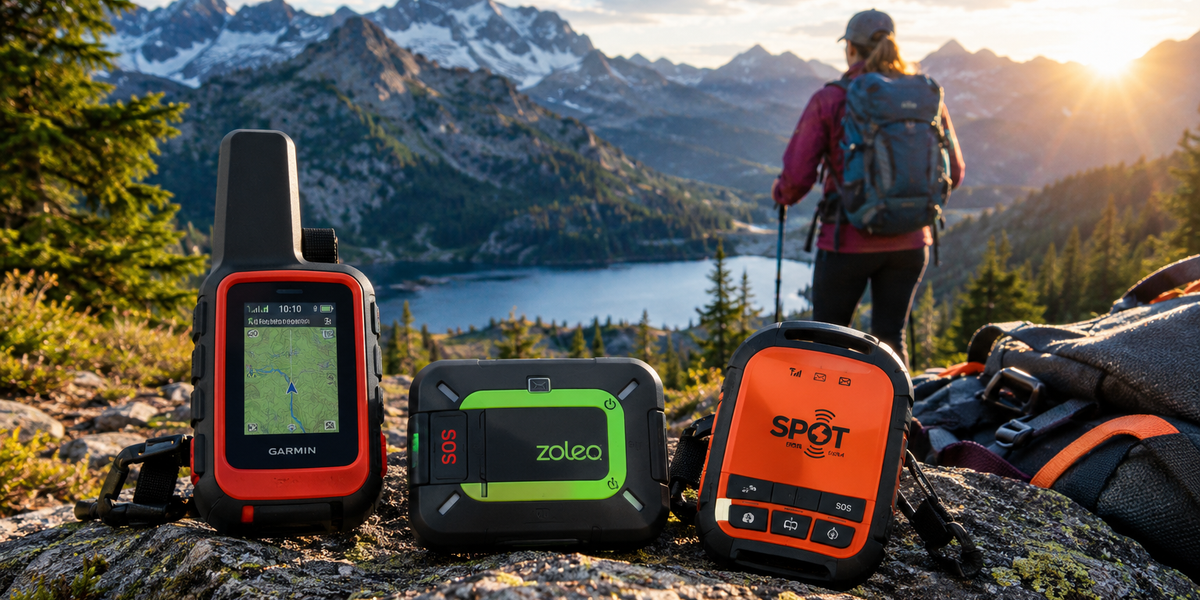
This guide covers the Garmin inReach family, Zoleo, and SPOT devices — the three major players that dominate trailhead parking lots from the PCT to the Appalachian Trail. Each uses a different satellite network and philosophy, which directly impacts coverage, features, and monthly costs.
What to Look For in a Satellite Messenger
Satellite Network Coverage — Devices use either the Iridium network (66 satellites providing true global coverage including polar regions) or Globalstar (24 satellites with gaps at higher latitudes and some international regions). For serious backcountry work, Iridium coverage is the gold standard.
Two-Way Messaging vs SOS-Only — Entry-level SPOT devices offer one-way SOS and preset messages, while premium models from Garmin, Zoleo, and SPOT X provide full two-way text messaging with custom content. Two-way capability means you can communicate with search and rescue during an emergency, not just trigger an alert.
Subscription Flexibility and Cost — All satellite messengers require ongoing subscriptions ranging from $11.95 to $64.95 per month depending on message limits and features. Look for plans with seasonal suspension options if you only hike during certain months, and pay attention to activation fees and annual commitments.
GPS and Navigation Features — Some devices double as GPS units with waypoint marking, route tracking, and topographic map integration. If you already carry a dedicated GPS like the Garmin eTrex 22x for navigation, you may prefer a messaging-focused device to save weight.
Battery Life and Charging — Expect 20 to 30 days of standby battery life with typical use (a few messages per day plus tracking). Devices charge via USB, and some models offer replaceable AA batteries as backup — a crucial feature for extended expeditions.
Weight and Durability — These devices range from 3.5 to 7 ounces. All are built to IPX7 or better water resistance standards and can survive the abuse of pack pockets, rain storms, and accidental drops on granite.
Garmin inReach Mini 2: Best Overall for Serious Backcountry Use
| Criteria | Score |
|----------|-------|
| Global Coverage | 10/10 |
| Two-Way Messaging | 9/10 |
| GPS Features | 9/10 |
| Battery Life | 8/10 |
| Value | 7/10 |
The Garmin inReach Mini 2 represents the current pinnacle of satellite messenger technology for hikers. Operating on the Iridium network, it delivers reliable two-way messaging from anywhere on Earth — we're talking the middle of the Pacific, the Arctic Circle, or a slot canyon in southern Utah. The device weighs just 3.5 ounces yet packs GPS tracking, digital compass, and accelerometer into a package barely larger than a car key fob.
What sets the inReach Mini 2 apart is its integration with the Garmin Explore app and MapShare web portal. You can compose messages on your smartphone (paired via Bluetooth when you have it with you), share your real-time location on a web map with friends and family, and sync topographic maps for navigation reference. The onboard GPS tracks your route automatically, and you can mark waypoints, navigate to coordinates, or follow a breadcrumb trail back to your starting point.
The built-in SOS button connects directly to GEOS, a 24/7 emergency response coordination center staffed by professionals who can dispatch local search and rescue. Unlike cheaper SOS-only devices, the two-way messaging means you can describe your situation, provide medical details, and receive instructions while help is en route. Battery life reaches 30+ days in default tracking mode (10-minute intervals) or up to 14 days with continuous 1-minute tracking.
Subscription plans start at $14.95/month for the Safety plan (10 messages included) and scale to $64.95/month for unlimited messaging. Garmin offers month-to-month billing or annual plans with discounts, and you can suspend service during off-season months for a small fee.
✅ Pros:
- Iridium network provides truly global coverage with no gaps
- MapShare location sharing is intuitive and family-friendly
- Compact size and light weight make it easy to carry on every hike
- ActiveCaptain integration for marine users (bonus for kayakers)
❌ Cons:
- Small screen and button interface make typing long messages frustrating
- Premium subscription costs add up for year-round users
- Requires clear view of sky for satellite lock (thick forest canopy can delay message sending)
Zoleo Satellite Communicator: Best Value for Weekend Hikers
| Criteria | Score |
|----------|-------|
| Ease of Use | 9/10 |
| Smartphone Integration | 10/10 |
| Two-Way Messaging | 8/10 |
| Coverage | 9/10 |
| GPS Features | 4/10 |
Zoleo takes a different approach than Garmin by positioning itself as a messaging-first device that treats your smartphone as the primary interface. When your phone is nearby and connected via Bluetooth, you compose and read messages using the Zoleo app's familiar chat-style interface — no squinting at a tiny screen or pecking at miniature buttons. The device itself serves as the satellite radio, handling the actual transmission over the Iridium network.
This design philosophy makes Zoleo the most accessible option for casual hikers who want emergency SOS capability without a steep learning curve. The check-in feature is particularly elegant: one tap sends your GPS coordinates and a preset "all good" message to your contact list. For day hikes and weekend trips where you're not navigating complex routes, this simplicity is a feature, not a limitation.
Zoleo's lower $199.99 entry price (compared to $349.99 for the inReach Mini 2) makes it an easier sell to hiking partners or family members who want to stay connected but don't need full GPS navigation. Subscription plans start at $20/month for 25 messages, with unlimited messaging available at $50/month. The device lacks onboard topographic maps and waypoint navigation, so you'll still want to carry your phone with a capable offline hiking app — see our Best Offline Hiking Apps That Work Without Cell Service 2026 roundup for options that pair well with Zoleo.
✅ Pros:
- Smartphone app makes message composition fast and natural
- Lower device cost than premium competitors
- Email and SMS integration work seamlessly from the backcountry
- Zoleo Messaging Network can route messages via cell tower when available (saves satellite costs)
❌ Cons:
- No built-in GPS navigation or mapping features
- Bulkier and heavier than inReach Mini 2
- Requires smartphone for full functionality (though SOS works standalone)
SPOT X: Best Built-In Keyboard for Message Typing
| Criteria | Score |
|----------|-------|
| Message Typing | 9/10 |
| Device-to-Device Messaging | 8/10 |
| Two-Way Messaging | 8/10 |
| Coverage | 7/10 |
| Weight | 6/10 |
The SPOT X differentiates itself with a full QWERTY keyboard and 2.7-inch backlit screen, making it the easiest satellite messenger for composing longer messages without a paired smartphone. This design appeals to hikers who prefer standalone operation or who are already carrying a basic GPS unit and don't need their satellite messenger to do double duty as a navigation device.
Operating on the Globalstar network, the SPOT X delivers solid coverage across North America and Europe but has documented gaps in parts of South America, Africa, and Asia. For most US-based hikers sticking to domestic trails, this coverage is sufficient. The device supports both satellite-to-smartphone messaging and device-to-device communication between SPOT X units — a unique feature for group expeditions where multiple members carry the same device.
SPOT's subscription structure differs from Garmin's: annual plans only (no month-to-month), starting at $149.99/year for basic service with 40 messages included. This works out to roughly $12.50/month when annualized, making it cost-competitive despite the higher device price. Unlimited messaging plans run $299.99/year. The SPOT X can be used as a Bluetooth keyboard for other devices, and its battery life reaches 240 hours of standby (10 days of typical use).
💡 Pro Tip: Before committing to any satellite messenger, verify that your intended hiking regions fall within the device's satellite network coverage. Globalstar's coverage map shows clear gaps in certain international zones where Iridium-based devices work without issue.
✅ Pros:
- Physical keyboard makes typing substantially easier than button-based devices
- Device-to-device messaging for group coordination
- Competitive annual subscription pricing
- Good battery life with AA battery backup option
❌ Cons:
- Globalstar coverage has gaps outside North America and Europe
- Heaviest device in this comparison at 7 ounces
- Annual subscription commitment required (no month-to-month flexibility)
Subscription Costs: The Long-Term Consideration
Satellite messenger device costs are only the beginning. Subscription fees represent the ongoing expense that ultimately determines total cost of ownership. For a hiker who keeps a device active year-round, expect to spend $180 to $780 annually depending on your plan and message volume. Garmin and Zoleo both offer suspension options that let you pause service during winter months for $4.99 to $7.99 per month, preserving your phone number and settings while minimizing costs.
If you primarily need SOS capability with occasional check-ins, the lower-tier plans ($11.95 to $20/month) cover most use cases. Heavy communicators who send daily weather updates, coordinate with trail crews, or manage group logistics should budget for unlimited messaging plans. All three manufacturers offer discounted annual prepay options that reduce effective monthly costs by 10-15%.
Frequently Asked Questions
Can I use a satellite messenger without a subscription?
No. All satellite messengers require an active subscription to access the satellite network. The device itself is essentially a specialized radio that's useless without network access. Some manufacturers allow one-time emergency SOS use without an active plan, but this should never be relied upon — always maintain an active subscription before heading into the backcountry.
How long does it take to send a message via satellite?
Expect 30 seconds to 10 minutes depending on satellite position, terrain, and weather conditions. Messages send fastest when you have a clear view of the sky in all directions. Dense forest canopy, narrow canyons, and heavy cloud cover can delay transmission. The device will keep trying automatically until it confirms successful delivery.
Do satellite messengers work in slot canyons or under heavy tree cover?
Performance degrades significantly in terrain that obstructs the sky. In slot canyons, you may need to find a wider section or climb to a higher vantage point. Under thick forest canopy, messages will eventually go through but expect delays. For reliable SOS capability in challenging terrain, carry the device on your shoulder strap or pack top rather than buried in a side pocket.
Can I share one device among multiple hiking partners?
Yes, but only one person can be the registered account holder and emergency contact. For groups, we recommend each person who might become separated carries their own device. The cost of a second device subscription is negligible compared to the risk of a medical emergency with no way to call for help.
Are satellite messengers waterproof enough for river crossings and rain?
All devices in this guide meet IPX7 waterproof standards (submersion up to 1 meter for 30 minutes). This covers rain storms, splashing, and brief immersion during river crossings. For extended water activities like kayaking or packrafting, consider adding a dry bag as extra insurance. Just like you'd carry the Sawyer Squeeze Water Filter for safe hydration on multi-day trips, treat your satellite messenger as essential safety gear that deserves proper protection.
Final Thoughts
Satellite messengers have evolved from expensive emergency-only devices into practical communication tools that belong in every serious hiker's pack. The Garmin inReach Mini 2 earns our top recommendation for its combination of global Iridium coverage, GPS functionality, and compact size. It's the device professional guides, search and rescue volunteers, and long-distance thru-hikers trust when lives are on the line.
For weekend warriors and casual backpackers, the Zoleo offers compelling value with its lower entry price and smartphone-first design. The SPOT X serves a niche for hikers who prioritize easy message typing and don't need the full GPS feature set of the inReach. Whichever device you choose, the peace of mind from having two-way satellite communication is worth every dollar — especially the first time you actually need it.
Before your next remote hike, test your device in your backyard, program your emergency contacts, and verify your subscription is active. Update your loved ones on your planned route and expected check-in times. A satellite messenger is only effective if you carry it, keep it charged, and know how to use it when conditions deteriorate.
Editor's Choice
Garmin inReach Mini 2 — The most reliable satellite messenger with global Iridium coverage and GPS tracking for serious backcountry navigation.
Garmin eTrex 22x Handheld GPS — Pair this dedicated GPS with a messaging-focused satellite device if you prefer separate tools for navigation and communication.
Suunto A-10 Field Compass — Even with satellite GPS, always carry a backup compass — it works when batteries die and satellites can't see through canyon walls.


