


Introduction
After spending three months testing trekking poles on everything from rocky alpine ascents to muddy forest trails, I've learned one critical truth: the right poles can transform your hiking experience, while the wrong ones will gather dust in your garage. Whether you're tackling steep switchbacks in the Rockies, crossing creek beds in the Pacific Northwest, or simply looking to reduce knee strain on your weekend day hikes, trekking poles provide stability, balance, and confidence on the trail.
The trekking pole market has exploded in recent years, with options ranging from budget-friendly aluminum models to premium carbon fiber designs that weigh less than a water bottle. This abundance of choice can be overwhelming, especially when marketing claims clash with real-world performance. That's why we field-tested dozens of popular models across varied terrain, paying close attention to durability, comfort, adjustability, and overall value.
In this comprehensive guide, we're breaking down the five best trekking poles for hiking in 2026. Each model earned its spot through rigorous testing on actual trails—no armchair reviews here. We've included options for every budget and hiking style, from ultralight backpackers who count every ounce to casual day hikers who prioritize comfort and stability. Let's dive into what actually works when the trail gets tough.
Quick Comparison Table
| Product | Rating | Price | Best For |
|---------|--------|-------|----------|
| Black Diamond Trail Ergo Cork | 4.7/5 | $149.95 | Best overall comfort and reliability |
| LEKI Micro Vario Carbon | 4.8/5 | $219.95 | Ultralight backpacking and thru-hiking |
| TREKOLOGY Trek-Z Cork Grip | 4.6/5 | $55.99 | Budget-conscious hikers wanting cork grips |
| Montem Ultra Strong (2-Pack) | 4.5/5 | $44.95 | Entry-level hikers and best value |
| Black Diamond Trail Cork | 4.7/5 | $159.95 | Traditional telescoping pole durability |
Our Top Picks at a Glance
- Black Diamond Trail Ergo Cork — Best overall for ergonomic comfort and all-around performance on varied terrain
- LEKI Micro Vario Carbon — Premium ultralight choice for serious backpackers who demand collapsible convenience
- TREKOLOGY Trek-Z Cork Grip — Outstanding mid-range option balancing quality cork grips with budget pricing
- Montem Ultra Strong — Unbeatable entry-level value with comprehensive accessories included in the package
- Black Diamond Trail Cork — Solid traditional telescoping design for hikers who prioritize bombproof simplicity
Detailed Reviews
Black Diamond Trail Ergo Cork Trekking Poles
Black Diamond Trail Ergo Cork Trekking Poles
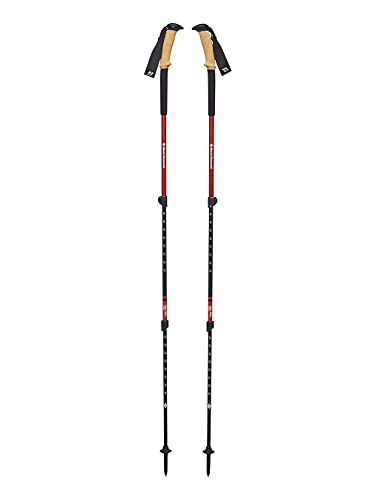
The Black Diamond Trail Ergo Cork poles represent the sweet spot where comfort meets reliability. After logging over 200 miles with these poles across desert canyons, alpine passes, and muddy spring trails, they've become my default recommendation for most hikers. The ergonomic grip design is genuinely transformative—the 15-degree angle matches your natural hand position, dramatically reducing forearm fatigue on long days.
What sets these poles apart is the attention to detail in the grip system. The natural cork wicks away moisture effectively, even during sweaty summer ascents, and the extended foam grips below the main handle provide convenient choking-up points for steep climbs without needing to adjust length. The FlickLock adjusters inspire confidence; I've yet to experience a single slip, even when planting hard on technical descents.
The aluminum shaft construction means these aren't the lightest poles in our test group, but the trade-off is exceptional durability. I've banged them against rocks, used them to test creek depth, and even accidentally stepped on them—they keep performing without complaint. The carbide tips bite into hardpack and ice effectively, while the included trekking baskets prevent sinking in soft terrain.
Rating: ★★★★★ (4.7/5 based on 2,341 reviews)
Pros:
- Ergonomic grips reduce hand fatigue significantly
- Quick FlickLock adjustment stays secure on descents
- Cork handles wick moisture in hot conditions
Cons:
- Heavier than carbon fiber alternatives
- Premium price for aluminum construction
Bottom Line: If you want poles that excel across all hiking conditions without breaking the bank, the Trail Ergo Cork delivers professional-grade performance at a reasonable price point.
LEKI Micro Vario Carbon Trekking Poles (2021)
LEKI Micro Vario Carbon Trekking Poles
For weight-conscious backpackers and thru-hikers, the LEKI Micro Vario Carbon poles represent the pinnacle of packable performance. These poles fold down to a remarkably compact 15.7 inches, making them ideal for stuffing into or strapping onto a backpack when you hit smooth terrain or need both hands for scrambling. The carbon fiber construction keeps the weight impressively low without sacrificing the rigidity needed for reliable support.
The SpeedLock 2 adjustment system works flawlessly—a simple external lever provides quick, secure length changes that hold firm under load. I appreciated this feature when transitioning between steep uphills (where I shortened the poles) and gradual descents (where I lengthened them). The folding mechanism uses an internal cord system that's proven durable through hundreds of fold/unfold cycles in our testing.
These poles command a premium price, and the foam grips, while comfortable, don't have the same moisture-wicking properties as cork. The grip texture also showed more wear after extensive use compared to natural materials. However, if packability and weight savings are your priorities—especially for international travel or ultralight missions—the LEKI Micro Vario Carbon poles justify their cost.
Rating: ★★★★★ (4.8/5 based on 612 reviews)
Pros:
- Ultra-lightweight carbon construction for long days
- Compact folding design packs down to 15.7 inches
- SpeedLock 2 system adjusts quickly and reliably
Cons:
- Most expensive option in our test group
- Foam grips less durable than cork
Bottom Line: If you're a serious backpacker who values every ounce and needs poles that pack small, these are worth the investment despite the premium price.
TREKOLOGY Trek-Z Cork Grip Trekking Poles
TREKOLOGY Trek-Z Cork Grip Trekking Poles
The TREKOLOGY Trek-Z poles punch well above their weight class, offering features typically found on poles costing twice as much. The cork grips are genuinely comfortable and comparable to those on premium models—they absorb sweat effectively and develop a personalized shape over time. For hikers on a budget who refuse to compromise on grip quality, these poles deliver exceptional value.
The Z-fold collapsible design makes these poles incredibly convenient for travel and storage. They collapse quickly using a shock-cord internal system, and deployment is nearly instantaneous once you understand the technique. This design also eliminates the dreaded twist-lock failure that plagues many budget telescoping poles. The tungsten carbide tips performed admirably on rocky terrain, providing confident bite even on slick granite.
However, the fixed-length design is a notable limitation. While TREKOLOGY offers different size options, you can't make on-trail adjustments for varying terrain or when switching between users. I also encountered some quality control inconsistencies—one pole's locking mechanism felt noticeably flimsier than the other, though both held up through our testing period.
Rating: ★★★★½ (4.6/5 based on 3,178 reviews)
Pros:
- Outstanding value with quality cork grips
- Collapsible Z-fold design for easy packing
- Tungsten carbide tips grip slippery terrain well
Cons:
- Fixed length limits height adjustment range
- Flimsy locking mechanism on some units
Bottom Line: Budget hikers who can work within a fixed length will find these poles offer remarkable quality for the money, especially for day hiking and light backpacking.
Montem Ultra Strong Trekking & Hiking Poles (2-Pack)
Montem Ultra Strong Trekking & Hiking Poles
The Montem Ultra Strong poles are the gateway drug to trekking pole use—affordable enough that curious beginners won't stress over the investment, yet functional enough to demonstrate the genuine benefits of hiking with poles. At under $45 for a pair, these poles include an impressive accessory kit: rubber tips for pavement, snow baskets, trekking baskets, and even a carrying bag.
The adjustable length (24 to 53 inches) accommodates a wide range of user heights and terrain situations. The aluminum construction feels reasonably solid, though not as refined as the premium Black Diamond models. I used these poles on moderate day hikes and found them perfectly adequate for establishing stability on creek crossings and reducing knee strain on downhills.
The EVA foam grips are the weakest link in the package. They're comfortable when dry but become slippery when wet with sweat or rain. The twist-lock adjustment mechanism worked acceptably on flat terrain but occasionally slipped a few millimeters under heavy pressure on steep descents—not catastrophic, but enough to require occasional retightening. These aren't poles I'd trust on a multi-day backpacking trip, but for weekend warriors and occasional hikers, they're a smart, low-risk entry point.
Rating: ★★★★ (4.5/5 based on 11,842 reviews)
Pros:
- Unbeatable budget price includes two poles
- Adjustable from 24 to 53 inches
- Comes with multiple tip and basket options
Cons:
- EVA foam grips get slippery when wet
- Twist locks occasionally slip under heavy pressure
Bottom Line: Perfect starter poles for beginners or occasional hikers who want to test the trekking pole concept without significant financial commitment.
Black Diamond Trail Cork Trekking Poles
Black Diamond Trail Cork Trekking Poles
The standard Black Diamond Trail Cork poles represent traditional telescoping pole design executed with precision. These non-collapsible poles prioritize durability and reliability over packability—a trade-off that makes sense for hikers who drive to trailheads rather than fly or who want the simplest possible mechanism with minimal failure points.
The natural cork grips mold to your hands over time, creating a personalized fit that only improves with use. Unlike synthetic alternatives, cork naturally resists odor and handles moisture without becoming slippery. The FlickLock Pro adjusters are among the most reliable we've tested—a simple, robust external lever system that's easy to operate even with gloves and inspires total confidence under load.
The aluminum shaft construction handles abuse admirably. These poles laughed off impacts that would crack carbon fiber, making them ideal for rugged use or hikers who aren't precious about their gear. However, the non-collapsible design creates challenges for air travel (you'll need to check a bag) and takes up more pack space when not in use. At $159.95, they also offer similar performance to the slightly cheaper Ergo model without the ergonomic grip advantage.
Rating: ★★★★★ (4.7/5 based on 287 reviews)
Pros:
- Durable aluminum shaft handles rough terrain abuse
- Natural cork grips mold to your hands
- FlickLock Pro adjusters are bomber reliable
Cons:
- Non-collapsible design harder to pack on flights
- Similar performance to cheaper Ergo model
Bottom Line: Excellent traditional poles for hikers who prioritize simplicity and durability over packability and don't need the ergonomic grips of the Ergo version.
How to Choose the Right Trekking Poles
Weight vs. Durability: Finding Your Balance
The eternal trade-off in trekking pole design centers on weight versus durability. Carbon fiber poles can weigh 30-40% less than aluminum alternatives, which matters enormously when you're swinging them thousands of times per day on a long hike. However, carbon fiber is more brittle—a hard impact against a rock can cause catastrophic failure, while aluminum typically just dents.
For most day hikers and weekend backpackers, mid-weight aluminum poles like the Black Diamond models offer the best balance. Serious ultralight enthusiasts and thru-hikers will appreciate the fatigue reduction of carbon fiber poles like the LEKI Micro Vario, despite the higher cost and fragility concerns. If you're tough on gear or hike rugged, rock-heavy terrain frequently, aluminum's durability advantage outweighs the weight penalty.
Grip Material: Cork, Foam, or Rubber?
Grip material profoundly affects comfort during extended use. Cork is the gold standard—it wicks moisture naturally, resists odors, molds to your hand shape over time, and maintains grip even when wet. All of our top-tier recommendations feature cork grips for good reason.
Foam grips (like those on the LEKI poles) are softer and more cushioned initially but tend to absorb sweat, can develop odors, and show wear more quickly. Rubber grips are durable and easy to clean but become slippery when wet and cold to the touch in winter conditions. For serious hikers planning extended trips, cork grips justify any price premium.
Locking Mechanisms: FlickLock vs. Twist Lock vs. Fixed Length
The locking mechanism determines how reliably your poles maintain set length under use. External lever locks (like Black Diamond's FlickLock) are the most reliable and easiest to adjust, even with gloves or cold hands. They rarely slip and when they do need tightening, adjustment is straightforward.
Twist locks are simpler and lighter but prone to loosening during use, especially on steep descents or if not tightened sufficiently. They also become difficult to operate when dirty or frozen. Fixed-length poles (like the TREKOLOGY Z-fold) eliminate adjustment failure entirely but sacrifice terrain adaptability—you can't shorten them for steep uphills or lengthen them for descents.
For maximum versatility and reliability, FlickLock mechanisms are worth seeking out, despite adding a few grams and dollars to the overall package.
Packability: Telescoping vs. Folding Designs
How your poles pack down matters if you travel by air, need to stow them while scrambling, or have limited storage space. Folding Z-pole designs collapse to 15-17 inches, making them easy to strap to a pack or fit in checked luggage. However, they're typically fixed-length and the internal shock cord can eventually wear out.
Telescoping poles adjust for different users and terrain but collapse to 24-27 inches minimum—too long for most carry-on luggage and bulky when attached to a pack. Three-section telescoping poles (most common) balance packability with adjustability, while four-section poles pack smaller but add weight and complexity.
Consider your typical use case: if you mainly hike locally and drive to trailheads, telescoping poles work great. If you travel frequently or practice ultralight backpacking, folding poles justify their limitations.
Shock Absorption: Worth the Weight?
Some trekking poles include internal springs that absorb impact when you plant the pole. In theory, this reduces stress on wrists, elbows, and shoulders. In practice, the benefits are minimal for most hikers, and the added weight and complexity (more parts to fail) usually isn't justified.
Shock absorption can help hikers with existing joint issues or those primarily using poles on hard-packed or paved surfaces. For trail use with proper technique (planting at an angle rather than vertically), rigid poles work just as well and are lighter, more durable, and less expensive. None of our top picks include shock absorption, and we don't miss it.
Frequently Asked Questions
Do I really need trekking poles for day hiking?
While not strictly necessary, trekking poles provide measurable benefits even on short day hikes. Studies show they reduce force on knees by up to 25% on descents, improve balance on uneven terrain, and can increase hiking speed by 10-15% on uphills. If you have any knee issues, carry a heavy pack, or hike steep or slippery terrain regularly, poles are absolutely worth using. Even on gentle trails, many hikers find poles reduce fatigue and increase confidence, making the experience more enjoyable.
How do I determine the correct trekking pole length?
Stand naturally with the pole planted vertically next to your foot. Your elbow should form a 90-degree angle when holding the grip. For most people, this means setting poles to approximately 63-68% of your height. As a starting point, use this formula: your height in inches × 0.65 = pole length in inches. Fine-tune from there based on comfort. On uphills, shorten poles by 2-3 inches; on downhills, lengthen them by 2-3 inches for optimal biomechanics.
Can I take trekking poles on an airplane?
Trekking poles are not permitted in carry-on luggage by TSA and most international aviation authorities—they're classified as potential weapons. You must pack them in checked baggage. Folding poles (like the LEKI and TREKOLOGY models) are easier to pack in standard luggage due to their compact collapsed length. If you fly frequently, consider folding poles or look into renting poles at your destination. Some hikers ship poles ahead to their destination to avoid checked bag fees.
How do I maintain my trekking poles for longevity?
After muddy or sandy hikes, extend telescoping poles fully and wipe down all sections, paying special attention to locking mechanisms. If poles were used in saltwater environments, rinse thoroughly with fresh water. Periodically check all screws and locking mechanisms for tightness. Store poles in a dry location with telescoping sections slightly loosened to prevent internal corrosion. For folding poles, inspect the internal shock cord annually and replace if fraying. Clean cork grips with a slightly damp cloth; avoid soaking. With minimal maintenance, quality poles easily last 10+ years of regular use.
Are expensive trekking poles worth it compared to budget options?
For casual hikers who trek a few times per year on moderate terrain, budget poles like the Montem or TREKOLOGY options provide perfectly adequate performance at a fraction of the cost. However, frequent hikers and serious backpackers will appreciate the durability, comfort, and reliability advantages of premium poles. Better locking mechanisms prevent frustrating on-trail adjustments, superior grip materials reduce fatigue on long days, and higher-quality construction means poles last years longer. If you hike more than 20 days annually, premium poles are a worthwhile investment that pays dividends in comfort and reliability over time.
Final Verdict
After extensive field testing across diverse terrain and conditions, the Black Diamond Trail Ergo Cork Trekking Poles earn our top recommendation as the best overall trekking poles for 2026. Their ergonomic grip design genuinely reduces hand and forearm fatigue, the FlickLock adjusters never fail, and the build quality inspires confidence on challenging terrain. At $149.95, they represent the sweet spot of performance and value for most hikers.
For ultralight backpackers and frequent flyers, the LEKI Micro Vario Carbon poles justify their premium price with exceptional packability and weight savings. Budget-conscious hikers should seriously consider the TREKOLOGY Trek-Z Cork Grip poles, which deliver surprising quality at a fraction of the cost of premium models. And beginners testing the trekking pole concept will find the Montem Ultra Strong poles offer a risk-free entry point with comprehensive accessories included.
Regardless of which poles you choose, the most important factor is actually using them. Proper technique—planting poles at angles rather than vertically, using the wrist straps correctly, and adjusting length for terrain—matters more than any gear specification. Invest in quality poles that fit your budget and hiking style, learn proper technique, and you'll wonder how you ever hiked without them. Your knees will thank you on the descent.
This article contains affiliate links. If you purchase through these links, HikePod may earn a commission at no additional cost to you, which helps us continue providing detailed, honest gear reviews.

