Disclosure: As an Amazon Associate, HikePod earns from qualifying purchases at no extra cost to you.
⭐ Our Top Pick
🏆 Best Overall: Big Agnes Copper Spur HV UL2 — ultralight at 2.6 lbs with two doors and a sub-5-minute setup that's a lifesaver after a long drive with tired kids.
💰 Best Value: TETON Sports Mountain Ultra Tent — under $90 with full rain fly coverage, making it the smartest starter tent for families new to camping.
Introduction
Family camping in 2026 looks a little different than it did a decade ago. Campgrounds are more crowded, kids are less patient after screen-heavy weeks, and the pressure to make every trip "Instagram perfect" is real. But here's the truth we've learned from dozens of trips with kids of all ages: the families who have the best time aren't the ones with the fanciest gear — they're the ones who showed up prepared.
This checklist is the result of hard-won experience. We've forgotten sunscreen at the trailhead, shown up without a can opener, and once spent a soggy night in a tent that couldn't handle a light drizzle. Every mistake made it into this guide so you don't have to repeat it. Whether you're loading up a minivan for a weekend at a state park or tackling a backcountry site for the first time, this list has you covered.
We've organized everything by category — shelter, sleep, safety, food, and kids' specifics — and included honest reviews of the gear we actually use and recommend. Bookmark this page before your next trip, print the checklist, and send it to the other parent in your group chat.
What to Look For
Before you start throwing gear into duffel bags, run through these criteria. They'll save you money and prevent the most common family camping mistakes.
- Ease of setup: After a three-hour drive with kids asking "are we there yet?", you want a tent that goes up fast. Look for color-coded poles and freestanding designs.
- Weather readiness: Summer storms happen. A full-coverage rain fly and a decent floor bathtub height (at least 6 inches) are non-negotiable.
- Weight vs. capacity trade-off: Car campers can afford heavier gear; backpackers cannot. Know your style before you buy.
- Kid-specific safety items: First aid kit, a whistle for every child old enough to use one, and a reliable water purification method top the list.
- Food system simplicity: The best camp meals for families are ones that require minimal prep and generate minimal waste. Plan for 20% more food than you think you need — kids burn calories fast outdoors.
- Entertainment buffer: Pack one low-tech backup activity per child (cards, a field guide, glow sticks) for the inevitable rainy afternoon.
Tent Reviews: Our Top Picks for Families
Big Agnes Copper Spur HV UL2
| Criteria | Score |
|---|---|
| Setup Speed | 9/10 |
| Weather Protection | 9/10 |
| Weight & Packability | 10/10 |
| Value for Quality | 8/10 |
If you want one tent that does everything brilliantly and don't mind spending for it, the Big Agnes Copper Spur HV UL2 is the answer. At just 2.6 lbs, it's light enough for backpacking trips as the kids get older, but robust enough for a car camping weekend where you're doing a lot of hiking in between. The two-door design is a genuine quality-of-life upgrade for couples — no more crawling over each other at 2 a.m. Pitch time in our testing was consistently under five minutes once you've done it once, which matters enormously when you're tired and your kids are already trying to start the campfire without you.
✅ Pros:
- Ultralight 2.6 lbs with a packed size smaller than a Nalgene bottle
- Two doors and vestibules for gear storage and easy night access
- Freestanding design pitches fast on any terrain
❌ Cons:
- $549.95 is a real investment — best justified if you camp more than 4–5 times a year
- The 2-person capacity means larger families need a second shelter
---
TETON Sports Mountain Ultra Tent
| Criteria | Score |
|---|---|
| Setup Speed | 7/10 |
| Weather Protection | 8/10 |
| Weight & Packability | 6/10 |
| Value for Quality | 10/10 |
For families testing the waters with their first camping trip, the TETON Sports Mountain Ultra Tent is where we'd tell you to start. At under $90, it removes the financial risk from the "what if the kids hate camping" calculation. The full-coverage rain fly performed well in the moderate rain we tested it in, and the interior is genuinely roomy for a budget tent — enough floor space for two sleeping bags and a pile of stuffed animals that your five-year-old absolutely cannot leave behind.
💡 Pro Tip: Seam-seal the floor and lower fly panels before your first trip. It takes 20 minutes and dramatically improves wet-weather performance on any budget tent.
✅ Pros:
- Under $90 makes it the most accessible entry point for new camping families
- Full rain fly coverage handles typical 3-season weather
- Generous interior floor space for kids to spread out
❌ Cons:
- Noticeably heavier than premium options — car camping only
- Hardware and zippers are functional but not built for years of hard use
---
Water Safety: Sawyer Squeeze Filter
| Criteria | Score |
|---|---|
| Filtration Level | 10/10 |
| Weight | 10/10 |
| Ease of Use | 9/10 |
| Value | 10/10 |
Water safety is the one area where we don't compromise, especially with kids. The Sawyer Squeeze Water Filter filters to 0.1 micron — removing bacteria, protozoa, and microplastics — weighs 3 oz, and costs less than a nice dinner out. It's the one piece of gear every camping family should own before anything else. Squeeze directly into a water bottle, attach inline to a hydration bladder, or use the included pouch. Kids old enough to understand can even operate it themselves.
✅ Pros:
- 0.1 micron filtration removes bacteria, protozoa, and microplastics
- 3 oz weight adds virtually nothing to any pack
- Lifetime guarantee — buy once, use forever
❌ Cons:
- Does not remove viruses — add iodine tablets for international trips
- Included squeeze pouches wear out and need periodic replacement
The Full Family Camping Checklist
🏕️ Shelter & Sleep
- Tent (sized for your group + 1 extra person for gear room)
- Sleeping bags rated 10°F below the expected low
- Sleeping pads or air mattresses
- Pillow (kids sleep better with their own)
- Tarp or canopy for shade and rain cover at the campsite
🍳 Kitchen & Food
- Camp stove + fuel canisters (2 for a weekend)
- Lighter and waterproof matches as backup
- Pot, pan, and camp utensil set
- Plates, cups, and cutlery for everyone
- Biodegradable dish soap and a small basin
- Bear canister or hang bag for food storage
- Pre-planned meals and snacks — over-pack by 20%
🩺 Safety & First Aid
- Comprehensive first aid kit
- Sawyer Squeeze or equivalent water filter
- Insect repellent (DEET-based or picaridin for kids over 2)
- Sunscreen SPF 50+
- Personal whistle for every child
- Headlamp with fresh batteries — one per person
- Emergency contact card in every child's pack
👶 Kid-Specific Items
- Kid-sized sleeping bag and pad
- Rain jacket and an extra warm layer
- Sturdy closed-toe shoes + camp sandals
- Wet wipes (in large quantities)
- Small backpack for day hikes — kids carry their own water
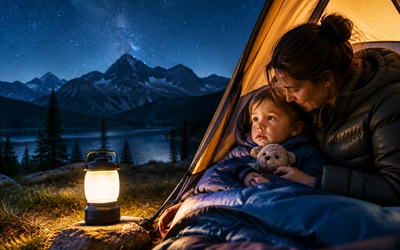
- Comfort item from home (stuffed animal, favorite book)
- One surprise activity per child for rainy downtime
Frequently Asked Questions
What age is appropriate to start camping with kids?
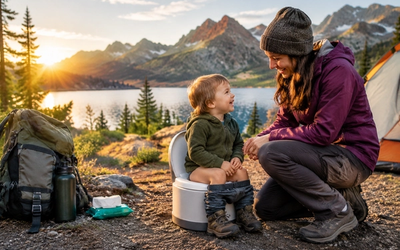
There's no minimum age — families camp successfully with infants. The key is adjusting your expectations and gear. With babies, focus on a comfortable sleep setup and shade management. With toddlers, short walks and campfire stories go a long way.
How do I keep kids safe from wildlife at camp?
Store all food in a bear canister or hang it at least 10 feet off the ground and 4 feet from the trunk. Never bring food into the tent. Teach kids not to approach or feed any wildlife, no matter how friendly it looks.
What's the best way to handle kids and campfire safety?
Establish a clear "campfire circle" boundary before you light anything, and make it a firm rule. Assign one adult as the fire watcher at all times. Keep a bucket of water nearby, and use it — don't just kick dirt on embers.
Do I need a water filter if we're camping at a developed campground?
Most developed campgrounds have potable water, so a filter is optional there. But the Sawyer Squeeze weighs 3 oz and costs $30 — there's no good reason not to have it in your kit for any trip that involves hiking away from camp.
How do I handle bedtime routines while camping?
Bring familiar items from home — a specific stuffed animal, a nightlight that runs on batteries, or an audiobook they love. Keeping the pre-sleep routine as close to home as possible (brush teeth, story, quiet time) helps kids settle faster in an unfamiliar environment.
Final Thoughts
The best family camping trips aren't the ones with the best weather or the most scenic views — they're the ones where nobody had to scramble for missing gear at 9 p.m. A solid checklist removes the chaos and frees you up to actually enjoy the trip. Start with the essentials, invest in a good tent and a water filter, and let the rest be flexible.
If you're gearing up for your first family trip, pick a well-reviewed campground within two hours of home, keep the first trip to two nights, and use this guide as your starting point. The goal is a win early on — a trip the kids talk about for weeks afterward. Once you've got that first success under your belt, the next adventure practically plans itself.
Editor's Choice
Big Agnes Copper Spur HV UL2 — our top tent recommendation for active families who want a shelter that's genuinely easy to pitch after a long day on the trail.
TETON Sports Mountain Ultra Tent — the smartest first tent purchase for families who want solid weather protection without a steep upfront investment.
Sawyer Squeeze Water Filter System — a must-pack safety item for any family camping near streams or lakes, and cheap enough that there's no reason to leave it at home.