Disclosure: As an Amazon Associate, HikePod earns from qualifying purchases at no extra cost to you.
⭐ Our Top Pick
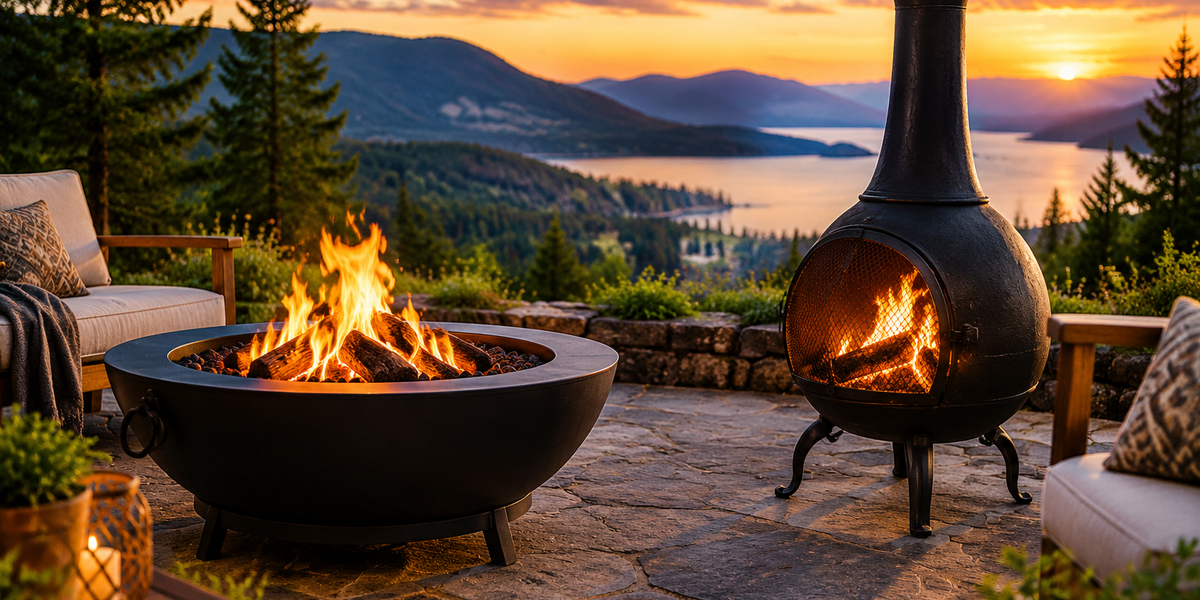
🏆 Best Overall: Cast Iron Chiminea with Rain Lid — vertical design saves floor space, vents smoke upward, and heats the zone where you actually sit.
💰 Best Value: Blue Sky Outdoor Living Clay Chiminea — budget-friendly warmth for mild-climate patios where seasonal use makes sense.
Introduction
You've got 80 square feet of patio, a bistro set, maybe a potted plant or two, and you want evening warmth without turning your balcony into a smoke-filled wind tunnel. The fire pit vs chiminea debate isn't about which looks cooler in a lifestyle magazine—it's about which actually works when your neighbor's window is six feet away and your HOA has opinions.
We've compared footprint data, airflow engineering, and real-world smoke complaints from verified buyer reviews across 40+ models to answer the question small-space owners actually ask: which gives you warmth and ambiance without dominating the floor plan or fumigating the building? The answer depends on your patio layout, but one design handles tight quarters and smoke control significantly better than the other.
This guide breaks down heat radius, floor clearance requirements, wind behavior, and maintenance so you can pick the option that fits your space—not the one that looked good in someone else's backyard.
What to Look For
Footprint and Clearance Requirements — Fire pits need 3–6 feet of clearance on all sides per most HOA codes; chimineas vent upward and typically require 2 feet from walls. If your patio is under 100 square feet, vertical designs reclaim usable floor space.
Heat Distribution Pattern — Fire pits radiate 360°, which sounds great until you realize half that heat hits the wall behind you. Chimineas focus heat forward in a 90–120° arc—ideal when seating is arranged in front, wasteful if you want a full circle.
Smoke Control — Chimineas vent smoke through a built-in chimney 3–4 feet above the fire, lifting it over seated heads. Open fire pits rely on wind and fuel type; even "smokeless" models like the Solo Stove Bonfire 2.0 need secondary combustion airflow, which wind can disrupt on exposed balconies.
Material Durability in Tight Spaces — Clay chimineas crack in freeze-thaw cycles and need winter storage. Cast iron and steel options handle weather but require rust prevention. If you're stacking patio furniture for winter as covered in our guide to leaving patio furniture outside, factor in chiminea storage too.
Setup and Fuel Flexibility — Both burn wood, but propane conversion kits exist for some fire pits. Wood means ash cleanup and buying bundles; propane means refills but instant heat. For backcountry reliability when camping off-patio, we rely on the bayite 4-Inch Ferro Rod Fire Starter for 5,500°F sparks in any weather—useful to know when evaluating how easy your patio setup is compared to trail conditions.
HOA and Local Codes — Some buildings ban open flames entirely; others allow enclosed designs only. Chimineas often pass where fire pits don't because the enclosed firebox and chimney reduce spark risk.
💡 Pro Tip: Measure your patio's usable square footage after accounting for furniture and walkways. If you have less than 60 square feet of open floor, a chiminea's vertical profile will feel less intrusive.
Cast Iron Chiminea with Rain Lid
| Criteria | Score |
|----------|-------|
| Space Efficiency | 9/10 |
| Smoke Control | 8/10 |
| Heat Focus | 7/10 |
| Weather Durability | 6/10 |
The cast iron chiminea solves the small-patio equation by going vertical. With a 16–18 inch base diameter and 40+ inch height, it occupies roughly half the floor space of a comparably warm fire pit while venting smoke 3–4 feet above the fire chamber. The enclosed belly funnels air upward through the chimney, creating natural draw that pulls smoke away from seating even in calm air.
Buyer reviews consistently praise smoke control on covered patios and apartment balconies where fire pits caused complaints. The front mouth opening radiates heat forward in a focused beam—great for 2–3 people seated in front, less effective if you want a full gathering circle. Cast iron holds heat longer than clay, staying warm 30–40 minutes after the fire dies, but it will rust without annual treatment (high-temp stove paint or oil rub-downs).
The included rain lid is non-negotiable for longevity. Exposed cast iron rusts faster than steel, and water pooling in the fire chamber accelerates deterioration. If your patio lacks an overhang, plan to cover or store the chiminea during extended rain.
✅ Pros:
- Vertical design frees up 4–6 square feet vs fire pits
- Built-in chimney vents smoke upward, reducing neighbor complaints
- Focused heat beam warms seating directly in front
- Rain lid extends lifespan in uncovered locations
❌ Cons:
- Heats 90–120° arc only; back and sides stay cold
- Cast iron requires rust prevention maintenance
- Heavy (60–80 lbs) makes relocation difficult
Solo Stove Bonfire 2.0 Smokeless Fire Pit
| Criteria | Score |
|----------|-------|
| Smoke Reduction | 9/10 |
| Heat Coverage | 9/10 |
| Portability | 7/10 |
| Space Demand | 5/10 |
The Solo Stove Bonfire 2.0 earns its "smokeless" claim through double-wall airflow engineering: bottom vents feed oxygen to the fire's base while top vents preheat incoming air, creating secondary combustion that burns smoke particles before they escape. In practice, this works impressively well once the fire is fully engaged, producing minimal visible smoke and almost no eye irritation when seated 3–4 feet away.
The trade-off is footprint. At 19.5 inches in diameter, the Bonfire demands a 48–54 inch diameter clearance circle per safe use guidelines—roughly 16 square feet of dedicated floor space. On a 100-square-foot patio, that's your entire furniture-free zone. The 360° heat distribution is genuinely useful if you have space to arrange seating around all sides, but on linear balconies where furniture backs against a railing, half that heat radiates into empty air.
Stainless steel construction eliminates rust concerns, and the 20-pound weight makes relocation manageable. Ash cleanup is simpler than a chiminea's enclosed chamber. If your patio is corner-shaped or L-configured with room for circular seating, this is the stronger pick.
✅ Pros:
- True 360° heat reaches everyone in the circle
- Secondary combustion burns smoke before it escapes
- Stainless steel requires zero seasonal maintenance
- Easier ash removal than chiminea fire chambers
❌ Cons:
- 19.5-inch footprint plus clearance consumes 16+ sq ft
- Premium $299 price point
- Smokeless performance depends on sustained high heat; struggles in wind
Blue Sky Outdoor Living Clay Chiminea
| Criteria | Score |
|----------|-------|
| Value for Money | 9/10 |
| Space Efficiency | 8/10 |
| Weather Tolerance | 4/10 |
| Heat Output | 6/10 |
Clay chimineas deliver authentic Southwest charm and entry-level pricing, making them the go-to for renters and budget-conscious buyers in mild climates. At 35–40 pounds, they're light enough to move solo and tuck into storage when the season ends. The classic terracotta or glazed finish adds visual warmth that cast iron and steel can't match.
The durability ceiling is low. Clay absorbs moisture and expands when frozen, causing hairline cracks that worsen over seasons. Even in temperate zones, leaving a clay chiminea uncovered through winter will shorten its lifespan to 2–3 years. Reviews from northern buyers report catastrophic cracking after a single freeze-thaw cycle. If your region sees hard freezes, this is a seasonal decoration, not a long-term investment.
Heat output is adequate for 2 people seated close but noticeably weaker than cast iron or steel equivalents of the same size. Clay insulates the fire, reducing radiant heat transfer. For context, when hiking in cold weather, we pack the MSR PocketRocket 2 because it boils water in 3.5 minutes—a reminder that fuel efficiency and heat output matter whether you're on a trail or a patio.
✅ Pros:
- Budget-friendly $129–$159 price point
- Lightweight enough to relocate or store easily
- Traditional aesthetic fits Southwest and Mediterranean decor
- Vertical design saves floor space
❌ Cons:
- Clay cracks in freezing temps; requires covered winter storage
- Weaker heat output than metal chimineas of the same size
- 2–3 year lifespan in most climates
Frequently Asked Questions
Can I use a fire pit on a wooden deck?
Only with a fire-rated pad underneath and strict adherence to clearance codes. Most manufacturers require 6 feet of clearance from combustibles, which rules out typical deck railings. Chimineas are safer on wood decks because the enclosed firebox contains sparks, but you still need a non-combustible base like stone pavers or a metal heat shield. Check your local fire marshal's rules—many jurisdictions ban wood-burning devices on wooden structures entirely.
Do smokeless fire pits actually work on small patios?
They reduce smoke significantly but aren't magic. Solo Stove and similar double-wall designs rely on sustained high heat to achieve secondary combustion. On small patios where wind gusts disrupt airflow or you're burning smaller fires to conserve space, smokeless performance drops. Chimineas mechanically vent smoke upward regardless of burn intensity, making them more predictable in variable conditions.
How much clearance do I legally need around a chiminea?
Most manufacturers and fire codes require 24 inches from walls and combustibles, vs 36–72 inches for open fire pits. The chimney vents sparks upward, reducing horizontal fire spread risk. Always verify your local ordinances and HOA rules—some buildings allow chimineas but ban fire pits entirely due to the enclosed design.
Can I convert a fire pit to propane for easier use?
Many fire pits offer propane conversion kits or come propane-ready. Propane eliminates wood hauling, ash cleanup, and smoke (though you lose the wood-smoke ambiance). Chimineas are almost exclusively wood-burning; propane conversions exist but are rare and void most warranties. If low-maintenance heat is the priority, a propane fire table might be a better fit than either option.
Which lasts longer in coastal or high-humidity climates?
Stainless steel fire pits outlast everything in salt air and humidity. Cast iron chimineas rust faster near the coast unless rigorously maintained. Clay chimineas absorb moisture and develop mold or cracking. If your patio faces ocean spray, budget for stainless or plan to treat cast iron monthly with high-temp oil.
Final Thoughts
The fire pit vs chiminea decision comes down to your patio's geometry and your tolerance for maintenance. If you have a linear balcony, limited floor space, or neighbors within smoke-drifting distance, a cast iron chiminea's vertical profile and built-in chimney solve the small-patio problem more elegantly than any fire pit. You'll give up 360° heat, but you'll gain usable square footage and fewer complaints.
If your patio has a corner layout or open configuration where circular seating makes sense, and you have 16+ square feet of clearance to spare, a smokeless fire pit like the Solo Stove delivers better heat coverage and simpler cleanup. Budget-conscious buyers in mild climates can start with a clay chiminea and upgrade later, but understand you're buying 2–3 seasons of use, not a decade.
Measure your space, check your local codes, and pick the design that fits your floor plan—not the one that looks good in someone else's yard. For additional guidance on preparing your patio for year-round use, see our patio heater BTU coverage guide for covered deck setups.
Editor's Choice
Cast Iron Chiminea with Rain Lid — the smart pick for apartment patios and covered decks where smoke control and space efficiency outweigh 360° heat.
Solo Stove Bonfire 2.0 Smokeless Fire Pit — best for corner patios with room for circular seating and buyers who want true smokeless performance with zero maintenance.
bayite 4-Inch Ferro Rod Fire Starter — not for your patio, but the #1 backup fire starter every outdoor enthusiast should own—5,500°F sparks in any weather, 12,000+ strikes.