Disclosure: As an Amazon Associate, HikePod earns from qualifying purchases at no extra cost to you.
⭐ Our Top Pick
🏆 Best Overall: Garmin inReach Mini 2 Satellite Communicator — it's the only device here that keeps you reachable when both your watch and phone lose signal, turning a scary situation into a manageable one.
💰 Best Value: Garmin eTrex 22x Handheld GPS — preloaded topo maps and 25-hour battery life for under $200, no phone or data plan required.
Introduction
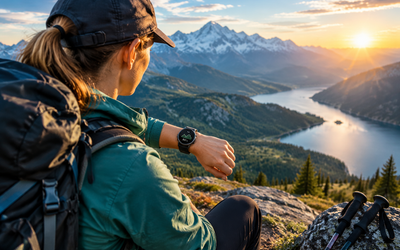
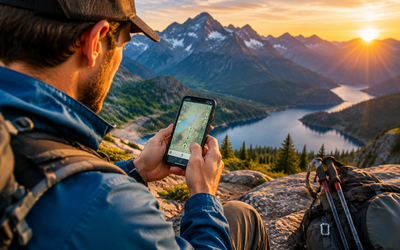
Every year, the same debate resurfaces on trailheads and in hiking forums: do you really need a GPS watch, or is your smartphone enough? In 2026, both tools have gotten dramatically better — watches pack multi-band GNSS and multi-day batteries, while phones run offline map apps that would have impressed a dedicated handheld a decade ago. The honest answer is that neither wins outright. What matters is matching the tool to your terrain, trip length, and risk tolerance.
We've spent years compiling specs, manufacturer documentation, and thousands of verified buyer reviews to understand where each option genuinely excels. A weekend loop on well-marked trails is a very different problem than a five-day traverse with no cell signal and unpredictable weather. The right choice for one is often the wrong choice for the other.
This guide breaks down the real trade-offs — battery life, screen visibility, navigation accuracy, emergency features, and cost — so you can decide with confidence. We'll also cover the dedicated handhelds and safety devices that bridge the gap, and why a $20 compass still belongs in every pack.
What to Look For
- Battery Life Under Load: A phone running GPS with the screen on can drain in 4–6 hours. A GPS watch in expedition mode can last days. Match battery endurance to your longest day, plus a safety margin.
- Offline Navigation: Both watches and phones can navigate without cell service, but only if you've downloaded maps in advance. Test your offline setup at home before you rely on it. Our Gaia GPS offline guide walks through the download process step by step.
- Screen Readability: Watches win in bright sun and cold. Phones win for detailed map viewing. If you navigate by glancing at your wrist, a watch is faster and safer than digging a phone out of a pocket.
- Emergency and Communication Features: SOS, satellite messaging, and live tracking can be literal lifesavers. Decide whether you need two-way communication or just a beacon, and budget for any subscriptions.
- Durability and Water Resistance: Trails are hard on electronics. Look for at least IPX7 water resistance, scratch-resistant glass, and a design that survives drops onto rock.
- Weight and Carrying Comfort: A phone lives in your pocket; a watch lives on your wrist; a handheld lives in your hand or a pouch. Think about how you actually move and where each device ends up.
GPS Watch vs Smartphone: The Core Trade-Offs
Battery Life and Reliability
Smartphones are general-purpose computers, and GPS navigation is one of the most power-hungry things they do. With the screen on and GPS active, most phones burn through a full charge in a single hiking day. You can stretch that with airplane mode and screen-off navigation, but you're still managing a battery that also powers your camera, emergency calls, and photos.
GPS watches are purpose-built for this. Many current models run 20–40 hours in full GPS mode and several days in ultra-low-power tracking. That reliability matters when your route takes longer than planned.
Navigation Accuracy
Modern multi-band GNSS watches and recent smartphones both deliver excellent accuracy in open terrain. The differences show up in canyons, dense forest, and steep valleys, where signal reflection causes errors. For a deeper look at how elevation data holds up in these conditions, see our analysis of GPS watch elevation accuracy.
Screen Size and Map Detail
This is the phone's clearest win. A 6-inch screen shows far more map context than a 1.4-inch watch face. For complex route-finding, a phone (or a dedicated handheld) is simply easier to read.
Emergency Features
Neither a standard watch nor a phone guarantees rescue when you're out of coverage. That's why serious hikers carry a satellite communicator. The Garmin inReach Mini 2 Satellite Communicator delivers two-way messaging and interactive SOS anywhere on Earth, with a subscription. It pairs with your phone or watch, so you keep the navigation you like and add a genuine safety net.
Dedicated Handhelds and Backups
Garmin eTrex 22x Handheld GPS
| Criteria | Score |
|----------|-------|
| Battery Life | 9/10 |
| Map Detail | 8/10 |
| Durability | 9/10 |
| Value | 8/10 |
Based on verified specs and buyer reviews, the eTrex 22x is the no-nonsense choice for hikers who want dedicated navigation without a phone. It ships with preloaded TopoActive maps, runs up to 25 hours on two AA batteries, and is rugged and waterproof. Buyers consistently praise its reliability and the freedom of swapping in fresh batteries mid-trip. The trade-off is a bulky body and a menu system that feels dated next to modern apps.
✅ Pros:
- Preloaded topo maps, no phone or data plan needed
- 25-hour battery life with user-replaceable AAs
- Rugged, waterproof, and drop-resistant
❌ Cons:
- Bulky compared to a watch or phone
- Interface feels clunky next to modern apps
Suunto A-10 Field Compass
| Criteria | Score |
|----------|-------|
| Reliability | 10/10 |
| Weight | 10/10 |
| Ease of Use | 7/10 |
| Value | 10/10 |
Every navigation system fails eventually — batteries die, screens crack, software glitches. The Suunto A-10 Field Compass costs less than lunch and never needs charging. Its liquid-filled capsule settles quickly for accurate bearings, and it weighs next to nothing. The only catch is that you need basic map-and-compass skills to use it well — which is exactly why we recommend practicing before you need it.
✅ Pros:
- Works forever with no batteries or software
- Fast-settling, accurate liquid-filled capsule
- Nearly weightless and inexpensive
❌ Cons:
- Requires map-reading skills to be useful
- No GPS, tracking, or digital features
Sawyer Squeeze Water Filter System
| Criteria | Score |
|----------|-------|
| Filtration | 9/10 |
| Portability | 10/10 |
| Durability | 8/10 |
| Value | 9/10 |
Navigation gets the attention, but hydration keeps you moving. The Sawyer Squeeze Water Filter System filters to 0.1 micron, weighs just 3 oz, and works as a squeeze, inline, or gravity setup. It's the piece of gear we'd tell any hiker to carry regardless of which navigation tool they choose. Note that it doesn't filter viruses, so treat or boil in regions where that matters.
✅ Pros:
- 0.1-micron filtration removes bacteria and protozoa
- 3 oz and packs down tiny
- Flexible squeeze, inline, or gravity use
❌ Cons:
- Does not filter viruses
- Flow rate slows as the filter clogs
💡 Pro Tip: Whatever you carry, do a full "dead battery" drill at home: navigate a route with your phone in airplane mode and your watch in its lowest-power setting. You'll learn your real endurance before the trail teaches you the hard way.
Frequently Asked Questions
Can I hike with just my smartphone?
Yes, for most day hikes on marked trails. Download offline maps, carry a power bank, and keep the phone warm and dry. For remote or multi-day routes, add a dedicated device or satellite communicator.
Do GPS watches work without a phone?
Most modern GPS watches track and navigate independently once satellites lock on. You typically need a phone only for initial setup, map downloads, and syncing activities.
Is a GPS watch more accurate than a phone?
In open terrain they're similar. Multi-band GNSS watches often hold a signal better in canyons and dense forest, but a recent phone with good satellite lock is very capable.
Do I need a satellite communicator if I carry a phone?
Only if you'll be out of cell coverage and want real emergency capability. A phone without signal can't call for help — a satellite communicator can.
What's the best backup navigation tool?
A map and a baseplate compass. They're lightweight, inexpensive, and immune to dead batteries — the ultimate failsafe.
Final Thoughts
There's no single winner in the GPS watch vs smartphone debate — there's only the right combination for your trip. For most day hikers, a smartphone with offline maps plus a power bank is genuinely sufficient. For longer, remoter, or higher-risk routes, a GPS watch adds wrist-level convenience and battery endurance, while a satellite communicator adds the safety net that neither a watch nor a phone can provide on its own. Whichever you choose, carry a map and compass as your failsafe, and always pack a water filter.
Editor's Choice
Garmin inReach Mini 2 Satellite Communicator — the essential safety layer for any hiker venturing beyond reliable cell coverage.
Garmin eTrex 22x Handheld GPS — a rugged, battery-friendly navigator for hikers who want dedicated mapping without depending on a phone.
Suunto A-10 Field Compass — the inexpensive, unbreakable backup that belongs in every pack.