Disclosure: As an Amazon Associate, HikePod earns from qualifying purchases at no extra cost to you.
⭐ Our Top Pick
🏆 Best for Solo Safety: Adventure Medical Kits Ultralight Watertight .7 First Aid Kit — comprehensive treatment for the injuries you're most likely to face alone, in a watertight 7 oz package.
💰 Best Budget Safety Gear: SOL Escape Lite Bivvy Emergency Sleeping Bag — under $20 for a windproof, waterproof emergency shelter that weighs less than a granola bar.
Introduction
The question isn't whether solo or group hiking is "better"—it's which style fits your goals, risk tolerance, and the trails you're tackling. We've spent years comparing verified experiences from thousands of hikers, and the truth is this: both approaches offer profound rewards and demand different safety disciplines.
Solo hiking delivers unmatched solitude, pace control, and self-reliance. Group hiking brings shared decision-making, built-in safety redundancy, and social momentum when motivation flags. The hikers who thrive understand that the choice isn't binary—most experienced trail users alternate between both styles depending on the terrain, season, and personal headspace.
In this guide, we break down the honest trade-offs, the gear shifts required for each style, and the safety protocols that separate confident solo hikers from reckless ones. Whether you're drawn to the silence of a solo sunrise summit or the camaraderie of trail conversation, you'll leave with a clear framework for making the call.
What to Look For
Self-Rescue Capability: Solo hikers must carry (and know how to use) gear that handles injuries, navigation failures, and weather emergencies without external help. Groups can distribute specialized gear, but everyone should still understand basic first aid and navigation.
Communication and Check-In Systems: Solo hikers need a reliable way to signal distress or confirm safe return—satellite messengers, detailed trip plans left with trusted contacts, and realistic turnaround times. Groups need internal communication (radios on large groups) and a designated emergency contact who knows the full itinerary.
Pace Flexibility vs. Accountability: Solo hiking lets you stop for photos, adjust your speed, or bail early without negotiating. Group hiking provides external motivation to push through discomfort and social accountability that discourages risky shortcuts.
Mental Resilience and Decision-Making: Solo hikers face every decision alone—route-finding in fog, assessing whether to cross a swollen stream, rationing food after a wrong turn. Groups benefit from collective wisdom but can fall into groupthink or defer to the loudest voice rather than the most experienced.
Trail Difficulty and Remoteness: Beginner-friendly, well-marked trails near cell service are forgiving for solo hikers. Technical terrain, remote backcountry, or winter conditions amplify the consequences of solo mishaps exponentially. If you're still learning to match trails to your fitness level, our guide on how to choose a hiking trail for your fitness level walks through the decision framework.
Social and Psychological Needs: Some hikers recharge in solitude; others find trail anxiety spikes without companions. Neither preference is wrong—acknowledging your psychological wiring helps you prepare appropriately (e.g., solo hikers practicing calm during unexpected setbacks, group hikers learning to advocate for their needs in group dynamics).
Solo Hiking: Pros, Cons, and Safety Essentials
The Case for Solo Hiking
Solo hiking delivers total autonomy. You leave when you want, stop where you want, and turn around without justifying the decision. The silence amplifies your awareness—you notice birdsong, wind patterns, and your own breathing in ways group chatter drowns out. For many hikers, solo trail time is meditation in motion.
The self-reliance builds confidence faster than any other outdoor activity. When you navigate a tricky descent alone, troubleshoot a blister mid-trail, or filter water from a murky creek because it's that or go thirsty, you internalize skills that group hiking lets you outsource. That competence compounds—solo veterans move through the backcountry with a calm efficiency that's impossible to fake.
| Criteria | Score |
|----------|-------|
| Solitude & Introspection | 10/10 |
| Pace Flexibility | 10/10 |
| Safety Margin | 4/10 |
| Skill Development | 9/10 |
✅ Pros:
- Complete control over pace, breaks, and route modifications
- Deeper immersion in nature without social distraction
- Faster skill acquisition through self-reliance
❌ Cons:
- No backup if you're injured, lost, or facing severe weather
- Psychological pressure of solo decision-making in high-stakes moments
- Increased wildlife encounter risk (no "group noise" to deter animals)
💡 Pro Tip: Before your first solo overnight, do three solo day hikes on the same trail system. Familiarity with the terrain gives you one less variable to manage when you're alone.
Solo Hiking Safety Non-Negotiables
The Adventure Medical Kits Ultralight Watertight .7 First Aid Kit is the baseline. When you're solo, a sprained ankle or deep laceration isn't an inconvenience—it's a potential rescue scenario. This kit treats blisters before they cripple your pace, stabilizes sprains, and handles wound care in a watertight 7 oz package. Add Moleskin Blister Prevention Pads as insurance—blisters are the #1 preventable reason solo hikers cut trips short.
Carry the SOL Escape Lite Bivvy even on day hikes. At 3.8 oz, there's no weight excuse. If weather turns or you twist an ankle at dusk, this windproof, waterproof bag reflects 90% of your body heat and buys you a survivable night until help arrives.
Leave a detailed trip plan with someone who will actually call for help if you don't check in. Include your exact route, expected return time, vehicle description and location, and emergency contacts. Set a firm check-in deadline and stick to it—chronic late check-ins train people to ignore your safety protocol.
Water access is non-negotiable for solo hikers. The Sawyer Squeeze Water Filter System weighs 3 oz, filters 0.1 micron contaminants, and eliminates the need to carry excessive water weight. When you're alone, dehydration impairs judgment faster than you realize.
Group Hiking: Pros, Cons, and Dynamics
The Case for Group Hiking
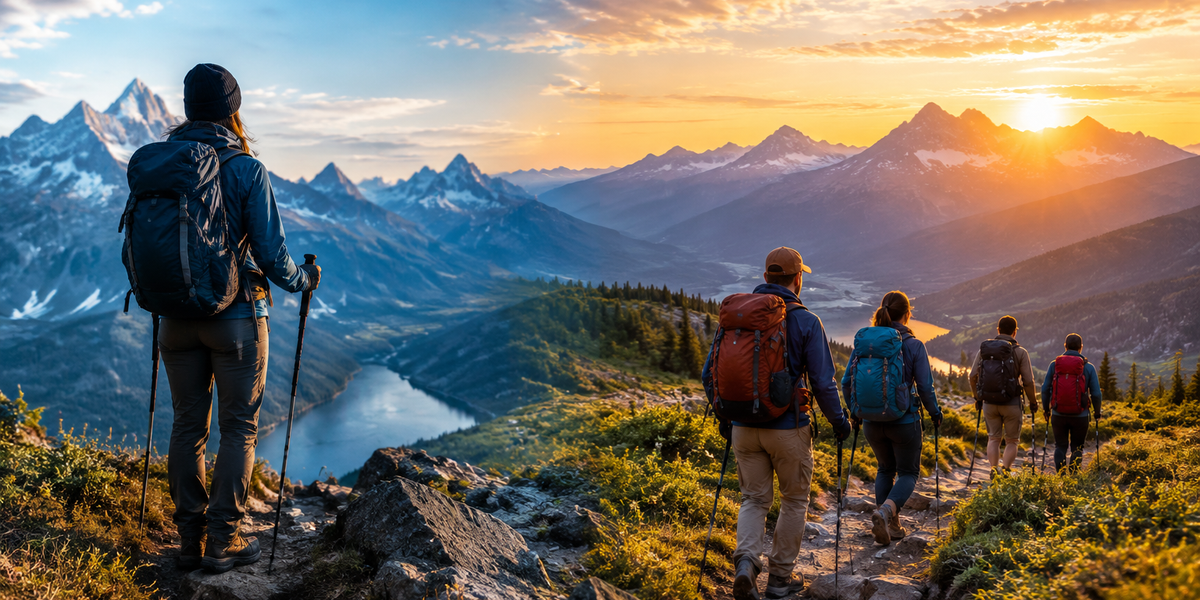
Group hiking distributes risk beautifully. If one person gets injured, the group has multiple people to provide first aid, send for help, or carry extra gear. Navigation mistakes get caught by a second set of eyes. Morale stays higher when someone's cracking jokes during a brutal uphill grind.
The social accountability pushes you further than you'd go solo. When your legs are screaming on mile eight and your buddy's still chatting, you dig deeper. Group hikes build friendships through shared suffering—there's a reason "we survived that storm together" bonds people for years.
| Criteria | Score |
|----------|-------|
| Safety Redundancy | 9/10 |
| Social Motivation | 9/10 |
| Pace Flexibility | 3/10 |
| Solitude & Reflection | 2/10 |
✅ Pros:
- Built-in safety backup for injuries and emergencies
- Shared gear weight (one tent for two people, distributed cooking equipment)
- Social motivation during tough sections
❌ Cons:
- Pace dictated by the slowest hiker (or group fractures)
- Decision-making by committee slows response to changing conditions
- Social dynamics can create pressure to continue when individuals should turn back
💡 Pro Tip: Establish a "no-shame turnaround" policy before the hike. Anyone can call it without justification. This prevents groupthink from overriding individual safety judgments.
Managing Group Hiking Dynamics
The biggest group hiking mistake is mismatched fitness levels. A fit hiker crawling at someone else's pace breeds resentment; a struggling hiker feeling rushed spirals into anxiety and poor decisions. Honest pre-hike conversations about expected pace and distance prevent mid-trail blowups.
Designate a "sweep" hiker—someone experienced who voluntarily hikes last and ensures no one gets left behind. The sweep carries extra water, snacks, and first aid supplies. This role rotates on longer trips to distribute the responsibility.
For groups larger than four, bring FRS radios. When the group naturally spreads out on long climbs, radios let the lead communicate trail hazards (loose rock, stream crossings, wildlife) and coordinate regrouping points without shouting or waiting.
Frequently Asked Questions
Is solo hiking safe for beginners?
Solo hiking is safe for beginners on well-trafficked, clearly marked trails with cell service and short distances (under 5 miles round trip). The risk scales with remoteness, difficulty, and your emergency response skills. Start with popular trails where you'll encounter other hikers, build your navigation and self-rescue skills, then progress to more remote terrain.
How do I find hiking groups near me?
Check local hiking clubs (search "[your city] hiking club"), REI and outdoor retailer group hikes (usually free or low-cost), Meetup.com hiking groups, and trail organization volunteer days (great for meeting experienced hikers). Facebook groups for specific trail systems often organize informal group hikes. Vet the group's typical pace and distance before committing.
What should I do if I encounter wildlife while hiking alone?
Stay calm, make yourself large, speak in a firm voice, and back away slowly without turning your back. Never run—that triggers predator instinct. For bears, carry bear spray in a hip holster (not buried in your pack) and know how to use it. For mountain lions, maintain eye contact and fight back aggressively if attacked. Most wildlife encounters end with the animal leaving if you give it space.
Can I hike alone as a woman safely?
Yes, with the same safety protocols any solo hiker follows: detailed trip plans, reliable communication (satellite messenger), self-defense tools if you're comfortable carrying them, and starting on popular trails to build skills. Many women report feeling safer on remote trails (where the statistical risk is wildlife and weather) than in urban parks. Trust your instincts—if a trailhead or fellow hiker gives you bad vibes, leave.
Should I hike with my dog or is that considered "solo"?
Dogs provide companionship and can deter wildlife, but they don't replace human safety backup—you're still responsible for navigation, first aid, and emergency decisions. Dogs add complexity (leash laws, wildlife conflicts, their own first aid needs) and can't summon help. Consider a dog a morale boost, not a safety partner.
Final Thoughts
The best hikers alternate between solo and group trips based on what they need from the trail that day. Solo hiking builds the skills and confidence that make you a valuable group member. Group hiking teaches you to read other people's fatigue signals and make collaborative decisions—skills that sharpen your solo risk assessment.
Start with your comfort zone, then expand deliberately. If you're a lifelong group hiker, try a solo morning hike on a familiar trail. If you're a solo purist, join a group overnight and observe how shared decision-making handles unexpected challenges. The goal isn't to pick a side—it's to master both styles so the trail is always open to you, regardless of who's available to join.
If you're planning summer hikes, check out our guide on the best time of day to hike in summer to avoid heat-related risks, especially when hiking solo.
Editor's Choice
Adventure Medical Kits Ultralight Watertight .7 First Aid Kit — the single most important piece of solo hiking insurance, treating the injuries that turn manageable discomfort into rescue scenarios.
Sawyer Squeeze Water Filter System — whether solo or in a group, reliable water access is non-negotiable, and this 3 oz filter eliminates the need to haul excessive weight.
SOL Escape Lite Bivvy Emergency Sleeping Bag — at under $20 and 3.8 oz, every hiker (solo or group) should carry this emergency shelter for when plans go sideways.