Disclosure: As an Amazon Associate, HikePod earns from qualifying purchases at no extra cost to you.
⭐ Our Top Pick
🏆 Best Overall: Sawyer Squeeze Water Filter System — the essential foraging companion that safely filters any wild water source at just 3 oz.
💰 Best Value: Adventure Medical Kits Ultralight .7 First Aid Kit — maximum trail-safety coverage for under $35, in a watertight pack-friendly kit.
Introduction
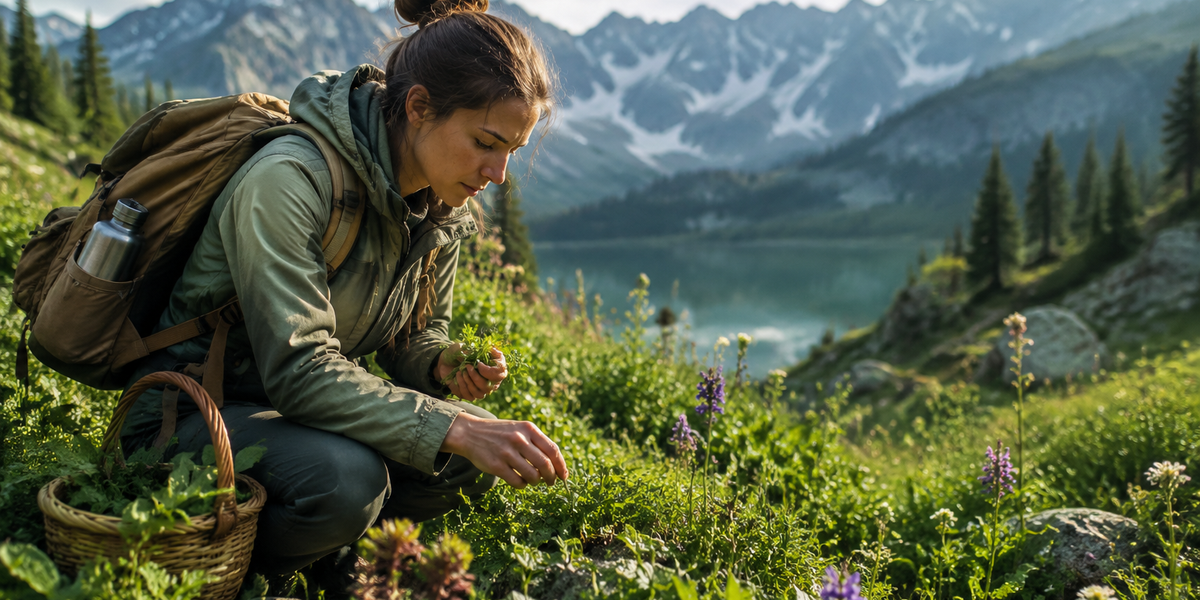
Foraging is one of the oldest human skills on earth — and it's making a serious comeback. Whether you're a weekend hiker curious about the plants brushing your boots or someone who wants to supplement trail meals with wild greens, learning to identify edible wild plants is a deeply rewarding skill. It sharpens your observation, deepens your connection to the land, and, yes, occasionally puts a fresh salad in your bowl.
That said, foraging is a skill that demands respect. The same forests that offer wild strawberries and purslane also harbor water hemlock and death camas — plants that can kill an adult in hours. In this guide, we'll walk you through the foundational rules of safe foraging, the beginner-friendly edible plants worth learning first, and the essential gear that keeps every foray into the field safe and enjoyable.
We've spent years hiking, foraging, and field-testing gear across habitats from the Pacific Northwest to the Appalachians. What follows is the practical, no-nonsense guide we wish we'd had when we started.
What to Look For
Before you pick a single leaf, internalize these six principles. They're the difference between a great foraging habit and a dangerous one.
- Positive ID — never eat on a maybe. You must be 100% certain of a plant's identity before consuming it. If even one feature doesn't match, leave it alone. Use at least two independent references (field guide + app, or two separate field guides).
- Learn the deadly lookalikes first. For every edible plant, know its toxic doppelgänger. Wild carrot and poison hemlock look nearly identical. Queen Anne's Lace and water hemlock share the same habitat. Knowledge of lookalikes is not optional.
- Harvest clean, legal, and ethical. Never forage in areas sprayed with herbicides or pesticides, near roadsides with heavy traffic runoff, or on protected land where harvesting is prohibited. Take no more than 20% of any plant colony.
- Start with high-confidence beginner species. Dandelion, purslane, wood sorrel, and lamb's quarters have no deadly lookalikes and grow nearly everywhere. Build your ID muscle on safe species before tackling complex families like Apiaceae (carrot family).
- Season and habitat matter as much as appearance. Plants look dramatically different across seasons. A nettle in April looks nothing like one in August. Learn your target plants across their full growth cycle and in the habitat where they actually thrive.
- Carry safety gear every time. Allergic reactions to unfamiliar plants happen even with edible species. A first aid kit and a reliable water filter aren't optional — they're table stakes for any foraging hike.
Gear That Belongs in Every Forager's Pack
Sawyer Squeeze Water Filter System
| Criteria | Score |
|----------|-------|
| Filtration Level | 10/10 |
| Weight & Packability | 9/10 |
| Versatility | 9/10 |
| Value for Money | 10/10 |
Foragers range far off maintained trail, and that means drinking from streams, springs, and seeps that most hikers skip. The Sawyer Squeeze Water Filter System is, without exaggeration, the piece of gear we'd give up last. At 3 oz and filtering to 0.1 micron, it eliminates bacteria, protozoa, and microplastics from any freshwater source. Fill the included pouch, squeeze through the filter, and drink — it's that simple. We've used ours across hundreds of miles of backcountry travel and it has never let us down.
✅ Pros:
- Filters to 0.1 micron — handles bacteria, protozoa, and microplastics
- Featherlight 3 oz — you'll forget it's there
- Works as squeeze filter, inline filter, or straw — maximum versatility
❌ Cons:
- Filter membrane can crack if allowed to freeze — store inside your sleeping bag in cold temps
- Included pouches wear out over time and may need replacing
---
Black Diamond Spot 400-R Rechargeable Headlamp
| Criteria | Score |
|----------|-------|
| Brightness | 9/10 |
| Battery Life | 8/10 |
| Water Resistance | 10/10 |
| Weight | 8/10 |
Foraging often means starting before dawn or pushing past dusk — prime time for spotting mushrooms and dew-covered greens. The Black Diamond Spot 400-R Rechargeable Headlamp throws 400 lumens of crisp, even light that makes plant identification in low-light conditions dramatically easier. Its IPX8 waterproof rating means morning rain and creek crossings are no concern. We particularly appreciate the dimming memory — it returns to your last-used brightness every time, so you're not blasting full lumens at a delicate flower you're trying to examine.
✅ Pros:
- 400 lumens — exceptional for examining plant details in shadow or at dusk
- IPX8 waterproof — fully submersible to 1 meter
- USB-C rechargeable — no disposable batteries needed on multi-day trips
❌ Cons:
- Battery drains faster at max brightness — bring a small power bank for multi-day use
- Slightly heavier than ultralight headlamps at 3.2 oz
---
Adventure Medical Kits Ultralight .7 First Aid Kit
| Criteria | Score |
|----------|-------|
| Coverage & Contents | 8/10 |
| Weather Protection | 9/10 |
| Weight & Packability | 9/10 |
| Value for Money | 9/10 |
Contact dermatitis, thorny scrapes, and the rare allergic reaction to an unfamiliar plant are realities of foraging. The Adventure Medical Kits Ultralight .7 First Aid Kit packs wound care, blister treatment, and antihistamines into a 7 oz watertight DryFlex bag. We recommend adding a personal supply of diphenhydramine (Benadryl) to the kit — it's not included but is invaluable if you or a trail partner has an unexpected reaction to a wild plant.
💡 Pro Tip: Add a small tube of hydrocortisone cream to your kit. Contact with stinging nettle, wild parsnip (when activated by sunlight), or unknown plants can cause significant skin inflammation — hydrocortisone calms it fast.
✅ Pros:
- Watertight DryFlex bag protects contents in rain and river crossings
- Handles wound care, blisters, and basic allergic reactions
- Only 7 oz — genuinely ultralight
❌ Cons:
- No diphenhydramine (Benadryl) included — add your own before heading out
- Doesn't cover serious trauma like fractures — supplement with a SAM splint on remote trips
---
5 Beginner-Friendly Edible Wild Plants to Learn First
These species are widely distributed across North America, have no deadly lookalikes, and are easy to positively identify even for beginners.
- *Dandelion (Taraxacum officinale)* — Every part is edible: leaves (best in spring), flowers, and roasted roots. Found in almost every disturbed habitat. Zero dangerous lookalikes.
- *Purslane (Portulaca oleracea)* — A succulent groundcover with paddle-shaped leaves. Tart, slightly lemony, and packed with omega-3 fatty acids. Common in garden edges and gravel paths.
- *Wood Sorrel (Oxalis spp.)* — Heart-shaped leaflets in groups of three with a bright lemony flavor. Excellent in salads. Note: high in oxalic acid — eat in moderation.
- *Lamb's Quarters (Chenopodium album)* — Tastes like mild spinach, thrives in disturbed soils, and is extraordinarily nutritious. Dusty white coating on young leaves is the key identifier.
- *Stinging Nettle (Urtica dioica)* — Wear gloves to harvest. Cooking or drying neutralizes the sting entirely. Young spring shoots are among the most nutritious wild greens available.
💡 Pro Tip: Build a laminated one-page ID card for your top 5 beginner plants and keep it in your hip belt pocket. Quick field references prevent hesitation — and hesitation prevents mistakes.
Frequently Asked Questions
Is it safe for absolute beginners to forage without a guide?
Yes — with the right approach. Stick strictly to the five beginner species listed above, use two independent references for every ID, and never eat anything you're less than 100% certain about. Taking a local guided foraging walk first is strongly recommended; seeing an expert ID plants in the field teaches you more than any book.
What's the single most important rule in foraging safety?
"When in doubt, throw it out." No wild food is worth risking your life over. The edible plants available to beginners are common, abundant, and easy to find — there's no reason to gamble on a questionable ID.
Can I use a plant ID app instead of a field guide?
Apps like iNaturalist and PlantNet are genuinely useful as a second reference, but they make mistakes — sometimes dangerous ones. Always cross-reference an app's suggestion with a trusted regional field guide. The app is a starting point, not a verdict.
Are there foraging regulations I need to know about?
Yes. National parks generally prohibit plant harvesting. National forests, BLM land, and state parks vary widely — many allow personal-use foraging in small quantities. Always check local regulations before heading out, and follow the 20% rule: never harvest more than 20% of any plant colony.
What should I do if I think I've eaten something toxic?
Call Poison Control immediately: 1-800-222-1222 (US). Do not wait for symptoms to worsen. Take a photo of the plant and, if possible, a sample in a sealed bag. Get to emergency services if symptoms begin — nausea, blurred vision, difficulty breathing, or numbness are all emergency signals.
Final Thoughts
Foraging is a skill built slowly, plant by plant, season by season. The goal in your first year isn't to identify 50 species — it's to know five species with absolute certainty and to build the observational habits that will serve you for a lifetime. Go slow, carry the right gear, and let curiosity drive you.
The trail rewards the prepared. Before your next foraging hike, make sure you have a reliable water filter for wild water sources, a solid headlamp for early morning or dusk harvests, and a first aid kit for the unexpected. The wild pantry is extraordinary — and it's waiting for you.
Editor's Choice
Sawyer Squeeze Water Filter System — foragers venture far off trail to find the best plants, and this ultralight 3 oz filter ensures every wild water source you encounter is safe to drink.
Adventure Medical Kits Ultralight .7 First Aid Kit — skin reactions, scratches from thorny plants, and the occasional misstep are part of foraging life; this watertight kit handles them all without weighing you down.
Black Diamond Spot 400-R Rechargeable Headlamp — dawn and dusk are peak foraging windows, and 400 lumens of IPX8-rated light means low light and wet weather never cut your harvest short.

