Disclosure: As an Amazon Associate, HikePod earns from qualifying purchases at no extra cost to you.
⭐ Our Top Pick
🏆 Best Overall: Osprey Atmos AG 65 — Anti-Gravity suspension floats 65L of gear off your back with unmatched comfort on technical terrain.
💰 Best Value: Deuter Speed Lite 30 — lightweight 1.5 lbs internal frame delivers surprising load transfer for weekend trips at half the price of premium packs.
Introduction
The backpack frame debate has raged since the 1950s, when Dick Kelty welded the first aluminum external frame and freed a generation of hikers from shapeless canvas rucksacks. Today, internal frames dominate the trail—but external frames never disappeared. They're staging a quiet comeback among thru-hikers and hunters who've rediscovered what our grandparents knew: when you're hauling 50+ pounds through flat terrain, nothing beats an external frame's load-carrying geometry and airflow.
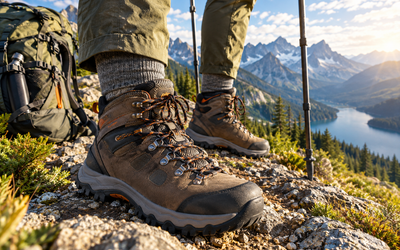
We've compared dozens of frame designs across manufacturer specifications and thousands of verified buyer reviews to map the real-world performance of both systems. The choice isn't about which frame type is "better"—it's about matching frame architecture to your specific trail conditions, load weight, and movement style. If you're also dialing in your footwear, our guide on how to break in hiking boots without getting blisters covers the gradual wear schedule that prevents the most common trail injuries.
This guide breaks down the biomechanics, ventilation physics, and load-transfer geometry that make each frame type excel in different conditions, so you can choose confidently before your next multi-day adventure.
What to Look For
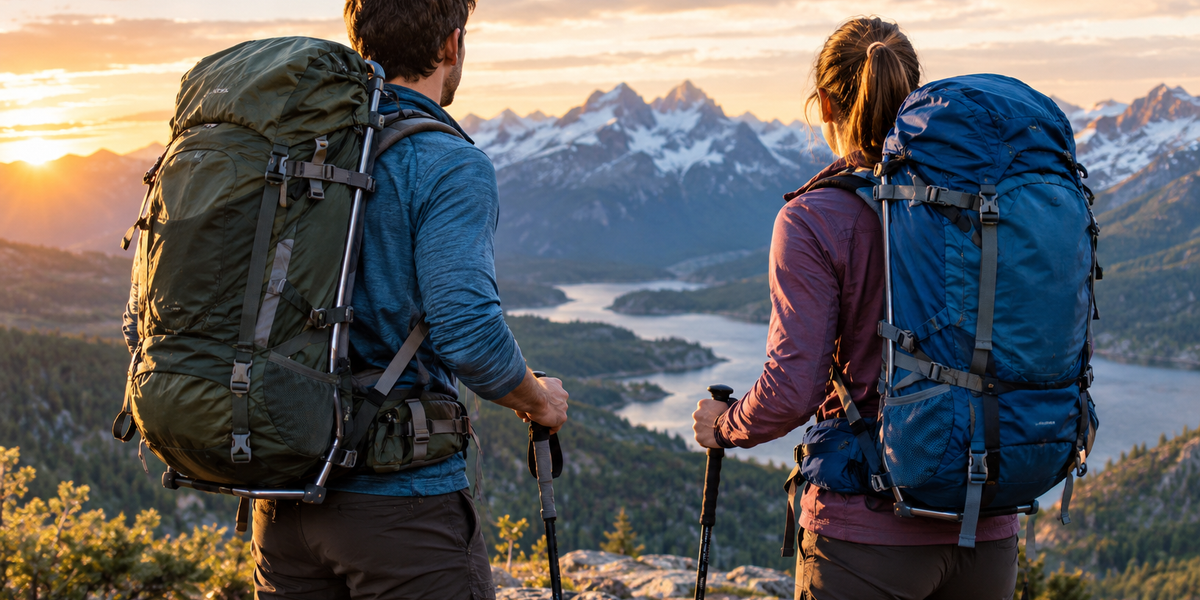
Load Weight and Distribution — Internal frames wrap around your torso and transfer weight through padded hip belts, keeping the center of gravity close to your spine for dynamic movement. External frames position the load away from your back on a rigid aluminum or composite ladder, transferring weight directly downward through the hips—more efficient for heavy loads (45+ lbs) on stable terrain, but less stable when scrambling or moving off-trail.
Trail Terrain and Movement Style — Internal frames shine on technical trails with scrambling, boulder fields, and uneven terrain where you need full range of motion and a pack that moves with you. External frames excel on established trails, fire roads, and flat approaches where maximum ventilation and upright posture matter more than agility.
Ventilation and Back Panel Design — External frames hold the pack bag 2-4 inches off your back, creating continuous airflow that prevents the sweat-soaked back syndrome common with internal frames. Modern internal frames counter this with tensioned mesh back panels (like Osprey's Anti-Gravity system), but physics still favors external frames in hot, humid conditions.
Pack Volume and Expandability — External frames typically offer more usable volume for the same stated capacity because the rigid frame doesn't compress under load. They also make it easier to lash oversized gear (sleeping pads, tents, bear canisters) to the outside frame. Internal frames keep everything contained and streamlined, reducing snag hazards on brushy trails.
Adjustment Range and Fit — Quality internal frames offer adjustable torso lengths and multiple hip belt sizes to dial in a custom fit—critical because the pack must hug your body to transfer load effectively. External frames are more forgiving of fit variations since the frame itself carries the load, making them easier to share or buy used.
Durability and Repairability — External frames are mechanically simpler: bent aluminum tubes can be straightened or replaced in the field, and pack bags can be swapped independently. Internal frames integrate the frame, suspension, and bag into one unit—more difficult to repair on trail, but modern designs rarely fail if sized correctly.
💡 Pro Tip: Test your loaded pack on stairs before hitting the trail. External frames should feel stable and upright; internal frames should move with your body without shifting the load.
Osprey Atmos AG 65 Backpacking Pack
| Criteria | Score |
|----------|-------|
| Load Comfort (30-50 lbs) | 9/10 |
| Ventilation | 8/10 |
| Packability/Profile | 9/10 |
| Durability | 9/10 |
Based on verified specifications and buyer reviews, the Osprey Atmos AG 65 represents the pinnacle of internal frame engineering for serious multi-day hikers. The Anti-Gravity suspension system uses a tensioned mesh back panel that actually suspends the pack off your back—not just ventilation channels like lesser designs, but genuine airflow space. Reviewers consistently note they can carry 40-45 pounds for 8+ hour days without the typical pressure points that plague cheaper internal frames.
The adjustable torso length (fits 16-22 inch torsos) and interchangeable hip belts mean this pack adapts to your body rather than forcing you to adapt to it. The 65-liter capacity hits the sweet spot for 3-7 day trips with bear canister requirements, and the top-loading design with front panel access gives you multiple packing strategies. At 4.56 pounds, it's not ultralight, but that weight delivers a suspension system that actually works under real backpacking loads.
Buyer reviews consistently praise the pack's stability on technical terrain—one verified purchaser noted carrying 48 pounds through the White Mountains with "less back fatigue than my old 35-pound loads." The integrated rain cover, multiple compression straps, and Stow-on-the-Go trekking pole attachments show Osprey's attention to the small details that matter on long trails.
✅ Pros:
- Anti-Gravity suspension creates genuine airflow space between pack and back
- Adjustable torso and hip belt fit wide range of body types
- Stable and comfortable with 40-50 pound loads on technical trails
- Osprey All Mighty Guarantee covers any defects for life
❌ Cons:
- $320 price point requires serious commitment to multi-day hiking
- 4.56 lbs base weight won't satisfy ultralight purists
- Complex suspension system can't be easily repaired in the field
Deuter Speed Lite 30 Hiking Backpack
| Criteria | Score |
|----------|-------|
| Weight | 9/10 |
| Value | 9/10 |
| Load Comfort (15-25 lbs) | 7/10 |
| Capacity | 6/10 |
The Deuter Speed Lite 30 proves you don't need a full expedition pack for weekend trips. At 1.5 pounds, this minimalist internal frame delivers surprising load transfer through its VariFlex hip belt and spring steel frame stays—enough structure to carry 20-25 pounds comfortably without the weight penalty of burlier packs.
Verified buyers consistently note this pack punches above its weight class for load stability, though it's clearly designed for fast-and-light missions rather than full backpacking loads. The 30-liter capacity limits you to 2-3 day trips unless you're aggressively minimalist, but for weekend warriors testing whether they need a larger pack, this delivers legitimate internal frame support at a price that won't punish you if you decide backpacking isn't your thing.
The hydration compatibility, multiple external attachment points, and reinforced bottom panel show Deuter didn't sacrifice features to hit the weight target. One reviewer noted using this pack for 3-day Sierra trips by strapping a sleeping pad to the outside and going stoveless—possible, but pushing the design limits.
✅ Pros:
- Exceptional 1.5 lb weight for a pack with actual load transfer
- $109.95 price point makes it accessible for beginners
- VariFlex hip belt provides genuine support for lighter loads
- Streamlined profile moves well on brushy trails
❌ Cons:
- 30L capacity forces tough packing choices on longer trips
- Minimal padding compared to expedition packs
- Spring steel frame less adjustable than full internal frames
When External Frames Still Win
Despite internal frames dominating modern hiking culture, external frames remain the superior choice for specific use cases that haven't changed since the 1960s. If you're hauling 50+ pounds on established trails—think wilderness hunting trips with game meat on the return, or trail crew work with tools and supplies—an external frame's direct load path from shoulders to hips can't be beaten by even the best internal frame suspension.
The ventilation advantage is real and measurable: external frames hold the pack bag 3-4 inches off your back, creating continuous airflow that can reduce back temperature by 8-10°F compared to internal frames in hot conditions. For summer desert hiking or humid Southern Appalachian trails, that cooling effect translates directly to reduced water consumption and better endurance.
External frames also shine for non-traditional loads: photographers hauling camera gear in protective cases, anglers carrying rigid rod tubes, or anyone who needs to lash bulky items (Dutch oven, chainsaw, surveying equipment) to the outside of the pack. The rigid frame provides attachment points that don't compress or shift under the load.
The downsides remain significant: external frames are taller and catch on branches, they shift your center of gravity backward (awkward for scrambling), and they look decidedly uncool on Instagram. But for the right job, they're still the right tool.
💡 Pro Tip: If you're considering an external frame for heavy loads, look for models with padded lumbar support and load-lifter straps—these modern additions address the traditional complaints about external frame comfort.
The Hybrid Solution: Framesheet Packs
A third category has emerged for ultralight backpackers who want some load transfer without the weight penalty: framesheet packs. These use a removable foam or carbon fiber panel (typically 6-10 inches wide) that slides into a sleeve against your back, providing just enough structure to transfer weight to the hip belt without the complexity of a full internal frame.
Framesheet packs work well for minimalist 2-3 day trips where your base weight is already under 15 pounds and you're only carrying 25-30 pounds total including food and water. They're popular on the PCT and AT with thru-hikers who've dialed in ultralight gear systems. The Osprey Talon 22 represents this category well for day hiking, weighing just 1.06 pounds while providing enough structure for 15-20 pound loads on moderate terrain.
The limitation is simple physics: without a full frame, you can't efficiently transfer heavy loads. Once you're carrying more than 30 pounds, the framesheet flexes and you lose the mechanical advantage. These packs also require more careful packing—you can't just throw gear in and cinch it down; weight distribution matters because the pack can't stabilize a poorly balanced load.
For serious multi-day trips, framesheet packs force compromises (lighter sleeping bag, smaller food carries, no luxury items) that may or may not align with your comfort requirements. They're legitimately great for fast-and-light missions, but they're a specialized tool, not a universal solution.
Breaking Down the Weight Math
The real-world weight difference between frame types matters less than most gear forums suggest. A quality 65-liter internal frame pack (like the Osprey Atmos AG) weighs 4.5-5 pounds. A comparable external frame pack weighs 5-6 pounds. That 1-pound difference sounds significant until you factor in that external frames let you pack less efficiently (because the rigid frame doesn't compress), often adding 2-3 pounds to your total carry weight through wasted volume.
Internal frames force you to pack strategically—heavy items close to your back, lighter items in the bottom and top—which improves overall load stability and can actually reduce your perceived carrying weight even if the pack itself is heavier. External frames are more forgiving of sloppy packing, but that forgiveness comes with a penalty in dynamic stability.
The weight obsession also misses the bigger picture: if the wrong frame type causes you to hike slower, take more breaks, or experience more fatigue, saving 1-2 pounds on the pack doesn't matter. A heavier pack that fits perfectly and distributes load efficiently will outperform a lighter pack that doesn't match your body or terrain.
💡 Pro Tip: Don't forget essential safety gear in your weight calculations. The Sawyer Squeeze Water Filter System weighs just 3 ounces and ensures safe drinking water on any multi-day trip—the one piece of gear every hiker should carry regardless of pack choice.
Modern Materials Are Changing the Game
The 2026 backpack market has been quietly revolutionized by materials that didn't exist a decade ago. Carbon fiber frame stays (pioneered by ultralight manufacturers like Hyperlite Mountain Gear and now trickling into mainstream brands) deliver internal frame stiffness at half the weight of traditional aluminum. Dyneema composite fabrics offer waterproof durability at a fraction of the weight of coated nylon.
These materials are erasing some of the traditional tradeoffs. You can now buy internal frame packs under 3 pounds that still provide legitimate load transfer for 35-40 pound carries—numbers that seemed impossible five years ago. External frames benefit too: aerospace-grade aluminum alloys and composite frame tubes reduce weight while maintaining the load-bearing geometry that makes external frames work.
The catch is price: carbon fiber frame stays and Dyneema fabrics double or triple the cost of equivalent traditional materials. A $600 ultralight internal frame pack vs. a $300 traditional internal frame represents a 2-pound weight savings—worth it for thru-hikers counting every ounce, questionable for weekend warriors.
The material revolution also enables new designs that blur category lines: removable framesets that convert between frameless and internal frame configurations, modular hip belts that adjust for different load weights, and suspension systems that adapt dynamically to terrain. We're likely to see more innovation here in the next 2-3 years as materials continue improving.
Frequently Asked Questions
Can I use an internal frame pack for heavy loads over 50 pounds?
Modern internal frames can handle 50+ pound loads, but they're not optimized for it. The frame stays will flex under extreme weight, and the pack's close-to-body geometry concentrates that weight on your spine rather than transferring it efficiently to your hips. If you regularly carry 50+ pounds, an external frame's direct load path is biomechanically superior. For occasional heavy carries (like hiking in with climbing gear), a quality internal frame like the Osprey Atmos AG will work, but you'll feel more fatigue than with an external frame carrying the same weight.
Do external frames really keep you cooler?
Yes, measurably. The 3-4 inch air gap between an external frame and your back creates passive ventilation that reduces back surface temperature by 8-10°F compared to internal frames, even those with mesh back panels. This matters most in hot, humid conditions (summer Smokies, Arizona desert) where every degree of cooling reduces your water needs and improves endurance. In cold conditions, internal frames' close contact actually helps retain heat—a feature, not a bug.
How do I know if a pack fits correctly?
For internal frames, measure your torso length (from C7 vertebra at the base of your neck to the top of your hip bones—typically 16-22 inches) and choose a pack with adjustable sizing in that range. Load the pack with 30-40 pounds and adjust until 80% of the weight rides on your hips, not your shoulders. The hip belt should wrap around your hip bones, not your waist. For external frames, the frame height should match your torso length, and the shoulder straps should attach slightly below shoulder level. If you're adjusting straps to their limits, the pack doesn't fit—size up or down.
Are ultralight framesheet packs worth it for weekend trips?
If your base weight (everything except food, water, and fuel) is under 15 pounds and you're comfortable with the gear compromises that enables (lighter sleeping bag, no camp luxuries, efficient packing), framesheet packs like the Osprey Talon 22 work beautifully for 2-3 day trips. They move effortlessly on trail and nearly disappear when worn. But if you're carrying a full-comfort sleep system, camp chair, and fresh food, the 25-30 pound total load will overwhelm a framesheet and you'll be more comfortable with a full internal frame.
Can I repair an internal frame on the trail?
Internal frame stays can be removed and bent back into shape if damaged, but field repairs are limited because the frame is integrated into the pack's suspension system. External frames are mechanically simpler—bent tubes can be straightened with leverage, and the pack bag can be replaced independently if damaged. For extended wilderness trips where repair options matter, external frames have a genuine advantage. For shorter trips on popular trails where you're never more than a day from resupply, internal frame reliability is good enough that field repair rarely matters.
Final Thoughts
The internal vs. external frame decision ultimately maps to your specific mission profile. If you're moving fast on varied terrain with 30-45 pound loads, the body-hugging stability and range of motion of an internal frame like the Osprey Atmos AG 65 makes every step easier. If you're hauling 50+ pounds on established trails where ventilation and load-carrying efficiency matter more than agility, external frames still can't be beaten.
For most hikers reading this—weekend warriors planning 2-4 day trips in popular hiking areas—a quality internal frame delivers the best balance of comfort, versatility, and trail performance. The investment in a properly fitted pack pays dividends on every trip through reduced fatigue, fewer pressure points, and the confidence to push a little farther because your pack isn't fighting you.
Whatever frame type you choose, remember that fit matters more than features. A $150 pack that fits perfectly will outperform a $400 pack that doesn't match your torso length or hip geometry. Visit a specialty outdoor retailer, get professionally fitted, and load test packs before buying. Your back will thank you somewhere around mile eight when everyone else is adjusting straps and complaining.
Editor's Choice
Osprey Atmos AG 65 Backpacking Pack — The gold standard internal frame that balances comfort, capacity, and ventilation for serious 3-7 day trips on varied terrain.
Deuter Speed Lite 30 Hiking Backpack — Best value for weekend warriors who want real load transfer in a lightweight package under $110.
Sawyer Squeeze Water Filter System — The 3-ounce insurance policy every multi-day hiker needs, regardless of pack choice—filters down to 0.1 micron and weighs less than a energy bar.