Disclosure: As an Amazon Associate, HikePod earns from qualifying purchases at no extra cost to you.
⭐ Our Top Pick
🏆 Best Overall: Sawyer Products Premium Permethrin Insect Repellent for Clothing — Bonds to fabric for up to 6 washes, odorless, and endorsed by NY Times Wirecutter for maximum tick protection.
💰 Best Value: Adventure Medical Kits Ultralight Watertight .7 First Aid Kit — Lightweight, watertight, and packed with essentials for treating bites and stings on the trail.
Introduction
Nothing ruins a perfect day on the trail faster than finding a tick crawling up your leg — or worse, already latched on. Ticks are more than a nuisance; they’re carriers of Lyme disease, anaplasmosis, and other serious illnesses. But here’s the good news: with the right knowledge and gear, you can dramatically reduce your risk.
At HikePod, we’ve spent years testing prevention methods, removal tools, and post-hike protocols. This 2026 guide covers everything you need: how to find ticks, remove them safely, and prevent Lyme disease so you can keep hiking with confidence.
What to Look For
🛡️ Permethrin-Treated Clothing — Unlike DEET sprays, permethrin bonds to fabric fibers and kills ticks on contact. It stays effective through multiple washes.
🔦 Bright Headlamp for Post-Hike Checks — A high-lumen, waterproof headlamp makes evening tick checks thorough and easy.
🧰 Compact First Aid Kit — Carry supplies for bite treatment, antiseptic wipes, and tweezers. A watertight kit keeps everything dry.
💧 Water Filter for Backcountry Hydration — Staying hydrated is key to staying alert for tick checks, and a lightweight filter ensures safe drinking water.
📋 Tick Removal Tool — Fine-tipped tweezers or a dedicated tick remover are essential for safe extraction.
How to Prevent Ticks Before You Hike
Prevention starts before you lace up your boots. The single most effective step is treating your clothing and gear with permethrin. We recommend Sawyer Products Premium Permethrin Insect Repellent for Clothing — it’s odorless when dry, bonds to fabric for up to 6 washes, and is endorsed by NY Times Wirecutter. Simply spray your pants, socks, and shirt, let them dry, and you’re protected for weeks.
💡 Pro Tip: Treat your hiking boots and backpack straps too — ticks often crawl up from the ground.
Wear light-colored clothing so ticks are easier to spot, tuck pants into socks, and stick to the center of the trail. Avoid brushing against tall grass or leaf litter.
How to Find Ticks While Hiking
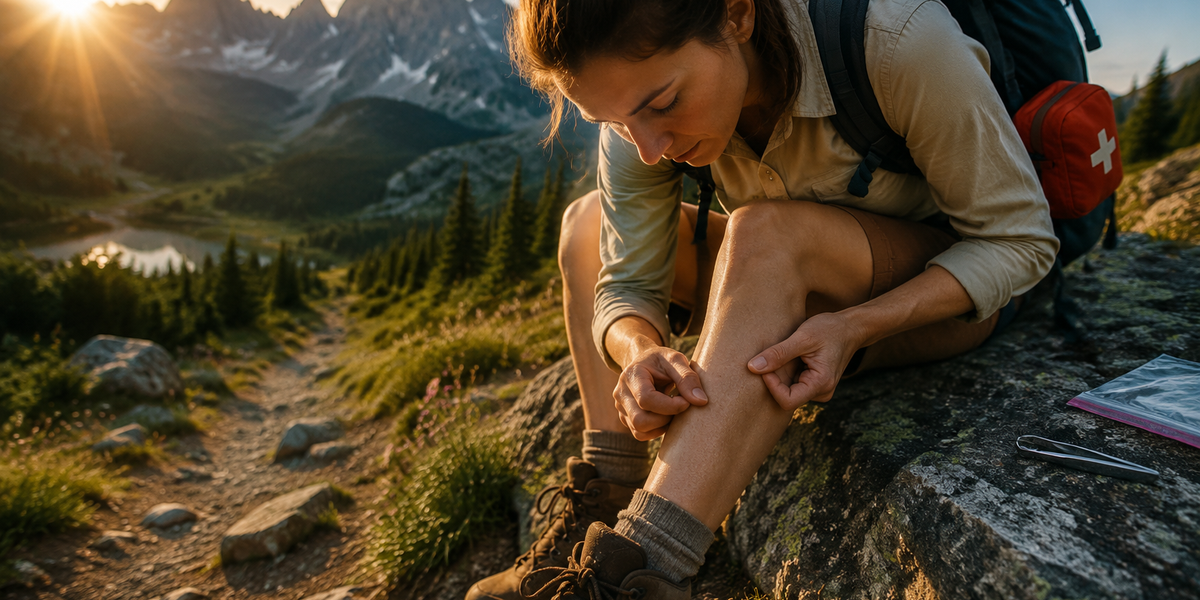
Perform a quick tick check every 2–3 hours during your hike. Focus on warm, hidden areas: behind the knees, groin, armpits, waistband, and hairline. Use a mirror or ask a buddy to check your back.
When daylight fades, a reliable headlamp is invaluable. The Black Diamond Spot 400-R Rechargeable Headlamp delivers 400 lumens and is IPX8 waterproof, so you can inspect every inch without missing a spot.
How to Remove a Tick Safely
If you find an attached tick, don’t panic. Follow these steps:
- Use fine-tipped tweezers to grasp the tick as close to the skin’s surface as possible.
- Pull upward with steady, even pressure. Don’t twist or jerk — this can cause the mouthparts to break off.
- Clean the bite area with rubbing alcohol or soap and water.
- Save the tick in a sealed bag or jar in case you need it for identification later.
What NOT to do: Don’t use heat, petroleum jelly, or nail polish. These methods increase the risk of infection.
Treating Bites and Other Trail Injuries
Even with the best prevention, bites happen. A well-stocked first aid kit is your backup. The Adventure Medical Kits Ultralight Watertight .7 First Aid Kit weighs only 7 oz and comes in a watertight case. It includes antiseptic wipes, bandages, and supplies to treat bug bites, stings, and minor cuts.
💡 Pro Tip: Add a tick removal tool and a small tube of antibiotic ointment to your kit for complete coverage.
Hydration and Safety on the Trail
Staying hydrated keeps you alert for tick checks and overall safety. For backcountry trips, a reliable water filter is essential. The Sawyer Squeeze Water Filter System filters to 0.1 micron, removes bacteria and protozoa, and weighs just 3 oz. It’s a perfect companion for any hiking adventure.
Frequently Asked Questions
What is the best tick repellent for hiking?
Permethrin-treated clothing is the gold standard. For skin, use a DEET-based repellent (20–30%) on exposed areas. Avoid combining with sunscreen to prevent irritation.
How long after a tick bite do Lyme symptoms appear?
Symptoms typically appear 3–30 days after a bite. Early signs include a bull’s-eye rash (erythema migrans), fever, chills, and fatigue. If you notice any, see a doctor immediately.
Can ticks survive in cold weather?
Yes. Ticks can be active when temperatures are above 40°F (4°C). In many regions, tick season now extends from early spring to late fall.
Should I see a doctor after a tick bite?
If the tick was attached for more than 24 hours, or if you develop a rash or flu-like symptoms, consult a healthcare provider. Prophylactic antibiotics may be recommended.
How do I do a thorough tick check?
Strip down and inspect every part of your body using a mirror and a bright light. Don’t forget behind the ears, in the belly button, and between toes. A headlamp like the Black Diamond Spot 400-R makes this much easier.
Final Thoughts
Ticks are a reality for hikers, but they don’t have to keep you off the trail. By treating your gear with permethrin, performing regular checks, and carrying the right tools, you can enjoy the outdoors with peace of mind. Remember: early detection and proper removal are your best defenses against Lyme disease.
Gear up, stay vigilant, and keep hiking.
Editor's Choice
- Sawyer Products Premium Permethrin Insect Repellent for Clothing — The single most effective tick prevention product for hikers.
- Adventure Medical Kits Ultralight Watertight .7 First Aid Kit — Lightweight, watertight, and perfect for treating bites and stings.
- Black Diamond Spot 400-R Rechargeable Headlamp — Bright, waterproof, and rechargeable — ideal for evening tick checks.
