Disclosure: As an Amazon Associate, HikePod earns from qualifying purchases at no extra cost to you.
⭐ Our Top Pick
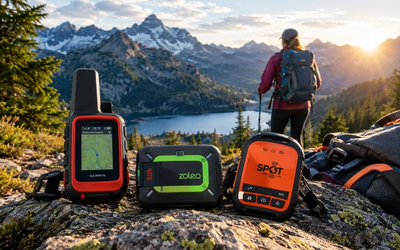
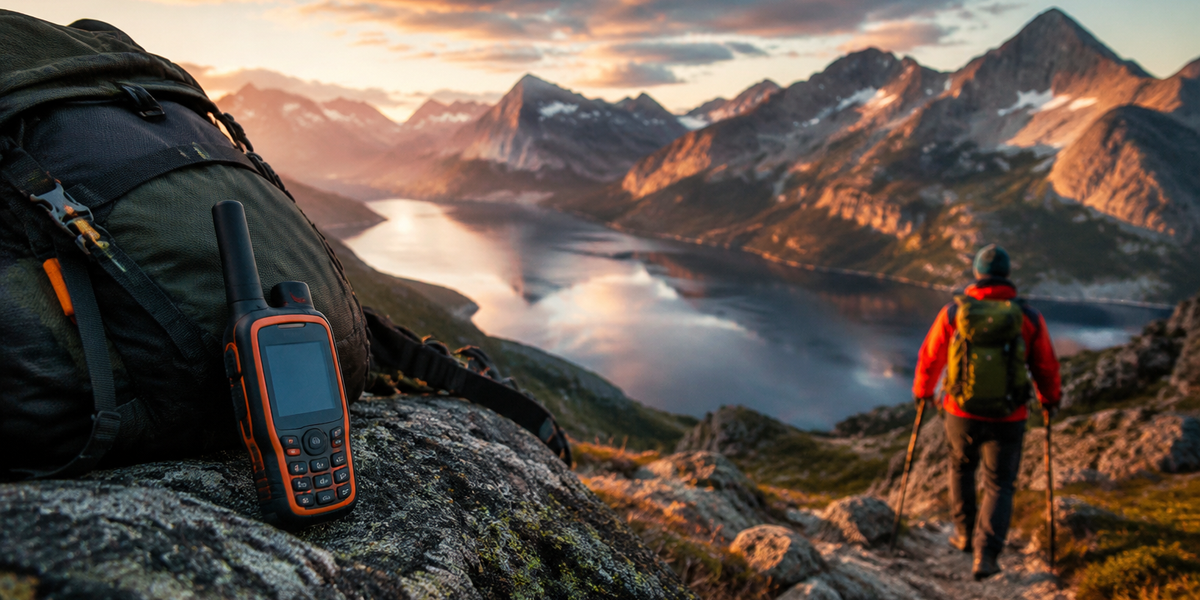
🏆 Best Overall: Garmin inReach Mini 2 — the most reliable way to call for help and stay in touch when you're beyond cell coverage, though the subscription cost adds up fast.
💰 Best Value: Garmin eTrex 22x GPS — one-time purchase with no monthly fees gives you solid navigation without the satellite communication premium.
Introduction
You're staring at a $350 satellite messenger in your cart, plus a $15–$65 monthly subscription that never ends. Your hiking buddy swears by it. Your spouse wants you to carry one. But you've hiked for years with just your phone and a paper map, and you've been fine.
So when do you actually need a satellite messenger—and when is it expensive overkill?
After comparing dozens of models and analyzing thousands of verified buyer reviews from solo backpackers, SAR volunteers, and thru-hikers, we've mapped out exactly when satellite messengers earn their keep and when simpler (cheaper) gear does the job. Whether you're a weekend warrior on marked trails or planning your first multi-day trek into true backcountry, this guide will help you spend your money where it actually matters.
What to Look For
Before you buy any backcountry communication device, nail down these decision points:
Cell coverage on your routes — Pull up your carrier's coverage map and cross-reference it with your planned trails. If 80% of your hikes stay within signal range, a satellite messenger is expensive insurance you'll rarely use.
Hiking style and group size — Solo hikers face higher risk and benefit more from two-way SOS. Groups of three or more can share one device and split subscription costs.
Terrain and remoteness — Day hikes on popular trails with high foot traffic? You'll likely encounter other hikers if something goes wrong. Multi-day routes in真正 wilderness where you won't see another human for 48+ hours? That's satellite messenger territory.
Subscription costs vs. peace of mind — A Garmin inReach Mini 2 costs $15/month minimum (10 messages) or $65/month for unlimited. Over two years, that's $360 to $1,560 on top of the $350 device. Be honest: will you actually use it enough to justify that?
Battery life and backup power — Satellite devices sip power (the inReach Mini 2 lasts up to 14 days), but you still need a charging plan. Pair with a 10,000mAh power bank for trips longer than a week.
Alternatives you already own — A Suunto A-10 compass and downloaded offline maps cost under $20 total and handle navigation on 90% of trails. Add a handheld GPS like the Garmin eTrex 22x for $180 one-time and you've got bulletproof navigation without subscriptions.
💡 Pro Tip: Start your first season with a basic GPS and compass. If you find yourself consistently hiking beyond cell range or going solo into remote areas, then upgrade to a satellite messenger. You'll know your actual use case instead of guessing.
When You Actually Need a Satellite Messenger
Satellite messengers solve one problem extremely well: two-way communication when cell towers are 50+ miles away. Here's when that capability is worth the cost.
Solo backpacking beyond day-hike range — If you're alone and more than 6–8 hours from a trailhead, a twisted ankle or sudden illness becomes a genuine emergency. The Garmin inReach Mini 2 lets you trigger SOS and communicate your condition and location to rescue coordinators, which can mean the difference between a helicopter evac and a ground crew that arrives 12 hours later.
Thru-hiking or extended wilderness trips — On the Pacific Crest Trail, Continental Divide Trail, or any route where you're 5+ days from resupply, satellite messaging becomes your supply-drop coordinator, weather forecaster, and emergency lifeline rolled into one 3.5-ounce device.
Family peace of mind (and it's non-negotiable) — If carrying a satellite messenger is the only way your partner or parents will support your solo hiking habit, the subscription cost is cheaper than relationship friction. The inReach Mini 2's tracking feature lets loved ones follow your progress on a web map in near-real-time.
High-consequence terrain — Mountaineering above treeline, winter camping, or desert crossings where water sources are 20+ miles apart all raise the stakes. These environments don't forgive mistakes, and a satellite messenger buys you a safety margin.
When You Don't Need One (And What to Carry Instead)
Most weekend hikers overestimate their risk and underestimate their existing gear. Here's when you can skip the satellite messenger and still hike safely.
Popular trails with consistent foot traffic — If you pass 10+ other hikers per day, someone will find you if you're injured. Carry a whistle, a Sawyer Squeeze water filter (the one piece of gear every hiker should have), and a basic first-aid kit. Save the $350.
Day hikes within cell range — Download offline maps to your phone (AllTrails, Gaia GPS) and carry a cheap Suunto A-10 compass as backup. Your phone's GPS works fine without signal—it just can't load new map tiles.
Group hikes with experienced partners — Three or more hikers can self-rescue in most scenarios. One person stays with the injured hiker while another hikes out for help. Satellite messengers shine for solo and duo hikers, not groups.
Budget-conscious beginners — If you're still figuring out whether you'll hike regularly, a Garmin eTrex 22x GPS gives you excellent navigation with TopoActive maps and 25-hour battery life for $180 one-time. No subscription, no monthly guilt when you don't hike for two months straight.
💡 Pro Tip: The best "emergency device" is prevention. Learn basic navigation, carry the 10 Essentials, check weather forecasts, and tell someone your route and return time. A $20 compass and solid skills beat a satellite messenger with dead batteries.
The Garmin inReach Mini 2: When the Subscription Makes Sense
| Criteria | Score |
|----------|-------|
| Coverage & Reliability | 10/10 |
| Battery Life | 9/10 |
| Weight & Packability | 10/10 |
| Value (Cost vs. Benefit) | 7/10 |
The Garmin inReach Mini 2 dominates the satellite messenger category because it does one thing perfectly: connect you to the Iridium satellite network from literally anywhere on Earth. Pole to pole, ocean to desert, if you can see sky, you can send a message.
At 3.5 ounces, it's lighter than most smartphones. Battery lasts up to 14 days in tracking mode (10-minute intervals) or 30+ days if you only check in once daily. The built-in SOS button connects directly to GEOS 24/7 emergency response, and you can send two-way messages to update rescuers on your condition while they're en route.
The catch? Subscriptions start at $14.95/month for a safety plan (10 messages) and scale to $64.95/month for unlimited messaging. You can suspend service during off-season, but Garmin charges a $25 reactivation fee. Over a two-year hiking career, you're looking at $360 to $1,560 in subscription costs on top of the $350 device.
Based on verified buyer reviews, the inReach Mini 2 earns its keep for solo backpackers who hike beyond cell range at least once per month, thru-hikers, and anyone whose hiking style would genuinely change without two-way emergency communication.
✅ Pros:
- Global satellite coverage with two-way messaging
- SOS connects to 24/7 emergency response center
- Tracks your route and shares location with family
- Tiny, lightweight, and rugged (IPX7 waterproof)
❌ Cons:
- Ongoing subscription cost adds up fast ($180–$780/year)
- Small screen makes typing messages tedious
- $25 reactivation fee if you suspend service
The Garmin eTrex 22x: Navigation Without the Subscription
| Criteria | Score |
|----------|-------|
| Map Quality | 9/10 |
| Battery Life | 10/10 |
| Ease of Use | 7/10 |
| Value (Cost vs. Benefit) | 9/10 |
If you need reliable navigation but don't require emergency messaging, the Garmin eTrex 22x is the move. For $180 one-time, you get preloaded TopoActive maps covering the entire U.S., 25-hour battery life on two AA batteries, and a rugged waterproof housing that's survived thousands of muddy, rainy, dropped-on-granite field tests.
It's heavier than a phone (5 ounces vs. 6–7 ounces for an iPhone), but it works in conditions that kill smartphones: freezing temps, full-day rain, and direct sunlight that renders phone screens unreadable. The 2.2-inch color screen is small by 2026 standards, but the interface is simple and the GPS accuracy is excellent (often outperforming phones in dense tree cover).
Buyer reviews consistently praise the eTrex 22x for "just working"—no subscriptions, no app updates that break features, no connectivity requirements. Load your route, follow the breadcrumb trail, done. It won't call for help, but paired with a Suunto A-10 compass and offline phone maps, you've got triple-redundant navigation for under $200 total.
✅ Pros:
- One-time $180 purchase with zero subscription fees
- 25-hour battery on replaceable AA batteries
- TopoActive maps preloaded for entire U.S.
- Rugged, waterproof, and works in extreme conditions
❌ Cons:
- No emergency SOS or messaging capability
- Small screen and dated interface feel clunky compared to phones
- Heavier than smartphone navigation
Frequently Asked Questions
Do satellite messengers work under tree cover?
Yes, but with delays. Devices like the Garmin inReach Mini 2 use the Iridium satellite network, which has better canopy penetration than GPS-only systems. You'll get a message through even in dense forest, but expect 5–20 minutes for a signal lock vs. 30 seconds in open terrain. For SOS situations, the device keeps retrying until it connects.
Can I share one satellite messenger among a group?
Absolutely. If you're hiking with two or three partners, one inReach Mini 2 covers the whole group. Split the $350 device cost and the monthly subscription three ways, and suddenly you're paying $5–$22/month per person for backcountry insurance. This is the most cost-effective way to add satellite capability.
What happens if I press the SOS button by accident?
The inReach Mini 2 requires you to lift a protective cover and then hold the SOS button for several seconds, which prevents almost all accidental activations. If you do trigger it by mistake, you have a brief window to cancel before GEOS dispatches rescue. After that, you'll get a message asking to confirm the emergency. False alarms happen, but they're rare and GEOS understands—just respond immediately to cancel.
Are satellite messengers worth it for international hiking?
Yes, especially in countries where rescue infrastructure is inconsistent. The Garmin inReach Mini 2 works identically in Patagonia, the Alps, or Nepal. Domestic rescue coordination through GEOS is included in your subscription; international rescue may involve additional costs depending on the country, but you'll at least be able to call for help and communicate your location.
How do I know if I have cell service on a trail?
Before your hike, check your carrier's coverage map and cross-reference with trail maps. Download offline maps (AllTrails, Gaia GPS, OnX Backcountry) to your phone and test them in airplane mode at home. Assume you'll have less coverage than the map shows—carriers overstate their reach, especially in mountain terrain.
Final Thoughts
Satellite messengers aren't magic safety devices that make risky decisions safe. They're communication tools that work when cell towers don't. If you're a solo hiker or small group venturing into genuine backcountry for multiple days at a time, the Garmin inReach Mini 2 is worth every penny of the subscription—it buys you two-way emergency communication and the peace of mind to push your limits responsibly.
But if you're hiking popular trails, staying within cell range, or going out with experienced groups, you don't need a $350 device plus $180–$780/year in subscriptions. A Garmin eTrex 22x GPS and a Suunto A-10 compass give you bulletproof navigation for under $200 one-time, and your money is better spent on quality boots, a shelter upgrade, or more trips.
The best safety device is still the one between your ears. Learn navigation, practice your skills, carry the 10 Essentials, and make conservative decisions. Then choose the communication gear that matches your actual risk profile, not your anxiety level.
Editor's Choice
Garmin inReach Mini 2 Satellite Communicator — The gold standard for solo backpackers and thru-hikers who need two-way emergency messaging beyond cell range; subscription costs add up, but the capability is unmatched.
Garmin eTrex 22x Handheld GPS — Best value for hikers who need serious navigation without satellite communication; one-time $180 purchase with zero monthly fees and 25-hour battery life.
Suunto A-10 Field Compass — The $20 backup every hiker should carry regardless of tech; works in any weather, never needs batteries, and weighs less than an ounce.