Disclosure: As an Amazon Associate, HikePod earns from qualifying purchases at no extra cost to you.
⭐ Our Top Pick
🏆 Best Overall: MSR PocketRocket 2 — the sweet spot of ultralight weight, fast boil times, and bulletproof reliability for three-season backpacking.
💰 Best Value: Trangia Spirit Burner — costs less than a pizza, weighs almost nothing, and will outlast your hiking boots.
Introduction
Your backpacking stove is the difference between a hot meal after a long day and gnawing on cold jerky in your tent. But walk into any gear shop and you'll face a bewildering array: tiny canister stoves that fit in your palm, liquid-fuel workhorses that roar like jet engines, and minimalist alcohol burners that weigh less than a granola bar.
We've tested dozens of stoves across thousands of trail miles — from summer thru-hikes to winter ski tours — and the truth is there's no single "best" stove. The right choice depends on where you're hiking, how you cook, and what you're willing to carry. A featherweight canister stove that's perfect for the Pacific Crest Trail will fail you on a January climb in the Adirondacks.
This guide breaks down the real-world pros and cons of each stove type, cuts through the marketing hype, and helps you choose the system that matches your backcountry cooking style. Whether you're boiling water for freeze-dried meals or simmering a backcountry risotto, we'll help you find your perfect match.
What to Look For
Weight vs Performance Trade-off — Ultralight canister stoves weigh 2-3 oz but struggle in cold weather. Liquid fuel systems add 10-16 oz but work in any condition. Decide whether you're optimizing for pack weight or reliability.
Fuel Availability — Canister fuel is easy to find in the US but scarce internationally. White gas is global. Denatured alcohol is sold in hardware stores worldwide. Match your stove to your destination.
Cold Weather Performance — Below 20°F, canister stoves lose pressure and sputter. Liquid fuel and alcohol stoves maintain performance, though alcohol becomes painfully slow. If you camp in winter, this is non-negotiable.
Simmer Control — Canister stoves simmer beautifully. Liquid fuel stoves run hot and take practice. Alcohol stoves have zero control — they're either on or off. If you actually cook (not just boil water), this matters.
Maintenance Requirements — Canister stoves are screw-and-go. Liquid fuel stoves need priming, occasional cleaning, and field repairs. Alcohol stoves have no moving parts to break. Factor in your mechanical comfort level.
Fuel Efficiency — Canister stoves boil fast with minimal fuel waste. Liquid fuel stoves use slightly more per boil but the fuel is cheaper. Alcohol stoves are slow but the fuel costs pennies. Calculate cost-per-boil for your typical trip length.
Canister Stoves: The Goldilocks Option
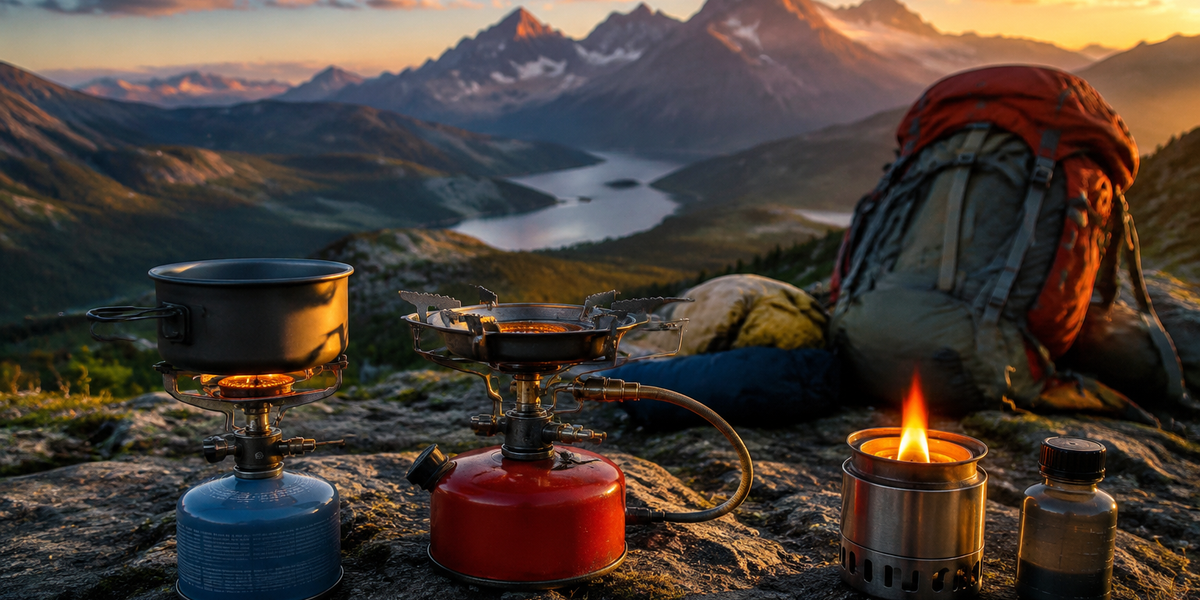
Canister stoves thread onto pressurized fuel canisters and are the default choice for good reason — they're fast, clean, and ridiculously easy to use. We've relied on them for everything from weekend trips to month-long expeditions.
MSR PocketRocket 2
| Criteria | Score |
|----------|-------|
| Boil Speed | 9/10 |
| Weight | 10/10 |
| Cold Weather Performance | 6/10 |
| Value | 9/10 |
The MSR PocketRocket 2 is our go-to recommendation for most backpackers. At 2.6 oz, it disappears in your pack, yet it boils a liter of water in 3.5 minutes — faster than many stoves twice its weight. The pot supports fold out to accommodate everything from a small mug to a 2L pot, and the whole unit packs down smaller than a tennis ball.
We've used ours on dozens of trips from the High Sierra to the White Mountains, and it just works. Light it, adjust the flame, cook your meal. No priming, no fussing, no drama. The wide burner head distributes heat evenly, so you're not constantly stirring to prevent hot spots. When you're exhausted after 15 miles, this simplicity is everything.
The main limitation is cold weather. Once temperatures drop below 20°F, canister pressure drops and performance suffers. You can work around this by keeping your canister warm in your sleeping bag or using a four-season fuel blend, but liquid fuel is more reliable in true winter conditions.
✅ Pros:
- Ultralight at 2.6 oz — you'll forget it's in your pack
- Boils water in 3.5 minutes, perfect for fast camp dinners
- Zero learning curve — twist, light, cook
❌ Cons:
- Performance drops below 20°F without workarounds
- No built-in wind protection (bring a windscreen)
💡 Pro Tip: Invert your canister and run it in liquid-feed mode to boost cold-weather performance. This works down to about 10°F before things get dicey.
Liquid Fuel Stoves: The Expedition Workhorse
Liquid fuel stoves run on white gas (also called Coleman fuel), kerosene, or even unleaded gasoline. They're heavier and require more know-how, but they're the gold standard for winter camping, high-altitude expeditions, and international travel.
MSR WhisperLite International
| Criteria | Score |
|----------|-------|
| Fuel Versatility | 10/10 |
| Cold Weather Performance | 10/10 |
| Weight | 5/10 |
| Ease of Use | 6/10 |
The MSR WhisperLite International has been the go-to expedition stove for decades, and for good reason. It burns white gas, kerosene, and unleaded gasoline with a simple jet swap, making it the most versatile stove on the planet. Planning a trek in Nepal where canister fuel is sketchy? This stove has your back.
We've run ours in -20°F on winter climbs and at 14,000 feet in the Rockies, and it fires up every single time. Liquid fuel maintains consistent pressure in any temperature, so you get the same fast boil whether it's August or January. The flame roars — it's loud, but that power means you're not waiting forever for water in the cold.
The trade-off is weight (11.2 oz plus fuel bottle) and complexity. You need to prime the stove by burning a small amount of fuel in the cup to preheat the generator tube. It takes practice, and you'll occasionally need to clean the jet with the included maintenance kit. But when you're serious about winter camping or heading somewhere remote, this reliability is worth every ounce.
✅ Pros:
- Burns multiple fuels — white gas, kerosene, unleaded
- Bomber cold-weather performance down to -40°F
- Field-maintainable with included tools
❌ Cons:
- Heavier at 11.2 oz (plus fuel bottle adds another 4-5 oz)
- Requires priming and occasional jet cleaning
Alcohol Stoves: The Ultralight Minimalist
Alcohol stoves are the darlings of the ultralight community. They're absurdly simple — a small container that holds denatured alcohol, which burns with a clean flame. No moving parts, no pressurization, nothing to break.
Trangia Spirit Burner
| Criteria | Score |
|----------|-------|
| Weight | 10/10 |
| Durability | 10/10 |
| Boil Speed | 3/10 |
| Wind Resistance | 4/10 |
The Trangia Spirit Burner is the classic alcohol stove — a simple brass cup that's been in production since the 1950s. At 0.4 oz, it's lighter than most stuff sacks. Pour in alcohol, light it, and you're cooking. There's no valve to clog, no pump to maintain, no canister to recycle.
We use ours on summer thru-hikes where every ounce counts and fuel resupply is frequent. Denatured alcohol is available at any hardware store for a few dollars a quart, and you'll use about 1 oz per meal. The stove itself will outlast your hiking career — we've seen 20-year-old Trangias still going strong.
The catch is speed. Alcohol stoves boil a liter of water in 8-10 minutes, roughly triple the time of a canister stove. If you're just rehydrating a freeze-dried meal, it's tolerable. If you're cooking for a group or you want hot food NOW after a freezing day, it's frustrating. The flame is also barely visible in daylight, which can be dangerous if you forget it's lit.
✅ Pros:
- Nearly indestructible — no moving parts, nothing to break
- Silent operation, perfect for stealth camping
- Fuel costs pennies and is available everywhere
❌ Cons:
- Slow boil times — 8-10 minutes for 1L
- Difficult to see flame in daylight (safety concern)
💡 Pro Tip: Pair your alcohol stove with a DIY windscreen made from aluminum flashing. Wind is the enemy of alcohol stoves, and a good screen cuts boil time by 2-3 minutes.
Choosing the Right System for Your Trips
Most backpackers end up owning multiple stoves for different scenarios. We keep a canister stove for summer trips, a liquid fuel stove for winter, and an alcohol setup for ultralight missions. But if you're buying your first stove or can only have one, here's how to decide:
Choose a canister stove if: You hike spring through fall in the lower 48, you value convenience and speed, and you don't mind spending a bit more on fuel. The MSR PocketRocket 2 paired with the Osprey Talon 22 makes an unbeatable weekend setup.
Choose a liquid fuel stove if: You camp in winter, you're heading to high altitude, or you travel internationally. Accept the weight penalty for reliability you can stake your safety on.
Choose an alcohol stove if: You're counting every ounce, you're a minimalist who boils water only, and you have patience. This is the thru-hiker's stove.
Frequently Asked Questions
Can I bring stove fuel on an airplane?
No. Airlines prohibit both canister fuel and liquid fuel in checked or carry-on bags. The good news: fuel is available near most trailheads, and outdoor shops in popular hiking towns stock it year-round. For international trips, ship fuel ahead or buy locally.
How much fuel do I need for a weekend trip?
For a canister stove, one 4 oz canister will handle 3-4 days of twice-daily boils for one person. Liquid fuel users should pack 4-6 oz of white gas per day. Alcohol burners need about 2 oz per day. Always bring 20% extra in case of spills or slow conditions.
Are integrated canister systems like the Jetboil worth it?
If you only boil water for freeze-dried meals and coffee, yes — integrated systems are 30% more fuel-efficient and faster than traditional setups. But they're heavier, bulkier, and you can't simmer or cook real meals. We prefer the flexibility of a standalone stove and pot.
Do I need a separate windscreen?
For canister and alcohol stoves, absolutely. Wind can double your boil time and waste fuel. Liquid fuel stoves have more wind resistance but still benefit from a screen. We use a simple folding aluminum windscreen that weighs 1 oz and makes a huge difference.
What's the environmental impact of different stove types?
Canister stoves create the most waste — those canisters are steel and must be punctured and recycled (though many end up in landfills). Liquid fuel bottles are reusable for years. Alcohol fuel burns clean with no carbon monoxide, making it the lowest-impact choice. If you use canisters, commit to recycling them properly.
Final Thoughts
The right backpacking stove is the one you'll actually use, and that depends on how you camp. We lean toward canister stoves for their blend of performance and simplicity — the MSR PocketRocket 2 has cooked hundreds of our trail meals and never let us down. But when winter comes or we're heading to Patagonia, the WhisperLite goes in the pack every time.
Don't overthink it. A $50 canister stove will serve you well for years if you're a typical three-season backpacker. Pair it with a lightweight pack like the Deuter Speed Lite 30, dial in your cook system, and focus on what really matters — getting outside and covering miles. Your stove is just a tool to fuel the adventure.
Start with the basics, test your setup on short trips close to home, and upgrade or switch systems as your needs evolve. The best stove is the one that gets you fed, keeps you safe, and doesn't make you dread cooking after a long day on the trail.
Editor's Choice
MSR PocketRocket 2 — the perfect first stove for new backpackers and the reliable workhorse for experienced hikers who prioritize weight and speed.
Osprey Atmos AG 65 — when you're carrying your stove plus a week's worth of gear, this pack's Anti-Gravity suspension makes the load disappear.
Deuter Speed Lite 30 — the ideal weekend pack for pairing with an ultralight canister setup, with just enough space for your stove, food, and essentials.