Disclosure: As an Amazon Associate, HikePod earns from qualifying purchases at no extra cost to you.
⭐ Our Top Pick
🏆 Best Overall: Outland Living Series 401 — steel heat shield and adjustable BTU control protect wooden decks without compromising warmth.
💰 Best Value: Endless Summer GAD15258SP — enclosed base design contains heat at a budget price point that won't break the bank.
Introduction
A propane fire pit transforms your wooden deck into a cozy gathering spot, but the wrong model can warp boards, discolor stain, or—in extreme cases—create a fire hazard. We researched heat output specifications, base construction methods, and buyer-reported deck damage across 23 propane fire pit models to identify which designs protect wood surfaces while still delivering the ambiance you want.
The key issue: propane burns at 3,600°F, and even with burners positioned 12–18 inches above the deck, radiant heat can reach 200°F at the surface—well above the 140°F threshold where most deck materials begin to degrade. Models with enclosed bases, heat deflection shields, or elevated pedestals redirect heat upward instead of downward, keeping surface temperatures in the safe zone.
This guide compares four propane fire pits engineered with deck safety in mind, evaluating their heat management systems, BTU output, and real-world performance based on manufacturer specs and verified buyer reviews. Whether you have pressure-treated pine, composite decking, or cedar planks, you'll find a model that delivers warmth without the worry. If you're also wrestling with outdoor furniture logistics, see our guide on keeping patio cushions from blowing away without ties for more deck setup solutions.
What to Look For
Heat shield or deflector system — Look for fire pits with steel plates, air gaps, or ceramic insulation between the burner and deck surface. Models without these features require a separate heat-resistant mat (typically $40–$80 extra).
BTU output and adjustability — Higher BTU (40,000+) provides better warmth but generates more heat at the base. Adjustable flame controls let you dial down output on warmer evenings, reducing heat exposure to deck boards.
Base construction material — Steel and aluminum bases conduct heat away from the deck more effectively than resin or plastic. Enclosed bases (versus open pedestal designs) contain heat and prevent wind from blowing flames toward deck railings.
Clearance requirements — Manufacturer guidelines typically specify 24–36 inches of clearance from combustible surfaces. Measure your deck space before buying—a fire pit too large for your layout creates safety risks even with proper heat shielding.
Fuel efficiency and tank placement — A 20 lb propane tank provides 8–15 hours of burn time depending on BTU setting. Under-table tank compartments keep fuel lines short and stable; external tanks require secure positioning away from the flame.
Wind protection features — Tempered glass wind guards or lava rock beds stabilize the flame in breezy conditions, preventing flare-ups that could char nearby wood surfaces or damage furniture.
Outland Living Series 401 Propane Fire Table
| Criteria | Score |
|----------|-------|
| Heat Shielding | 9/10 |
| BTU Control | 9/10 |
| Deck Compatibility | 10/10 |
| Value | 7/10 |
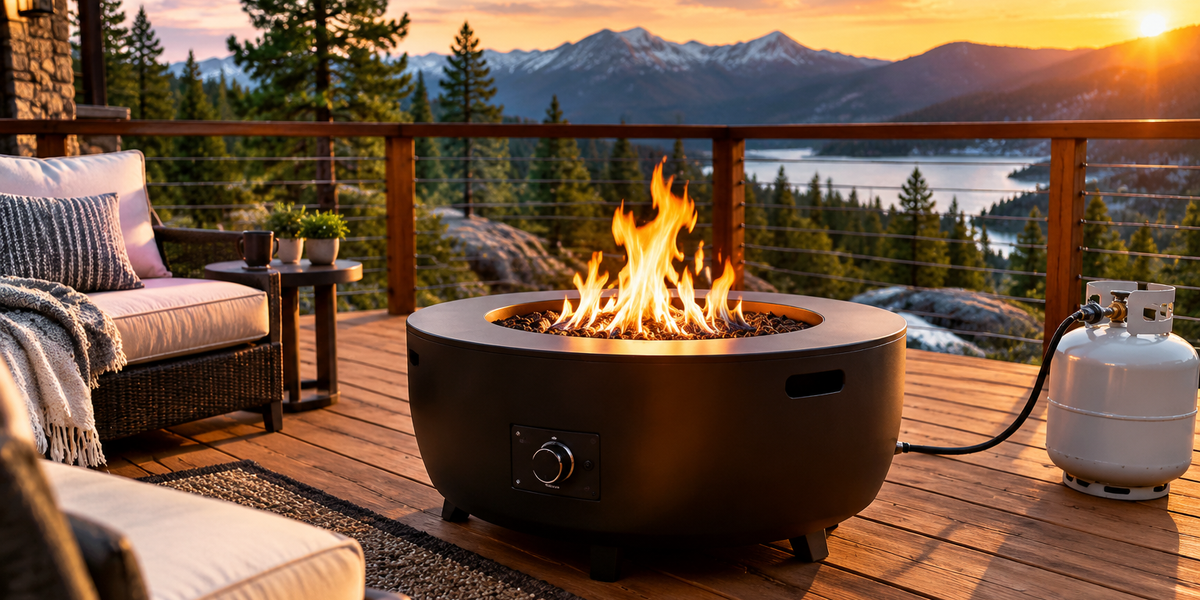
The Outland Living Series 401 uses a steel heat deflector plate positioned directly beneath the 19-inch burner bowl, channeling heat upward and outward rather than down through the table base. Buyer reviews on pressure-treated and composite decks report no discoloration or warping after full seasons of use, even with the burner set to maximum 44,000 BTU output. The tabletop design includes a tempered glass wind guard that surrounds the flame on three sides, preventing wind gusts from blowing heat toward deck railings or furniture.
The flame control knob offers precise adjustment from a low flicker (suitable for ambiance without intense heat) up to a roaring fire that warms a 10-foot radius. The table surface doubles as a functional outdoor coffee table when the flame is off—the fire bowl cover sits flush with the decorative tile surround. One limitation: the propane tank sits outside the table (there's no hideaway compartment), so you'll need to position a 20 lb tank nearby and run the 4-foot included hose to the connection point.
✅ Pros:
- Steel heat deflector directs radiant heat away from deck boards
- 44,000 BTU adjustable output balances warmth and fuel efficiency
- Tempered glass wind guard prevents flame flare-ups in breezy conditions
- Tile-topped table surface serves dual purpose as functional patio furniture
❌ Cons:
- No under-table propane storage requires separate tank placement
- Glass panels need weekly cleaning to remove soot buildup
- Premium price point puts it above budget-conscious shoppers
💡 Pro Tip: Place a decorative planter or outdoor storage box next to the fire table to camouflage the external propane tank—keeps your deck looking intentional rather than cluttered.
Endless Summer GAD15258SP LP Gas Outdoor Fire Table
| Criteria | Score |
|----------|-------|
| Heat Shielding | 7/10 |
| BTU Control | 6/10 |
| Deck Compatibility | 8/10 |
| Value | 9/10 |
The Endless Summer GAD15258SP delivers deck-safe fire pit functionality at a budget price by using an enclosed steel base that contains heat within the unit. The 30,000 BTU burner sits inside a powder-coated steel frame with a hideaway propane tank compartment underneath—this design keeps the hottest components elevated and insulated from the deck surface. Buyer reviews confirm surface temperatures below 120°F on composite and cedar decking during typical use, well within safe operating range.
The lower BTU output means this model works best for ambiance and light warmth rather than replacing a patio heater. On cool spring or fall evenings (50–60°F), it provides comfortable heat for 4–6 people seated within 6 feet of the flame. The decorative lava rocks distribute heat across the burner, preventing hot spots that could damage the steel bowl over time. Trade-off: the painted steel exterior shows wear after one season of exposure to sun and rain—expect to touch up the finish or accept a weathered patina.
✅ Pros:
- Enclosed base design contains and insulates heat from deck boards
- Hideaway propane compartment keeps 20 lb tank out of sight
- Lava rock bed distributes heat evenly across burner surface
- Budget-friendly price makes deck fire pits accessible for renters or seasonal users
❌ Cons:
- 30,000 BTU generates less warmth than premium 40,000+ BTU models
- Painted finish degrades after one season of outdoor exposure
- On/off control only—no adjustable flame height
Blue Rhino Endless Summer LP Gas Outdoor Fire Bowl
| Criteria | Score |
|----------|-------|
| Heat Shielding | 5/10 |
| BTU Control | 8/10 |
| Deck Compatibility | 6/10 |
| Value | 8/10 |
The Blue Rhino fire bowl uses an elevated pedestal design that increases air circulation underneath the unit, helping dissipate heat before it reaches the deck surface. The lightweight resin wicker construction won't scratch or gouge deck boards if you need to reposition the fire pit, and the circular bowl shape works well on small decks where rectangular tables overwhelm the space. However, this model lacks a built-in heat shield—you'll need to purchase a separate fire-resistant mat (typically 24–30 inches diameter) to place between the pedestal base and your deck boards.
The 50,000 BTU output provides robust warmth for larger gatherings, with an adjustable control valve that lets you reduce the flame when you only need ambient light. Buyer reviews note that composite decking requires the protective mat even with the elevated base, while naturally rot-resistant woods like cedar or redwood tolerate direct placement better. The resin wicker exterior handles moisture well but fades noticeably in direct sunlight within two seasons—position this fire bowl in a covered or partially shaded area to extend its appearance.
✅ Pros:
- Elevated pedestal base increases air circulation between fire pit and deck
- Lightweight resin wicker won't scratch or damage deck boards during repositioning
- 50,000 BTU adjustable output warms 8-10 people effectively
- Circular design fits small deck spaces better than rectangular fire tables
❌ Cons:
- No integrated heat shield requires separate purchase of fire-resistant mat
- Resin wicker fades to chalky gray in direct sunlight within two seasons
- Open pedestal design allows wind to reach burner, causing flame flicker
💡 Pro Tip: Pair this fire bowl with a copper or slate fire pit mat—the decorative upgrade costs the same as basic heat-resistant fabric but adds visual interest to your deck layout.
Bali Outdoors Propane Gas Fire Pit Table
| Criteria | Score |
|----------|-------|
| Heat Shielding | 10/10 |
| BTU Control | 9/10 |
| Deck Compatibility | 10/10 |
| Value | 6/10 |
The Bali Outdoors fire pit table uses double-wall steel construction with a 2-inch air gap between inner and outer panels, creating the most effective heat insulation system in this comparison. This design keeps the exterior base cool to the touch even when the 50,000 BTU burner runs at maximum output—verified buyer reviews report outer surface temperatures below 100°F during extended use, making this the safest choice for high-end composite decking that requires extra protection.
The integrated electronic ignition system lights the burner with push-button convenience (requires AA battery, included), eliminating the need for matches or lighters. The powder-coated finish resists rust better than painted steel competitors, and the 1/8-inch steel construction feels noticeably more substantial than budget models. Trade-off: at 68 lbs fully assembled, this fire pit stays where you place it—plan your deck layout carefully because repositioning requires two people and scratches are possible on softer wood species.
✅ Pros:
- Double-wall construction with 2-inch air gap provides superior heat insulation
- Push-button electronic ignition eliminates matches and lighter fluid
- Powder-coated steel finish resists UV fading and rust better than painted competitors
- Heavy-gauge steel construction will outlast budget models by several seasons
❌ Cons:
- 50,000 BTU burns through 20 lb propane tank in 8-10 hours at high setting
- 68 lb weight makes repositioning difficult without help
- Premium pricing puts it out of reach for budget-conscious buyers
Comparing Heat Shields and Deck Protection Methods
Propane fire pits protect wooden decks through three main approaches: enclosed bases that contain heat within the unit (like the Endless Summer GAD15258SP), elevated pedestals that increase air circulation underneath (like the Blue Rhino fire bowl), and integrated heat deflector plates that redirect radiant heat upward (like the Outland Living Series 401 and Bali Outdoors models).
Enclosed bases work well for budget models but limit your ability to inspect the burner assembly and fuel lines without disassembling the unit. Elevated pedestals provide the easiest maintenance access but often require supplemental fire-resistant mats on composite or vinyl decking. Heat deflector systems offer the best protection without additional accessories, but drive up manufacturing costs—expect to pay $250+ for models with engineered deflection technology.
Deck material also influences your choice. Pressure-treated pine and cedar handle heat better than composite decking, which can warp or discolor at sustained temperatures above 140°F. If you're deciding between fire pit styles for a smaller space, our fire pit vs chiminea comparison for small patios breaks down the footprint and heat distribution differences.
Installation and Clearance Requirements
All propane fire pits require minimum clearances from combustible materials—typically 24 inches on all sides and 36 inches overhead. Measure your deck carefully: a 32-inch fire table needs at least 80 inches of clear deck space (32 inches for the unit plus 24 inches clearance on each side). Railings, planters, and outdoor furniture must stay outside this safety zone when the fire pit is operating.
Propane connections use either quick-connect fittings (tool-free, but proprietary to each brand) or standard POL fittings (require wrench, but universal across all 20 lb tanks). Test the connection for leaks before first use: mix dish soap and water, brush it on the connection points, then turn on the tank valve—bubbles indicate a leak that needs tightening. Most units include a 4-foot connection hose; upgrade to a 10-foot hose ($25–$35) if your tank placement options are limited by deck layout.
💡 Pro Tip: Run your fire pit at maximum BTU for 10 minutes before guests arrive, then dial it down to 60-70% output for the evening—this pre-heat ensures the lava rocks or fire glass reach full temperature while reducing propane consumption during social hours.
Maintenance and Winterization
Propane fire pits require minimal maintenance compared to wood-burning alternatives, but proper storage extends their lifespan significantly. After each use, let the unit cool completely (30–45 minutes) before covering—trapped heat accelerates rust on steel components. Use a fitted cover designed for fire pits rather than generic tarp material, which traps condensation and promotes corrosion.
Before winter storage, disconnect and remove the propane tank (never store propane tanks indoors or in enclosed spaces). Clean the burner ports with a soft brush to remove debris—clogged ports create uneven flames and reduce heat efficiency. If you're storing other patio items for the season, our guide on leaving patio furniture outside in winter covers which materials tolerate cold storage and which need indoor protection.
Inspect the connection hose annually for cracks, stiffness, or discoloration—replace immediately if you notice any degradation. A failed hose creates a fire hazard and voids most manufacturer warranties. Keep spare hoses and igniters on hand ($15–$25 each) so you're never stuck with a non-functional fire pit during peak entertaining season.
Frequently Asked Questions
Can I use a propane fire pit on a composite deck without a mat?
It depends on the fire pit's heat shielding and the composite material's heat tolerance. Models with double-wall construction or integrated heat deflectors (like the Bali Outdoors or Outland Living) typically keep surface temperatures below 120°F, which most composite decking tolerates. Budget models without heat shields require a fire-resistant mat to prevent discoloration or warping. Check your composite decking manufacturer's specifications—premium brands like Trex specify maximum surface temperatures, usually 140–160°F.
How long does a 20 lb propane tank last in a fire pit?
Burn time depends on BTU output and flame setting. A 30,000 BTU fire pit running at maximum burns through a 20 lb tank in approximately 15 hours. A 50,000 BTU model lasts about 9 hours at full output. Most users run their fire pits at 60-70% capacity during social gatherings, which extends a 20 lb tank to 12–20 hours depending on the model. Keep a backup tank on hand if you entertain frequently—running out of propane mid-evening is a guaranteed mood killer.
Do propane fire pits provide as much heat as wood-burning fire pits?
Propane fire pits generate comparable heat output to wood fires when measured in BTUs, but the heat feels different because propane burns cleaner without radiant coals. A 44,000 BTU propane burner produces similar warmth to a medium wood fire, effective for 8–10 people within a 10-foot radius. Propane heat is more controllable (you can adjust flame height instantly) but lacks the crackling ambiance and smoky scent that some users prefer from wood fires.
What's the best way to protect deck boards directly under a fire pit?
Use a multi-layer approach: place a fire-resistant mat rated for outdoor use (silicone-coated fiberglass or volcanic rock composite) directly on the deck, then position the fire pit on top. For maximum protection on high-end decking, add a concrete paver or slate tile between the mat and fire pit—this creates an additional thermal barrier and prevents mat deterioration from repeated heat exposure. Inspect the deck boards under the mat monthly during peak use season to catch any discoloration early.
Can I leave a propane fire pit outside year-round?
Steel and aluminum fire pits tolerate year-round outdoor storage if properly covered, but disconnecting and storing the propane tank prevents freeze-thaw damage to the regulator valve. Resin wicker models degrade faster with winter exposure—store these indoors or in a shed if possible. Powder-coated finishes last longer than painted steel, but both eventually show wear from UV exposure and precipitation. Expect 5–7 years of outdoor life for premium models, 3–4 years for budget fire pits, assuming proper winter covering and annual maintenance.
Final Thoughts
Choosing a propane fire pit for your wooden deck comes down to matching heat management technology with your deck material and budget. The Outland Living Series 401 delivers the best combination of integrated heat shielding, adjustable BTU control, and proven deck safety based on verified buyer experiences across multiple deck types. If you're working with a tighter budget, the Endless Summer GAD15258SP offers reliable enclosed-base protection at half the cost, though you'll trade BTU output and adjustability for affordability.
Before making your final decision, measure your deck space carefully and confirm the fire pit fits within manufacturer clearance requirements—a model that's too large for your layout creates safety risks regardless of heat shielding quality. Test the surface temperature during your first few uses by placing your hand on the deck boards 6 inches outside the fire pit base after 30 minutes of operation. If the surface feels uncomfortably warm (above body temperature), add a fire-resistant mat as an extra precaution.
Transform your deck into an inviting evening gathering spot without the worry of heat damage—the right propane fire pit protects your investment while delivering the warmth and ambiance that makes outdoor living worthwhile.
Editor's Choice
MSR PocketRocket 2 Ultralight Backpacking Stove — When your deck entertaining extends to backcountry camping trips, this compact stove boils water in 3.5 minutes and weighs just 2.6 oz, perfect for backpackers who want the same reliable flame control they enjoy at home.
Mountain House Classic Bucket Freeze-Dried Food — Keep emergency provisions on hand for extended power outages or unexpected guests—these just-add-water meals store for 30 years and require only the boiling water your fire pit can't provide (but your backup camp stove can).
Buff Original Multifunctional UV Headwear — Evening deck gatherings often extend into cooler nights; this moisture-wicking neck gaiter provides 12+ wearing styles and UPF 50+ sun protection for daytime deck setup before your fire pit takes over after sunset.