Disclosure: As an Amazon Associate, HikePod earns from qualifying purchases at no extra cost to you.
⭐ Our Top Pick
🏆 Best Overall: Osprey Talon 22 — the Goldilocks capacity for day hikes (22L) with ultralight construction and integrated hydration at just 1.06 lbs.
💰 Best Value: Deuter Speed Lite 30 — stretches to 30L for gear-heavy days or light overnights, well under $110 with ventilated hip belt.
Introduction
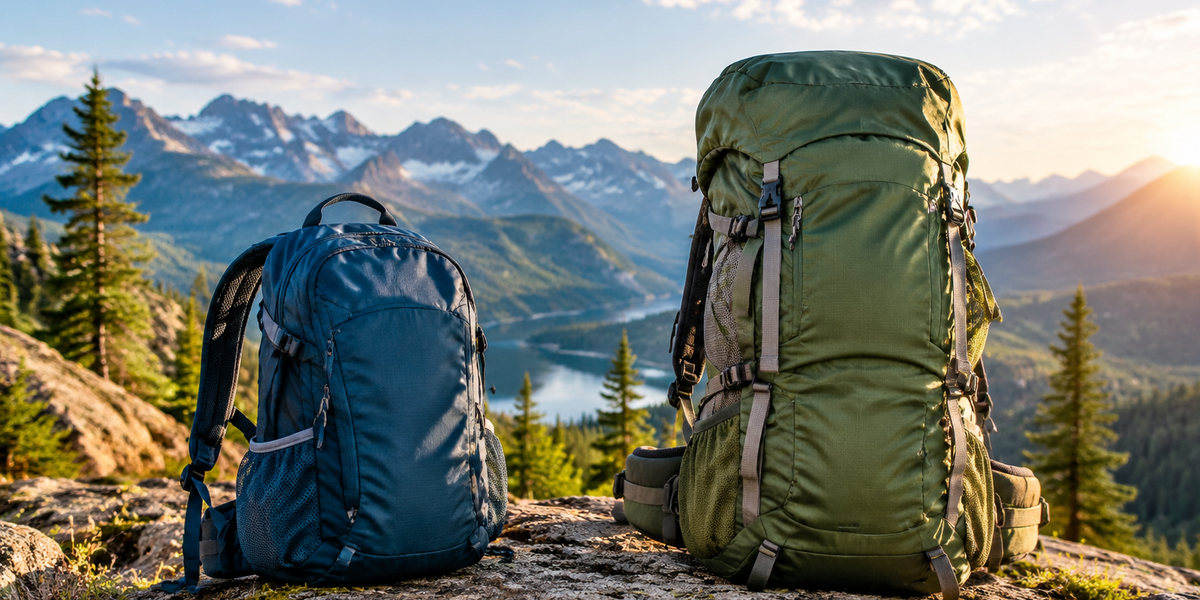
You're standing in the gear aisle staring at two packs. One's labeled "daypack," the other "hiking backpack." Both claim they're perfect for day hikes. The difference? About 20 liters of capacity, a pound of weight, and $100. Which one actually belongs on your back?
We've compared dozens of packs across the capacity spectrum, from minimalist 18L daypacks to 65L backpacking behemoths, cross-referencing manufacturer specs with thousands of verified buyer reviews. The line between daypack and hiking backpack isn't just about size — it's about how suspension systems, feature sets, and intended use cases translate to comfort and functionality on the trail.
This guide breaks down the real differences, shows you what capacity you actually need for different day hike scenarios, and helps you avoid the #1 mistake day hikers make: buying a pack sized for the gear they think they need instead of the gear they actually carry. If you're also dialing in your trekking setup, see our Do Trekking Poles Actually Help on Steep Descents? What the Research Says (2026) guide for data-backed pole recommendations.
What to Look For
Capacity (Liters): Daypacks run 18-25L, hiking backpacks 25-40L. For 90% of day hikers, 20-25L holds the Ten Essentials, lunch, extra layer, and 2L of water. Go bigger only if you carry camera gear, winter layers, or share group equipment.
Suspension System: Daypacks use frameless or minimal framesheet designs that keep weight under 1.5 lbs. Hiking backpacks add internal frames and load-lifting straps, which matter once pack weight exceeds 15 lbs (rare on day hikes). If your loaded pack weighs under 12 lbs, frameless rides more comfortably.
Hydration Compatibility: Internal sleeve for a reservoir is non-negotiable in 2026. External bottle pockets work, but stopping to retrieve a bottle kills momentum on technical terrain. Verify the sleeve fits 2-3L reservoirs, not just the 1.5L that came with your old CamelBak.
Hip Belt & Sternum Strap: Even on a daypack, a padded hip belt transfers weight off your shoulders once you're carrying 8+ lbs. Webbing-only belts are fine for ultralight setups under 6 lbs. The sternum strap should adjust vertically — fixed-position straps never land in the right spot.
Load Lifters: These angled straps connect the pack's top to your shoulder straps, pulling load closer to your back. Essential on 30L+ packs, overkill on sub-20L daypacks. The test: if your pack has a frame, it should have load lifters.
External Attachment Points: Trekking pole loops, ice axe loops, and gear loops matter more than you think. Stow-on-the-Go systems (Osprey's term) let you attach poles without removing your pack — a game-changer when terrain shifts from scramble to trail every half mile.
💡 Pro Tip: Lay out every item you carried on your last three day hikes. Measure total volume with a stuff sack or dry bag. That's your real capacity need — usually 5-10L less than you think.
The Case for a True Daypack (18-25L)
Daypacks shine when you're committed to day hiking and nothing else. The Osprey Talon 22 represents the category's best balance of capacity, weight, and features — enough room for the Ten Essentials plus lunch and a puffy, light enough to forget it's there.
Osprey Talon 22 Hiking Daypack
| Criteria | Score |
|----------|-------|
| Capacity (Liters) | 8/10 |
| Weight | 10/10 |
| Ventilation | 8/10 |
| Value | 9/10 |
At 1.06 lbs empty, the Talon 22 disappears on your back once you dial in the adjustment. The AirScape back panel (Osprey's ridged foam design) creates ventilation channels without the bulk of a trampoline mesh system. The integrated hydration sleeve fits a 3L reservoir, and the Stow-on-the-Go trekking pole loops let you secure poles with one hand while hiking.
The 22L main compartment swallows a 2L hydration reservoir, rain shell, insulating layer, first aid kit, headlamp, and lunch for a 6-8 hour day hike. Dual hipbelt pockets (one zippered, one stretch mesh) keep snacks and phone accessible. The front stretch mesh pocket is brilliant for a wet rain jacket you need to dry out while hiking.
Buyer reviews confirm the torso adjustment (via sliding back panel) fits a wide range of body types, though users under 5'2" report the hipbelt sits slightly high even on the smallest setting. The pack's only real limitation is winter hiking — adding an extra insulating layer, microspikes, and emergency bivy pushes the 22L envelope.
✅ Pros:
- At 1.06 lbs, you'll forget you're wearing it on 10+ mile days
- Stow-on-the-Go pole attachment works while pack is on your back
- Hydration sleeve routing keeps hose from freezing against back panel
❌ Cons:
- 22L gets tight when carrying group safety gear or winter extras
- Hipbelt pockets won't fit larger phones (iPhone Pro Max, Pixel 7 Pro)
The Case for a Hiking Backpack (25-40L)
Hiking backpacks in the 25-35L range handle day hikes that push into "almost an overnighter" territory — long shoulder seasons where you're carrying microspikes, extra insulation, emergency shelter, and maybe a DSLR with a lens or two.
Deuter Speed Lite 30 Hiking Backpack
| Criteria | Score |
|----------|-------|
| Capacity (Liters) | 9/10 |
| Weight | 8/10 |
| Load Transfer | 8/10 |
| Value | 10/10 |
The Speed Lite 30 splits the difference between frameless daypack and full internal-frame backpacking pack. At 1.5 lbs, it's only 7 oz heavier than the Talon 22, but the VariFlex Eco hip belt (Deuter's flexible internal support system) transfers load to your hips once you're carrying 12-15 lbs. That matters when you're hauling camera gear, a full 3L hydration reservoir, and winter layers on a 12-mile loop.
The 30L capacity (actually measures 32L when you cinch the top compression straps) handles everything the Talon 22 does plus room for a lightweight bivy sack, extra food, or a full set of microspikes and gaiters. The main compartment is top-loading with a floating lid — less convenient than panel-loading for digging out buried items, but the tradeoff is better weather sealing.
Buyer reviews highlight the value proposition: under $110 gets you hydration compatibility, gear loops for ice tools, and enough capacity for gear-heavy day hikes or fastpacking overnights. The Aircomfort back system (tensioned mesh panel) creates more ventilation than foam contact systems, though it adds a small amount of standoff distance that affects balance on technical scrambles.
✅ Pros:
- 30L swallows winter day hiking gear and light overnight setups
- Hip belt load transfer handles 15+ lb loads comfortably
- Best value in the category at $109.95
❌ Cons:
- Top-loading design requires unpacking to reach buried items
- Sternum strap whistle is cheap plastic that whistles on its own in wind
When a Backpacking Pack Is Wrong for Day Hikes
We included the Osprey Atmos AG 65 in this comparison to illustrate a common mistake: buying a 50-65L backpacking pack because "it can do day hikes too." Technically true. Practically miserable.
Osprey Atmos AG 65 Backpacking Pack
| Criteria | Score |
|----------|-------|
| Day Hike Suitability | 2/10 |
| Comfort (Heavy Loads) | 10/10 |
| Weight Penalty | 3/10 |
| Versatility | 6/10 |
The Atmos AG 65 is a phenomenal backpacking pack. The Anti-Gravity suspension (tensioned mesh that wraps your torso) floats the pack off your back, and the adjustable torso length fits nearly everyone. At 4.56 lbs empty, it carries 40+ lb loads more comfortably than any pack in this comparison.
But on a day hike where your total load is 8-12 lbs? You're hauling 3+ lbs of unnecessary pack weight. The suspension system that shines under heavy loads feels floppy and unstable with a light load. The 65L main compartment means your 10 lbs of gear rattles around in 65L of space, shifting your center of gravity with every step.
Buyer reviews from hikers who use the Atmos for day hikes consistently report the same issue: the pack feels "empty" and unbalanced until you cinch every compression strap, at which point you've essentially turned a 65L pack into a badly proportioned 25L pack that weighs twice as much as it should.
✅ Pros:
- Anti-Gravity suspension is unmatched for multi-day backpacking loads
- Adjustable torso fits nearly any body type perfectly
- If you need one pack for both day hikes and 5-day trips, this handles both
❌ Cons:
- 4.56 lbs empty weight is absurd for carrying 10 lbs of day hiking gear
- Suspension designed for 40+ lb loads feels loose and unstable with light loads
- 65L of empty space means gear shifts and rattles unless you over-compress
💡 Pro Tip: If you day hike 90% of the time and backpack 10%, buy the daypack. Rent or borrow a backpacking pack for those rare trips. Optimizing for the 10% makes the 90% miserable.
What About Hybrid Designs?
The 25-35L range is where pack design gets interesting. These "crossover" packs aim to handle both gear-heavy day hikes and ultralight overnight trips. The Deuter Speed Lite 30 succeeds because it commits to being lightweight first — the VariFlex hip belt adds just enough structure for 15 lb loads without the weight penalty of a full internal frame.
Frameless designs in this capacity range work when you keep base weight under 10 lbs. Once you're carrying a tent, sleeping bag, and pad, frameless packs transfer load poorly. For the full breakdown on when frames matter, see our Frameless Backpack vs Internal Frame: Which Should You Choose for Ultralight Hiking in 2026? guide.
The Gear You're Actually Carrying
Here's what the Ten Essentials plus typical day hiking gear actually weighs and how much space it occupies:
Core Safety & Navigation (2-3 lbs, ~5L):
- Map, compass, GPS device: 0.5 lb
- Headlamp with extra batteries: 0.3 lb
- First aid kit: 0.5 lb
- Fire starter, emergency shelter: 0.5 lb
- Multi-tool or knife: 0.3 lb
- Sun protection, bug spray: 0.5 lb
Hydration & Filtration (4-5 lbs, ~3L):
- 3L hydration reservoir (full): 6.6 lbs
- Water filter like the Sawyer Squeeze: 3 oz
Clothing & Insulation (2-3 lbs, ~8L):
- Rain shell: 0.5 lb
- Insulating layer (puffy or fleece): 1 lb
- Extra base layer: 0.5 lb
- Gloves, hat: 0.3 lb
Food & Trash (1-2 lbs, ~4L):
- Lunch, snacks for 6-8 hours: 1.5 lbs
Total: 10-13 lbs, 20-22L of actual gear
This math explains why the Osprey Talon 22 works for most day hikers — you're using 20L of the 22L capacity, leaving just enough room for a packable rain jacket to dry in the top pocket.
Frequently Asked Questions
Can I use a running vest for day hikes?
Running vests (typically 8-12L) work for fast-and-light summer day hikes under 10 miles where you're moving quickly and not stopping for long breaks. The front pocket accessibility is brilliant for snacks and phone. The limitation: 12L is too tight for the Ten Essentials plus extra layers. Running vests optimize for speed and minimalism. Day hiking optimizes for preparedness and comfort during breaks.
How do I know if I need a hip belt?
Test with your loaded pack: if it weighs more than 8 lbs, a padded hip belt transfers load off your shoulders and reduces fatigue over 6+ miles. If your pack weighs under 6 lbs, hip belts add weight and restrict movement without benefit. The 6-8 lb range is personal preference based on how much shoulder fatigue you tolerate.
Should I size up for winter day hikes?
Maybe. Winter adds microspikes or crampons (1-1.5 lbs, 2L), extra insulation layer (1 lb, 4L), insulated water bottle or reservoir sleeve (0.5 lb, 1L), and possibly an emergency bivy (0.5 lb, 2L). That's 9L of extra gear. If you're already using 20L of a 22L pack in summer, you need 28-30L for winter. The Deuter Speed Lite 30 handles this without jumping to a full backpacking pack.
Can I day hike with a frameless ultralight pack?
Yes, if your total load stays under 15 lbs. Frameless packs like the Gossamer Gear Kumo or Zpacks Nero ride comfortably in the 8-12 lb range day hikers typically carry. Once you're hauling camera gear, extra layers, or group safety equipment that pushes past 15 lbs, the lack of load-lifting straps and hip belt structure starts causing shoulder and neck fatigue. Frameless excels at minimalist setups, not gear-heavy ones.
Do I need a rain cover for my daypack?
Most modern daypacks use water-resistant fabrics and zippers that handle light rain without a cover. For extended downpours, a pack liner (trash compactor bag or dry bag) protects gear better than a rain cover, which tends to blow off in wind and trap condensation inside. If your pack has a bottom compartment for a reservoir, verify it has drain grommets — pooled water in a sealed compartment can soak gear from below.
Final Thoughts
The daypack versus hiking backpack choice comes down to how you actually hike, not how you imagine you'll hike. If your day hikes are 4-8 hours, 5-12 miles, with lunch and the Ten Essentials, a 20-25L daypack like the Osprey Talon 22 gives you everything you need at the lowest weight penalty. The moment you're regularly carrying camera gear, winter safety equipment, or pushing into 10+ hour days, the 28-35L hiking backpack range (Deuter Speed Lite 30) adds capacity without the overkill of a full backpacking pack.
The biggest mistake we see: buying a 40-65L backpacking pack because it "does everything." It doesn't. It makes day hiking miserable by adding 2-3 lbs of pack weight you don't need and suspension systems that feel floppy under light loads. Buy the pack for the hiking you do 80% of the time. For the occasional overnight trip, rent a proper backpacking pack or borrow one.
Start with the capacity calculation in this guide — lay out your actual gear, measure volume, add 10% margin. That number is your real need. Everything else is marketing and fear of being unprepared.
Editor's Choice
Osprey Talon 22 — the best all-around daypack for 90% of day hikers, balancing 22L capacity with ultralight 1.06 lb construction and integrated hydration.
Deuter Speed Lite 30 — the value pick for hikers who need extra capacity for winter gear or light overnights without jumping to a full backpacking pack.
Sawyer Squeeze Water Filter System — weighs just 3 oz, filters to 0.1 micron, and should be in every day hiker's kit regardless of pack choice.