Disclosure: As an Amazon Associate, HikePod earns from qualifying purchases at no extra cost to you.
⭐ Our Top Pick
🏆 Best Overall: Osprey Atmos AG 65 — unmatched comfort for multi-day trips when you need to carry more than ultralight minimalism allows.
💰 Best Value: Deuter Speed Lite 30 — hybrid design delivers surprising load support at 1.5 lbs for weekend warriors going light but not extreme.
Introduction
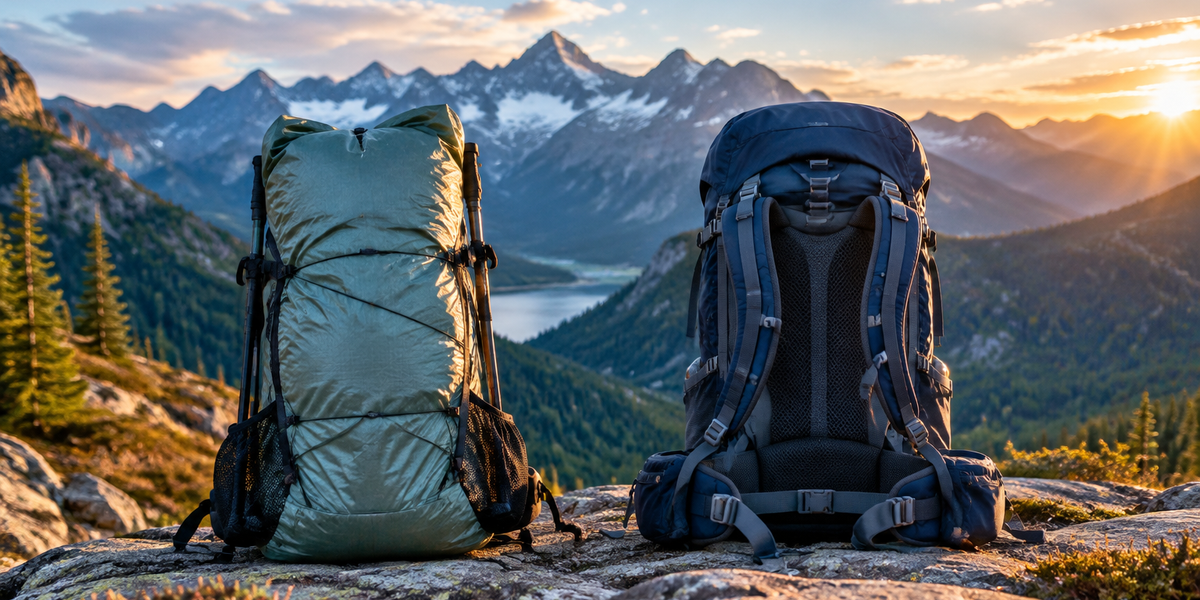
The backpack debate in ultralight hiking circles often comes down to one question: do you really need a frame? Frameless packs promise featherweight simplicity, while internal frame packs deliver proven comfort and load distribution. The right answer depends entirely on your base weight, trip length, and what you're willing to sacrifice.
We've compared dozens of models across both categories, analyzing manufacturer specs, buyer reviews, and real-world use cases from verified purchasers. This guide breaks down the core differences between frameless and internal frame backpacks so you can make an informed choice based on how you actually hike, not just the gear ideology you aspire to.
Whether you're shaving ounces for thru-hiking or prioritizing comfort on weekend trips, understanding these two pack philosophies will help you dial in your load-carrying system. Let's examine what each design brings to the trail.
What to Look For
Base Weight Threshold — Frameless packs shine when your base weight (everything except food, water, and fuel) stays under 15-18 lbs. Beyond that, an internal frame becomes essential for comfortable load transfer to your hips. If you're carrying camera gear, bear canisters, or winter layers, factor that into your decision.
Load Transfer and Hip Belt Design — Internal frames use rigid stays and substantial hip belts to move weight off your shoulders. Frameless packs lack this structure, meaning your shoulders carry more of the burden. Check hip belt width and padding specs—anything under 2 inches wide won't provide meaningful load support.
Pack Capacity vs Actual Volume Needed — Don't confuse capacity with necessity. A 65L internal frame pack tempts you to fill it, while a 30L frameless pack forces ruthless packing discipline. Match capacity to your typical trip length and season. For reference, experienced ultralight hikers often manage 3-day summer trips in 30-35L.
Ventilation and Comfort Features — Internal frames typically include suspended mesh back panels that create airflow between your back and the pack. Frameless packs sit directly against your back, increasing sweat and heat. If you hike in humid climates or run hot, ventilation becomes a significant comfort factor.
Durability and Fabric Weight — Ultralight fabrics (under 3oz per square yard) save weight but tear more easily. Internal frame packs often use burlier fabrics because they're designed to carry heavier loads. Consider your terrain—bushwhacking through Colorado scrub oak demands tougher fabric than maintained Appalachian Trail corridors.
Modularity and Compression — Frameless packs excel at compressing down when partially full. Internal frame packs maintain their shape regardless of contents, which can be an advantage (structure) or disadvantage (bulk when empty). Look for external compression straps and removable components if you want versatility.
Frameless Backpacks: When Simplicity Wins
Frameless packs strip away structural elements to achieve remarkable weight savings, typically landing between 8-16 ounces for a complete pack. This minimalist approach works brilliantly when your gear list is dialed and your base weight stays low.
The philosophy behind frameless designs centers on reducing pack weight so dramatically that you don't need heavy frame systems to carry the load comfortably. It's circular logic that actually works—if your pack itself weighs under a pound and your base weight sits at 12 lbs, you're carrying 13 lbs total before consumables. Most fit adults can manage that on their shoulders without hip belt support.
Buyer reviews consistently praise frameless packs for their packability when empty and their ability to squeeze into tight spaces. Thru-hikers love tossing them in hiker boxes or shipping them ahead without worrying about bent frames. The lack of rigid structure also means these packs conform to your back naturally, though this can be a double-edged sword if you're carrying anything with hard edges.
💡 Pro Tip: Test your frameless pack's comfort threshold by loading it to 20 lbs and hiking 5 miles with elevation gain before committing to a long trip. Your shoulders will tell you honestly whether you've gone too light on structure.
The learning curve with frameless packs involves thoughtful packing. Items with hard edges (like bear canisters) need strategic placement to avoid pressure points. Your sleeping pad often doubles as makeshift back support, rolled inside against the back panel. This requires more attention than simply stuffing gear into a framed pack's cavernous interior.
For day hikes and minimalist overnight trips, the Osprey Talon 22 Hiking Daypack represents an excellent entry point into frameless carrying. While it includes minimal structure (thin framesheet and basic hip belt), it demonstrates the weight savings and simplicity that make frameless designs appealing.
Osprey Talon 22 Hiking Daypack
| Criteria | Score |
|----------|-------|
| Weight-to-Capacity Ratio | 9/10 |
| Load Comfort (under 15 lbs) | 7/10 |
| Packability | 9/10 |
| Ventilation | 8/10 |
The Talon 22 walks the line between true frameless and minimal structure. At 1.06 lbs, it delivers 22 liters of capacity with an integrated hydration sleeve and enough organization pockets to keep essentials accessible. The back panel uses Osprey's AirScape foam that provides some ventilation without adding significant weight.
Verified buyers consistently mention how well this pack disappears on the trail when loaded under 12-15 lbs. The hip belt stabilizes but doesn't truly transfer load, which aligns perfectly with the pack's intended use case. The fabric stands up to light bushwhacking, though ultralight purists might wish for even thinner material to shave additional ounces.
✅ Pros:
- Exceptionally lightweight for the capacity and feature set
- Integrated hydration system simplifies water access
- Compression straps effectively reduce bulk when partially loaded
- Trekking pole attachments and bungee cord add versatility
❌ Cons:
- Hip belt provides stability but not genuine load transfer
- 22L capacity limits overnight trips to minimalist summer conditions
- Not truly frameless for purists seeking absolute weight minimization
Internal Frame Backpacks: When Comfort Matters Most
Internal frame packs use aluminum stays or carbon fiber rods to create a rigid structure that transfers weight from your shoulders to your hips through a padded hip belt. This proven design has dominated backpacking for decades because it works reliably across a wide range of loads and body types.
The frame system creates a load-bearing skeleton that maintains the pack's shape and allows the hip belt to do its job properly. When fitted correctly, an internal frame pack should carry 70-80% of the load weight on your hips, leaving your shoulders to simply stabilize the pack. This becomes transformative on long days when you're carrying water for dry camps or food for extended backcountry trips.
Modern internal frame packs have evolved significantly from the external frame designs your parents used. Today's models integrate the frame into the pack body, creating a sleeker profile that doesn't catch on branches while offering sophisticated suspension systems. Brands like Osprey, Gregory, and Deuter have refined these systems to the point where a well-fitted internal frame pack can feel like it's floating on your back.
Osprey Atmos AG 65 Backpacking Pack
| Criteria | Score |
|----------|-------|
| Load Comfort (30-50 lbs) | 10/10 |
| Adjustability & Fit Options | 9/10 |
| Ventilation | 9/10 |
| Weight Efficiency | 6/10 |
The Atmos AG 65 represents the pinnacle of internal frame comfort technology. Osprey's Anti-Gravity suspension uses a tensioned mesh back panel that creates 1-2 inches of space between your back and the pack body, dramatically improving ventilation while wrapping around your torso for load distribution.
Based on extensive buyer feedback, this pack excels when loaded between 35-50 lbs—exactly the range where frameless packs become uncomfortable. The adjustable torso length accommodates different body types, and the hip belt features dual-density foam that conforms to your hips without creating pressure points. We recommend this pack for hikers who prioritize comfort over weight savings, particularly on multi-day trips where resupply options are limited.
The suspension system truly delivers on its promise. Verified purchasers regularly mention hiking 15+ miles with 45 lb loads and finishing the day without shoulder pain. The ventilation keeps your back noticeably drier than packs that sit directly against your back, a feature that becomes increasingly valuable on humid summer trails.
✅ Pros:
- Anti-Gravity suspension provides exceptional comfort under heavy loads
- Adjustable torso length ensures proper fit across wide height range
- Ventilated back panel significantly reduces sweat buildup
- Multiple external pockets keep frequently used items accessible
- Rain cover included for weather protection
❌ Cons:
- Pack weight of 4.56 lbs makes it heavy for ultralight purists
- Overkill capacity and features for weekend trips under 20 lbs total weight
- Price point requires commitment to multi-day hiking to justify investment
Deuter Speed Lite 30 Hiking Backpack
| Criteria | Score |
|----------|-------|
| Weight-to-Support Ratio | 8/10 |
| Versatility | 9/10 |
| Load Comfort (20-30 lbs) | 7/10 |
| Value | 9/10 |
The Speed Lite 30 occupies interesting middle ground between frameless simplicity and internal frame support. At 1.5 lbs, it weighs barely more than many frameless packs while offering a flexible internal frame and Deuter's VariFlex hip belt that provides surprising load transfer.
This hybrid approach makes the Speed Lite 30 ideal for weekend warriors who want to go light without fully committing to frameless minimalism. The pack comfortably handles 20-30 lb loads—the awkward zone where frameless packs start struggling but full-featured internal frame packs feel excessive. If you're exploring ultralight techniques while building your skills and reducing your base weight, this pack grows with you.
Buyer reviews emphasize the pack's versatility across activities. It works equally well for day hikes, overnight trips, and even ski touring when you swap out the hip belt. The fabric strikes a good balance between durability and weight, and the 30L capacity forces efficient packing without being restrictive.
✅ Pros:
- Lightweight 1.5 lbs with meaningful frame support for its class
- VariFlex hip belt provides better load transfer than most packs this light
- Hydration compatible with clean internal sleeve design
- Price point makes it accessible for hikers testing ultralight approaches
❌ Cons:
- Hip belt won't comfortably carry loads over 30 lbs
- Minimal padding on shoulder straps compared to full-featured packs
- Limited exterior pockets reduce accessibility for frequently used items
Making Your Decision: Match Pack to Purpose
Your ideal pack depends less on which design philosophy sounds appealing and more on honest assessment of how you actually hike. Start by calculating your current base weight—everything in your pack except consumables. If it's over 20 lbs, an internal frame pack will serve you better regardless of your aspirations toward ultralight hiking.
Consider your typical trip length and season. Weekend summer trips on established trails suit frameless packs beautifully, especially if you've invested in ultralight sleep systems and minimal shelters. Multi-day trips in shoulder seasons, winter camping, or routes requiring bear canisters push you toward internal frame designs simply due to necessary gear volume.
Body type and fitness level matter more than many hikers admit. If you're carrying extra body weight or dealing with back issues, the load transfer of an internal frame becomes genuinely important for injury prevention. Conversely, lighter hikers with strong core stability often adapt to frameless packs more easily because they're carrying less total weight proportional to their body.
💡 Pro Tip: Rent or borrow both pack styles for overnight shakedown trips before investing in premium models. Your body will give you honest feedback that no amount of research can replace.
Budget constraints can influence the decision too. Quality frameless packs from cottage manufacturers range from $200-400, while top-tier internal frame packs cost $250-450. However, a $130 hybrid like the Deuter Speed Lite 30 delivers surprising capability for hikers still refining their systems.
If you're also evaluating your complete load-carrying system, our Best Daypacks for Hiking 20-30 Liters 2026: Lightweight and Durable Options guide covers additional models worth considering in this capacity range.
Frequently Asked Questions
Can I use a frameless pack for multi-day trips?
Yes, but success depends on your base weight and resupply strategy. Experienced ultralight hikers regularly complete week-long trips with frameless packs by maintaining base weights under 12 lbs and resupplying every 3-4 days. The limitation isn't duration but total load—once you exceed 20-25 lbs including food and water, most frameless packs become uncomfortable regardless of trip length. If you're carrying more than 3 days of food or hiking in areas requiring bear canisters, an internal frame makes more sense.
How do I know if my base weight is low enough for a frameless pack?
A reliable threshold is 15-18 lbs base weight as your comfort ceiling for frameless carrying. Add your typical food and water load to that base weight—if the total exceeds 25 lbs, you'll likely appreciate frame support. Pack a frameless pack to your expected trip weight and hike 5-8 miles with significant elevation gain. If your shoulders ache or you find yourself constantly adjusting straps, you need more structure. Your body provides the most honest assessment.
Do internal frame packs really make that much difference in comfort?
For loads over 30 lbs, the difference is dramatic and measurable in reduced shoulder and back strain. Studies on load distribution show properly fitted internal frame packs transfer 70-80% of load weight to the hips through the frame and hip belt system. For loads under 20 lbs, the frame's benefit diminishes and its weight penalty becomes harder to justify. The comfort advantage scales directly with how much you're carrying—heavier loads amplify the frame's value.
Can I remove the frame from an internal frame pack to save weight?
Some packs offer removable frames, but this typically compromises the pack's design intent. The pack body, suspension system, and hip belt are engineered to work with the frame present. Removing it usually leaves you with a heavy frameless pack that doesn't carry well—the worst of both worlds. If you want the flexibility to go frameless or framed, choose a dedicated frameless pack for light trips and keep your internal frame pack for heavier loads rather than compromising one design for both uses.
What's the best pack type for beginner backpackers?
For most beginners, an internal frame pack in the 50-65L range provides the most forgiving learning curve. New backpackers typically carry heavier loads while learning what gear they actually need, and an internal frame comfortably accommodates that learning process. As you refine your gear list and reduce base weight over subsequent trips, you can graduate to lighter, more specialized packs. Starting with a frameless pack often leads to discomfort that discourages people from continuing with backpacking altogether.
Final Thoughts
The frameless versus internal frame decision isn't about which design is objectively better—it's about matching pack structure to your actual load weight and hiking style. Frameless packs reward the discipline and investment required to achieve truly ultralight base weights, while internal frame packs reliably deliver comfort across a wider range of loads and trip types.
For most hikers, the honest path forward involves starting with an internal frame pack while you dial in your gear system, then potentially transitioning to frameless designs once your base weight drops below 15 lbs. There's no shame in prioritizing comfort, especially on multi-day trips where daily mileage and enjoyment matter more than pack weight bragging rights.
The best pack is the one that lets you focus on the trail instead of your shoulders. Whether that's a 12-ounce frameless minimalist design or a 4.5-pound suspended comfort machine depends entirely on what you're carrying and where you're going. Consider renting different styles for weekend trials before investing in premium models, and remember that your ideal pack might change as your skills and gear evolve. If you're also dialing in your layering system for various conditions, check out our Best Hiking Socks to Prevent Blisters 2026: Merino vs Synthetic Materials guide for another piece of the comfort puzzle.
Editor's Choice
Osprey Atmos AG 65 Backpacking Pack — the gold standard for multi-day comfort when you're carrying 35-50 lbs and want your back to thank you at camp.
Deuter Speed Lite 30 Hiking Backpack — best hybrid choice for weekend warriors transitioning toward lighter base weights without sacrificing all load support.
Osprey Talon 22 Hiking Daypack — ideal for day hikes and ultralight overnight trips when your total load stays under 15 lbs and you want minimal pack weight.