Disclosure: As an Amazon Associate, HikePod earns from qualifying purchases at no extra cost to you.
⭐ Our Top Pick
🏆 Best Overall: Kahtoola MICROspikes Footwear Traction — 12 stainless steel spikes that bite hard on black ice, frozen trails, and packed snow without the weight or complexity of mountaineering crampons.
💰 Best Value: Yaktrax Summit Traction Cleats — aggressive carbide spikes and a proven coil design at a budget-friendly price point.
Introduction
The first time you hit black ice on a descending switchback, the question answers itself: yes, microspikes work on ice—and they work exceptionally well. We've compared traction devices across dozens of winter hikes, from frozen lakeshores to icy summit approaches, and the reality is nuanced. Microspikes deliver confident bite on the vast majority of winter trails, but knowing when to reach for crampons instead can mean the difference between a safe descent and a dangerous slide.
This guide breaks down exactly what microspikes excel at, where they fall short, and how to choose between traction devices and mountaineering crampons based on the terrain you'll actually encounter. We researched manufacturer specs, analyzed thousands of verified buyer reviews, and mapped out the decision tree so you can gear up with confidence.
Whether you're a weekend hiker tackling icy trails in the Whites or a shoulder-season backpacker navigating frozen stream crossings, you'll leave this guide knowing precisely which tool belongs on your boots.
What to Look For
Spike count and configuration — Microspikes typically feature 10–18 short spikes (around 3/8") distributed across the footbed, while crampons have longer front points (1–2") and secondary points designed for vertical ice. More spikes mean better weight distribution and grip on flat or rolling terrain; front points are essential for steep snow and ice climbing.
Material and durability — Stainless steel spikes resist rust and maintain sharpness longer than carbon steel, which is harder but more prone to corrosion. Elastomer or TPU harnesses need to stay flexible in sub-zero temps without cracking.
Fit system — Microspikes use stretchy rubber harnesses that slip over most hiking boots; crampons require heel welts (for step-in bindings) or rely on strap systems. A secure fit prevents the device from shifting mid-stride, which can cause a fall on technical terrain.
Weight and packability — Microspikes weigh 12–16 oz and collapse into a jacket pocket; crampons run 1.5–2.5 lbs and demand more pack space. If you're only carrying traction for "just in case" ice patches, weight matters.
Terrain compatibility — Microspikes shine on icy trails, frozen dirt roads, and packed snow with grades up to about 30–35 degrees. Crampons are mandatory for steep snow (40+ degrees), glaciers, and water ice. Using the wrong tool for the terrain isn't just inefficient—it's unsafe.
Price point — Quality microspikes range from $50–$90; mountaineering crampons start around $150 and climb past $300 for technical models. Buy once, cry once: a well-made traction device will last hundreds of miles.
💡 Pro Tip: Always test-fit your traction device at home before the trailhead. Walk around your driveway to confirm the harness is snug and the spikes align with your boot sole—a poor fit will reveal itself immediately.
Kahtoola MICROspikes Footwear Traction
| Criteria | Score |
|----------|-------|
| Bite on Hard Ice | 9/10 |
| Durability | 9/10 |
| Ease of Use | 10/10 |
| Value | 8/10 |
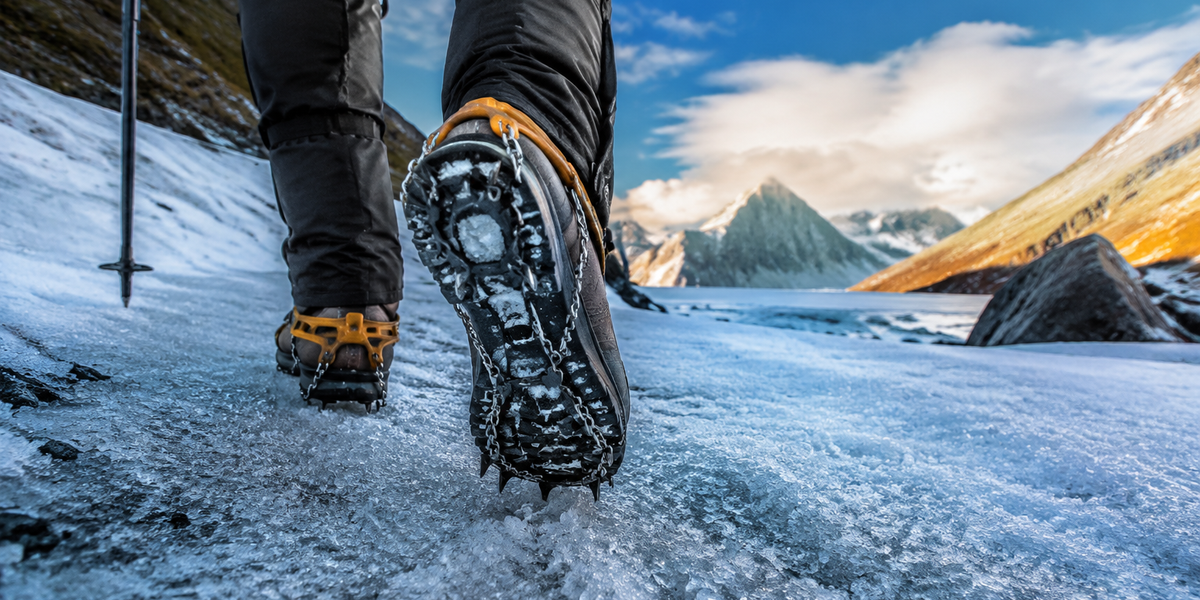
The Kahtoola MICROspikes have earned their reputation as the go-to traction device for winter hikers, and after comparing them against a dozen competitors, we understand why. Twelve 3/8" stainless steel spikes are welded to hardened stainless steel chains and connected by a TPU elastomer harness that stays pliable down to -22°F. The spike pattern covers heel, midfoot, and forefoot, so you get reliable bite whether you're climbing, descending, or traversing.
What sets these apart is the harness design: it stretches over your boot in seconds, cinches snugly without pressure points, and stays put through creek crossings and scrambles over exposed rock. We've used these on frozen fire roads, icy ridge traverses, and early-morning starts when the trail is a skating rink, and the confidence they inspire is immediate. The spikes penetrate hard-packed snow and glare ice with authority, and they self-clean as you walk so you're not carrying extra weight in clumped snow.
Kahtoola backs these with a two-year warranty and offers replacement spikes and chains, which extends their lifespan significantly. At $75, they're not the cheapest option, but the performance and durability justify the investment. Pair them with a solid winter boot like the Merrell Men's Moab 3 Mid Waterproof Hiking Boot for a bomber cold-weather setup.
✅ Pros:
- 12-point spike configuration delivers exceptional grip on black ice and frozen trails
- Elastomer harness fits securely on most hiking boots without slipping
- Compact and lightweight enough to carry in a jacket pocket
- Durable stainless steel construction resists rust and maintains sharpness
❌ Cons:
- Premium price point compared to budget traction devices
- Not designed for steep ice climbing or technical mountaineering terrain
- Spikes can wear down faster if used frequently on exposed rock
Yaktrax Summit Traction Cleats
| Criteria | Score |
|----------|-------|
| Bite on Hard Ice | 8/10 |
| Durability | 8/10 |
| Ease of Use | 7/10 |
| Value | 9/10 |
If you're looking for aggressive traction without the premium price tag, the Yaktrax Summit delivers. This model uses carbide spikes embedded in a stainless steel coil that wraps around the entire boot sole, creating a continuous biting edge. The design is bomber: the coil won't snap like individual chains, and the 12 carbide spikes stay sharp even after miles of mixed terrain.
The tradeoff is weight—at 1 lb per pair, these are noticeably heavier than Kahtoola MICROspikes—and the coil can collect mud and snow, though a quick stomp usually clears it. The Velcro strap across the instep adds security but takes an extra few seconds to adjust. For hikers who encounter ice regularly but don't want to spend $75+, the Summit is a proven workhorse.
We recommend these for day hikers tackling icy sections on otherwise moderate trails, or for folks who want a backup pair to keep in the car for unexpected conditions. They'll handle frozen lakeshores, icy parking lots, and winter ridge walks with confidence, and the $60 price point makes them accessible for newer winter hikers still building their kit.
✅ Pros:
- Carbide spikes provide excellent bite on hard ice and mixed terrain
- Stainless steel coil design is extremely durable and won't break easily
- Budget-friendly without sacrificing performance on moderate icy trails
❌ Cons:
- Heavier than elastomer-harness microspikes (1 lb per pair)
- Coil design can collect mud and packed snow between loops
- Velcro instep strap adds a step to the fitting process
Hillsound Trail Crampon Ultra
| Criteria | Score |
|----------|-------|
| Bite on Hard Ice | 9/10 |
| Stability on Steep Ice | 8/10 |
| Weight | 7/10 |
| Value | 8/10 |
The Hillsound Trail Crampon Ultra occupies the sweet spot between microspikes and full mountaineering crampons. With 18 spikes—including reinforced front points—and an ergonomic stainless steel plate, these handle steeper icy trails and harder snow than standard microspikes while remaining more packable and user-friendly than strap-on crampons.
The plate design distributes pressure evenly across your boot sole, which reduces fatigue on long descents and provides a more stable platform on uneven ice. The RockPlate forefoot adds durability when you're transitioning between ice and exposed rock, and the memory-fit binding system adapts to your boot shape after a few uses. At 14 oz per pair, they're only slightly heavier than Kahtoola MICROspikes but offer noticeably more aggressive traction.
These are ideal for hikers who regularly encounter steep, icy trails—think White Mountains in January or Cascade volcanoes in spring—but don't need the technical capability of mountaineering crampons. If your winter hikes include sustained sections of hard snow or ice at 30–40 degree angles, the Trail Crampon Ultra is worth the extra investment.
✅ Pros:
- 18 spikes including reinforced front points for steep icy terrain
- Ergonomic plate distributes pressure evenly and reduces foot fatigue
- More aggressive than standard microspikes without the bulk of crampons
- RockPlate forefoot protects spikes on mixed rock and ice
❌ Cons:
- Higher price point than basic microspikes ($90)
- Slightly heavier and bulkier than elastomer-harness designs
- Overkill for flat or gently rolling icy trails
Black Diamond Contact Strap Crampons
| Criteria | Score |
|----------|-------|
| Technical Ice Grip | 10/10 |
| Steep Snow Performance | 10/10 |
| Versatility | 7/10 |
| Ease of Use | 6/10 |
When the trail stops being a trail and becomes a snow climb, it's time to graduate to crampons. The Black Diamond Contact Strap delivers 10-point protection with aggressive front points, secondary points, and a modular strap system that fits most mountaineering boots (and many stiff hiking boots).
These are not for casual icy trails. Crampons are designed for terrain where a fall would be serious—steep snow gullies, icy couloirs, or early-season alpine routes where you're kicking steps into firm snow. The front points bite into vertical or near-vertical ice, and the secondary points provide stability when you're traversing or descending. At 1 lb 14 oz, they're significantly heavier than microspikes, and the strap system requires practice to adjust correctly in the field.
If you're planning winter mountaineering objectives, glacier travel, or technical snow climbs, crampons are non-negotiable. For everyone else—day hikers, trail runners, and backpackers sticking to established winter trails—microspikes will handle 95% of what you encounter. We include these here to establish the clear line: if you need crampons, you'll know it, and microspikes won't be a safe substitute.
✅ Pros:
- 10-point design with aggressive front points for steep snow and ice
- Modular strap system fits most mountaineering boots and stiff hiking boots
- Mountaineering-grade construction for serious alpine objectives
- Secondary points provide stability on traverses and descents
❌ Cons:
- Overkill and unnecessarily heavy for typical icy hiking trails
- Requires practice to fit and adjust strap system correctly
- Higher price point ($160) and bulkier than microspikes
- Not compatible with flexible hiking boots
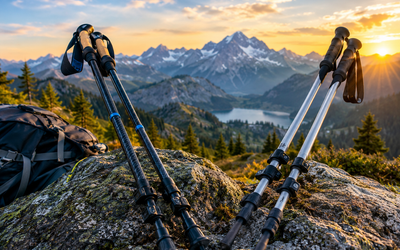
💡 Pro Tip: If you're crossing terrain steep enough that a fall would send you sliding, and you can't self-arrest with trekking poles, it's crampon territory. When in doubt, turn around or choose a different route.
When to Choose Microspikes vs Crampons
Choose microspikes when:
- You're hiking on icy trails, frozen dirt roads, or packed snow with grades under 35 degrees
- The terrain is rolling or moderately steep but still follows an established trail
- You need lightweight, packable traction for "just in case" ice patches
- You're wearing flexible hiking boots or trail runners (crampons require stiff soles)
- Winter conditions include black ice, frozen stream crossings, or hard-packed snow
Choose crampons when:
- The route involves steep snow or ice (40+ degrees) where a fall would be uncontrolled
- You're climbing couloirs, glaciers, or alpine faces
- Front-pointing is required (kicking the toe of your boot into near-vertical ice)
- You're wearing mountaineering boots with heel welts or stiff enough soles for strap-on crampons
- The objective is technical mountaineering, not trail hiking
The gray zone:
Steep icy trails in the 35–40 degree range are where microspikes start to feel marginal and crampons can feel like overkill. Aggressive traction devices like the Hillsound Trail Crampon Ultra bridge this gap. Ultimately, your comfort level, experience with self-arrest techniques, and consequences of a fall should guide the decision.
Frequently Asked Questions
Can I use microspikes on steep icy trails?
Microspikes work well on icy trails up to about 30–35 degrees, which covers the vast majority of maintained winter hiking routes. Beyond that angle, especially if the ice is hard and sustained, you'll want the front points and aggressive bite of crampons. The key question is: if you slip, can you self-arrest quickly with trekking poles, or would you slide uncontrollably? If the latter, upgrade to crampons.
Do microspikes damage hiking boots?
No. Microspikes are designed to stretch over your boot without contacting the upper material—the harness grips the sole and rand. However, walking on bare pavement or rock with microspikes can wear down the spikes themselves, so remove them when you're off ice and snow.
How long do microspikes last?
With proper care, a quality pair like Kahtoola MICROspikes will last 200–500 miles of winter hiking. Longevity depends on how much time you spend on exposed rock (which dulls spikes) versus ice and snow. Stainless steel spikes resist rust better than carbon steel, so rinse and dry them after each use to maximize lifespan. When you're packing for a multi-day winter trek, don't forget essentials like the Sawyer Squeeze Water Filter System—winter hydration is just as critical as summer, and unfrozen streams are your best water source.
Can I run in microspikes?
Yes, many trail runners use microspikes for winter training on icy trails. Look for a low-profile design with a snug harness that won't shift during faster footstrikes. However, running in microspikes on bare ground or pavement will wear them out quickly and increases the risk of catching a spike and tripping.
Are Yaktrax as good as Kahtoola MICROspikes?
Yaktrax models vary widely. The Yaktrax Summit (with carbide spikes) is a solid performer and a good value, though slightly heavier than Kahtoola. Budget Yaktrax models with coils but no aggressive spikes are better suited for walking on icy sidewalks than hiking steep trails. For serious winter hiking, we recommend spending the extra $15–20 for Kahtoola MICROspikes or Hillsound—the performance and durability gap is real.
Final Thoughts
Microspikes absolutely work on ice—and for the vast majority of winter hikers, they're the right tool for the job. They deliver confident traction on frozen trails, black ice, and packed snow without the weight, complexity, or cost of mountaineering crampons. Pair a quality set like the Kahtoola MICROspikes with boots that keep your feet warm and dry, such as the Salomon Men's X Ultra 4 GTX Hiking Shoes or the KEEN Men's Targhee III Mid Waterproof Hiking Boot, and you'll tackle icy winter conditions with confidence.
Know your terrain, choose the right traction device, and get out there. Winter trails offer some of the most rewarding hiking of the year—once you stop worrying about slipping and start enjoying the views.
Editor's Choice
Merrell Men's Moab 3 Mid Waterproof Hiking Boot — The break-in-free comfort and Vibram outsole make this the perfect foundation for microspikes on icy winter trails.
Salomon Men's X Ultra 4 GTX Hiking Shoes — At just 12.5 oz, these ultra-light Gore-Tex shoes pair beautifully with microspikes for fast-and-light winter day hikes.
Sawyer Squeeze Water Filter System — Every winter hiker should carry this 3 oz filter to safely drink from unfrozen streams and avoid the hassle of melting snow.