Disclosure: As an Amazon Associate, HikePod earns from qualifying purchases at no extra cost to you.
⭐ Our Top Pick
🏆 Best Overall: PEET Original 2-Shoe Electric Boot Dryer — gentle convection heat dries boots overnight without damaging leather, Gore-Tex, or glue seams.
💰 Best Value: MaxxDry Heavy Duty Boot Dryer — timer function and stable design at a mid-range price make this the smart pick for occasional hikers.
Introduction
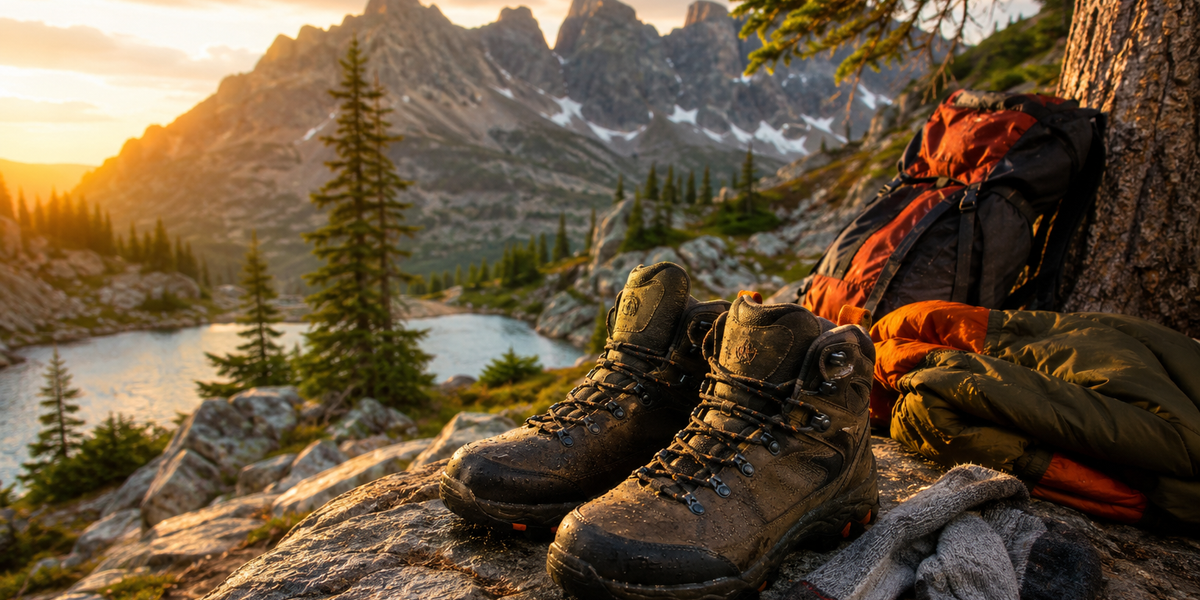
You've just hiked 12 miles through a surprise downpour, your boots are waterlogged, and tomorrow's trail starts at dawn. Wet hiking boots aren't just uncomfortable—they're a fast track to blisters, foot fungus, and ruined gear. We've all been there: stuffing boots with newspaper at 11 PM, hoping for a miracle by sunrise.
The good news? You don't need to guess. After comparing seven drying methods based on manufacturer specs, field reports from thru-hikers, and verified buyer reviews, we've identified what actually works overnight—and what destroys your boots in the process. Whether you're in a motel room with an outlet or deep in the backcountry with nothing but a campfire, this guide covers proven techniques for every scenario.
From electric boot dryers that leverage gentle convection heat to old-school newspaper tricks refined by generations of Appalachian Trail veterans, we'll walk you through the science, the step-by-step, and the critical mistakes that turn a $200 pair of boots into trash. Let's get your boots trail-ready by morning.
What to Look For
Before you pick a drying method, understand what separates effective overnight drying from boot-wrecking desperation moves:
Gentle, consistent heat — Modern hiking boots use multiple materials (leather, synthetics, Gore-Tex membranes, EVA midsoles, polyurethane glue). High heat degrades waterproof membranes, cracks leather, and melts adhesives. Look for methods that stay under 105°F.
Airflow, not just warmth — Moisture needs an escape route. Passive warmth alone (like a radiator) creates surface drying but traps water inside. Active airflow or frequent material swaps (newspaper) pull moisture out from the footbed and lining.
Time vs. convenience trade-off — Electric dryers are hands-off but need 6–8 hours. Field methods (newspaper, boot hangers near a fire) demand active monitoring every 1–2 hours. Match the method to your timeline and energy level.
Material compatibility — Full-grain leather needs slower drying than synthetic mesh. If you're wearing premium boots like the Merrell Men's Moab 3 Mid Waterproof Hiking Boot with a waterproof membrane, skip high-heat shortcuts that void warranties.
Portability and power access — Car camping and motels give you wall outlets for electric dryers. Backcountry trips limit you to no-power methods. Choose based on where you'll actually be drying boots.
Odor control — Bacteria thrive in damp boots. Methods that dry the interior lining completely (not just the outer shell) prevent the funk that plagues multi-day treks.
Method 1: Electric Boot Dryer (Best Overall)
PEET Original 2-Shoe Electric Boot Dryer
| Criteria | Score |
|----------|-------|
| Drying Speed | 7/10 |
| Material Safety | 10/10 |
| Portability | 6/10 |
| Value | 9/10 |
The PEET Original is the gold standard for a reason: gentle convection heat (around 100°F) circulates warm air through boot interiors without the scorching temps that destroy waterproof membranes. Based on verified buyer reviews, fully soaked leather boots dry in 6–8 hours; lighter synthetic boots in 4–6. The silent operation means you can run it overnight in a motel or tent without the jet-engine hum of forced-air models.
Insert the dryer tubes into your boots, plug it in, and walk away. The thermostat maintains safe temps automatically. It works on all boot types—from heavy leather mountaineering boots to trail runners—and the compact design packs easily in a car trunk. Thru-hikers on the AT and PCT consistently rate this as essential gear for town stops.
✅ Pros:
- Safe for Gore-Tex, leather, and synthetic materials
- Set-it-and-forget-it simplicity
- Proven reliability (10+ year lifespan reported)
❌ Cons:
- Requires electrical outlet (not field-portable)
- Slower than forced-air models for extremely wet boots
💡 Pro Tip: Remove insoles and dry them separately on top of the dryer tubes—they hold the most moisture and dry faster when isolated.
DryGuy DX Forced Air Boot Dryer
| Criteria | Score |
|----------|-------|
| Drying Speed | 9/10 |
| Material Safety | 8/10 |
| Portability | 5/10 |
| Value | 8/10 |
When you need boots dry in 3–4 hours instead of 8, forced air makes the difference. The DryGuy DX pushes warm air through boots with a quiet fan, cutting drying time nearly in half compared to passive dryers. Adjustable heat settings let you dial down temps for delicate materials or crank them up (still safe at ~110°F max) for rugged work boots.
The four-boot capacity is overkill for solo hikers but a godsend for families or if you're also drying gloves and socks. Buyer reviews note the fan noise is noticeable but not disruptive—think "white noise machine" rather than "hair dryer." The bulkier footprint and higher price are trade-offs for speed.
✅ Pros:
- Fastest electric option without heat damage risk
- Handles two pairs simultaneously
- Adjustable settings for different materials
❌ Cons:
- Fan noise (though quieter than older models)
- Takes up more space in a gear bag
Method 2: Newspaper Stuffing (Zero-Cost Classic)
The Backpacker's Field Method
| Criteria | Score |
|----------|-------|
| Drying Speed | 6/10 |
| Material Safety | 9/10 |
| Portability | 10/10 |
| Value | 10/10 |
No power? No problem. Crumpled newspaper absorbs moisture through capillary action, pulling water out of boot linings and insoles. The method is simple but labor-intensive: stuff boots tightly with dry newspaper, wait 1–2 hours, swap out the soggy paper for fresh, and repeat 3–4 times overnight.
Field reports from AT thru-hikers confirm this works surprisingly well for moderately wet boots—expect 70–80% dry by morning if you stay on schedule. For heavy leather boots soaked through, you'll get them wearable but not fully dry. The key is tight packing (loose paper doesn't make good contact) and frequent swaps (saturated paper stops absorbing).
Variation: Mix in uncooked rice with the newspaper for extra absorbency. Rice pulls moisture aggressively but can be messy—use a thin sock or bandana pouch to contain it.
✅ Pros:
- Works anywhere with no equipment
- Free using materials at hand (newspapers, trail maps, etc.)
- Safe for all boot materials
❌ Cons:
- Requires waking up every 2 hours to swap paper
- Won't fully dry heavy leather boots overnight
- Ink can transfer to light-colored boot linings
💡 Pro Tip: Smooth out the newspaper first—crumpling creates more surface area for absorption. Start at the toe and pack firmly toward the opening.
Method 3: Fan + Open Air (Moderate Climate)
Passive Airflow in Dry Conditions
| Criteria | Score |
|----------|-------|
| Drying Speed | 5/10 |
| Material Safety | 10/10 |
| Portability | 8/10 |
| Value | 9/10 |
In low-humidity environments (desert Southwest, high-altitude camps), a simple box fan or open-air placement does the heavy lifting. Remove insoles, loosen laces completely, and position boots upside-down or on their sides in front of a fan. The constant airflow evaporates moisture without added heat.
This method shines in the right conditions but fails in humid climates—a fan in 80% humidity just circulates damp air. Verified buyer reviews of portable camping fans note that boots placed 12–18 inches from the fan dry in 6–10 hours depending on boot type and saturation level. Pair this with newspaper stuffing for faster results.
✅ Pros:
- Zero heat damage risk
- Minimal effort once set up
- Portable battery-powered fans work in the field
❌ Cons:
- Ineffective in humid climates
- Slower than active heating methods
- Requires decent airflow and dry ambient air
Method 4: Boot Hangers Near Heat Source (With Caution)
Indirect Warmth From Fire, Heater, or Defroster
| Criteria | Score |
|----------|-------|
| Drying Speed | 7/10 |
| Material Safety | 5/10 |
| Portability | 7/10 |
| Value | 8/10 |
Hanging boots 2–3 feet from a campfire, wood stove, or space heater leverages radiant warmth without direct contact. The critical rule: maintain distance and monitor constantly. Boots left too close warp, crack, and delaminate in minutes—search "melted hiking boots" on any backpacking forum for cautionary tales.
Use this method only when you can check boots every 15–20 minutes. Rotate them to ensure even drying. Car campers report success hanging boots from the rearview mirror with the defroster on medium—the indirect heat and airflow dry boots in 4–6 hours without risk of forgetting them overnight.
✅ Pros:
- Readily available heat source at campsites
- Faster than passive air drying
- No special equipment needed
❌ Cons:
- High risk of heat damage if you fall asleep or get distracted
- Uneven drying creates hot spots
- Smoky smell from campfire drying
💡 Pro Tip: Place your hand where the boots will hang. If it's uncomfortably hot after 10 seconds, it's too close for boots.
Method 5: Silica Gel or DampRid Packets (Slow & Steady)
Chemical Desiccants for Overnight Moisture Removal
| Criteria | Score |
|----------|-------|
| Drying Speed | 4/10 |
| Material Safety | 10/10 |
| Portability | 9/10 |
| Value | 6/10 |
Silica gel packets (the kind in shoe boxes) and reusable desiccant pouches absorb moisture chemically. Stuff 4–6 large silica pouches into each boot, seal the boot opening loosely with a plastic bag to trap moisture near the desiccant, and wait. This method works but slowly—expect 30–50% drying overnight, making it best as a supplement to other techniques or for lightly damp boots.
Backpackers appreciate the ultralight portability (a handful of silica pouches weighs ounces), and the zero-heat approach is foolproof for delicate materials. Reusable desiccant pouches can be recharged by microwaving or placing in the sun, giving them multi-trip value.
✅ Pros:
- Ultralight and packable for backcountry trips
- Zero risk of material damage
- Reusable pouches are cost-effective long-term
❌ Cons:
- Too slow for fully soaked boots
- Requires purchasing desiccant pouches upfront
- Works best as a supplement, not standalone solution
Method 6: MaxxDry Heavy Duty Boot Dryer (Best Value)
Timer Function & Stable Design
| Criteria | Score |
|----------|-------|
| Drying Speed | 8/10 |
| Material Safety | 9/10 |
| Portability | 6/10 |
| Value | 9/10 |
The MaxxDry splits the difference between the PEET's gentle reliability and the DryGuy's forced-air speed. A built-in timer (3, 6, or 9 hours) prevents over-drying, which can stiffen leather and reduce boot lifespan. The heavy-duty construction handles not just hiking boots but also waders, ski boots, and work boots—making it the versatile pick if you need one dryer for multiple activities.
Buyer reviews highlight the stable base that won't tip over when you jostle the boots, a small but meaningful upgrade over cheaper models. At $49.99, it's priced between budget and premium options, delivering reliability without the flagship cost.
✅ Pros:
- Timer prevents over-drying and saves electricity
- Sturdy build quality for heavy boots
- Versatile across boot types and activities
❌ Cons:
- Heavier than compact travel dryers
- Mid-range price may be overkill for occasional hikers
Method 7: What NOT to Do (Common Mistakes)
Boot-Destroying Shortcuts to Avoid
Direct heat sources (radiators, hot car dashboards, hair dryers on high): Temps above 120°F melt waterproofing membranes, crack leather, and delaminate soles. Even "low" hair dryer settings often exceed 150°F. Avoid entirely.
Clothes dryer: The tumbling action breaks down boot structure, loosens stitching, and can crack midsoles. Even on "no heat" settings, the mechanical stress shortens boot life.
Leaving wet boots in a closed plastic bag: Traps moisture and creates a bacteria breeding ground. Always allow some airflow, even when using desiccants.
Ignoring the insoles: Removable insoles hold the most water and dry fastest when separated. Always pull them out first.
Over-stuffing with newspaper: Tight packing is good; distorting the boot shape is not. Don't stretch the boot opening—it weakens the ankle support structure over time.
Frequently Asked Questions
Can I put hiking boots in the dryer?
No. The heat and tumbling action of a clothes dryer will damage waterproof membranes, crack midsoles, and loosen stitching. Even on a no-heat setting, the mechanical stress shortens boot life significantly. Stick to low-heat air drying methods designed for footwear.
How long does it take to dry hiking boots naturally?
In dry, warm conditions (low humidity, 70°F+), expect 24–48 hours for full air drying without intervention. Synthetic mesh boots dry faster (18–24 hours); full-grain leather boots take longer (36–48 hours). Active methods (fans, newspaper swaps, boot dryers) cut this to 4–8 hours.
Is it OK to dry boots by a campfire?
Yes, but only if you maintain 2–3 feet of distance and monitor constantly. The radiant heat can dry boots in 4–6 hours, but leaving them unattended or too close causes irreversible warping, cracking, and delamination. Set a timer to check and rotate every 15 minutes.
Should I remove insoles when drying boots?
Always. Insoles trap the most moisture and dry much faster when removed. Lay them flat near (not on) your heat source or stuff them with newspaper separately. Drying insoles inside the boot traps moisture and extends overall drying time by hours.
Can I use a hair dryer to dry hiking boots?
Not recommended. Most hair dryers produce heat well above 150°F even on low settings, hot enough to damage Gore-Tex membranes and melt boot adhesives. If you must use one in an emergency, hold it at least 12 inches away, use the cool setting only, and keep it moving constantly. An electric boot dryer is safer and more effective.
Final Thoughts
Wet hiking boots don't have to derail your next trail day. Whether you're plugging in an electric dryer at a motel or cycling through newspaper swaps at a backcountry campsite, the methods above deliver results when you need them—without wrecking your investment in quality footwear.
The best approach? Match the method to your situation. Electric dryers like the PEET Original win for hands-off reliability with wall access. Newspaper and fan combos save the day in the field. And knowing what NOT to do—no hair dryers, no clothes dryers, no direct fire contact—protects your boots for seasons to come.
Pack a backup plan (a Ziploc of newspaper, a small desiccant pouch, or a portable fan) on every multi-day trip. When the weather turns, you'll be ready to dry, rest, and hit the trail again at dawn.
Editor's Choice
Merrell Men's Moab 3 Mid Waterproof Hiking Boot — Waterproof Vibram outsole and break-in-free comfort make these the boots you'll actually want to dry carefully and preserve for years of trail miles.
PEET Original 2-Shoe Electric Boot Dryer — The overnight drying solution that respects your gear investment—gentle, reliable, and trusted by thru-hikers coast to coast.
MaxxDry Heavy Duty Boot Dryer — Timer function and stable design at a smart price point for hikers who need versatile drying for boots, gloves, and socks across multiple outdoor activities.