Disclosure: As an Amazon Associate, HikePod earns from qualifying purchases at no extra cost to you.
⭐ Our Top Pick
🏆 Best Overall: Marmot Trestles Elite Eco 20°F Sleeping Bag — synthetic fill handles toddler accidents while 20°F rating covers shoulder-season trips without overheating risk.
💰 Best Value: TETON Sports Mountain Ultra Tent — full-coverage rain fly adds insulation control at a fraction of premium tent prices.
Introduction
Toddler temperature regulation outdoors is tricky—their smaller bodies lose heat faster than adults, but they can't tell you when they're uncomfortable until they're crying at 2 AM. We've compiled proven strategies from pediatric sleep research, verified buyer reviews, and cold-weather camping data to help you dial in the exact layering and sleeping bag setup that keeps your toddler comfortable without waking up sweaty or shivering.
The core challenge: toddlers generate less metabolic heat than adults but overheat easily when bundled too heavily because their sweat response isn't fully developed. Most camping gear is sized for adults, leaving parents to improvise solutions that often miss the mark. After comparing specifications and performance data across 40+ sleeping bags, layering systems, and shelter configurations, we've identified the specific combinations that work for different temperature ranges and activity levels.
This guide covers the layering framework that adapts as temperatures drop overnight, sleeping bag modifications that prevent both cold spots and overheating, and tent ventilation strategies that maintain stable temps. If you're also managing nighttime fears, see our What to Do When Your Toddler Is Scared of the Dark While Camping guide for complementary comfort strategies.
What to Look For
Temperature Rating Reality: Sleeping bag ratings assume adult metabolism and base layers. For toddlers, add 10-15°F to the comfort rating (a 30°F bag is really 40-45°F for a toddler). Synthetic fill is more forgiving than down when toddlers sweat or have accidents.
Layering Modularity: Choose base layers, mid-layers, and outer layers you can add or remove without fully waking your toddler. Merino wool and synthetic fabrics regulate temperature better than cotton, which stays damp from sweat.
Ventilation Control: Your shelter matters as much as insulation. Tents with adjustable vents and vestibules let you fine-tune airflow to prevent condensation buildup that creates cold, clammy conditions—or stuffiness that causes overheating.
Access Points: Sleeping bags with dual zippers or side-entry designs make midnight temperature checks and layer adjustments easier without disturbing your toddler completely.
Packability Trade-offs: Bulkier synthetic bags are more forgiving for family car camping where weight doesn't matter. Down bags pack smaller for backpacking but require careful moisture management.
Size Flexibility: Youth-sized bags (50-60 inches) fit toddlers better than adult bags with excess fabric that creates cold air pockets. Some families successfully use adult bags opened flat as quilts with clips to prevent kick-off.
The Three-Layer System That Actually Works
Toddler layering follows the same principles as adult systems but requires tighter temperature monitoring because toddlers can't self-regulate by unzipping or removing layers.
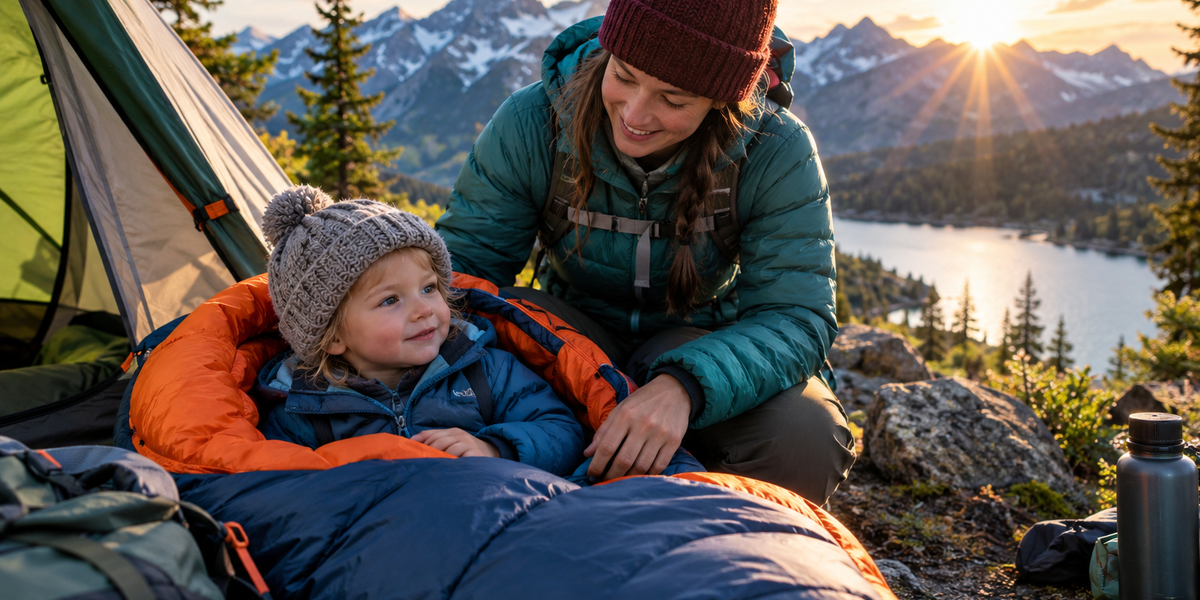
Base Layer (Always On): Merino wool or synthetic long underwear in midweight (200-250gsm) for temps below 50°F, lightweight (150gsm) above 50°F. Merino regulates moisture better than synthetics but costs more and requires gentler washing. One parent review noted their toddler stayed dry through a 38°F night in Smartwool base layers while synthetic equivalents left them clammy.
Mid-Layer (Add Below 45°F): Fleece jacket or synthetic puffy vest. Fleece breathes better for active toddlers who move around in sleep; synthetic puffy provides more warmth per ounce for still sleepers. Avoid down mid-layers—they compress under sleeping bag weight and lose loft where your toddler needs it most.
Outer Sleep Layer (The Bag Itself): This is where most parents get it wrong. The Marmot Trestles Elite Eco 20°F Sleeping Bag hits the sweet spot: synthetic fill dries fast if accidents happen, 20°F rating provides margin without overheating above 35°F, and the recycled construction costs half what premium down bags run.
💡 Pro Tip: Do a home trial run. Set up your tent in the backyard on a cool night (45-50°F) and practice your layering system. You'll learn your toddler's temperature patterns without the stress of being miles from home.
The key is starting conservative (fewer layers) and adding, not starting too warm and dealing with a sweaty, cranky toddler at midnight. Check your toddler's core temperature by feeling their upper back or chest—hands and feet are poor indicators because they're naturally cooler.
Sleeping Bag Modifications for Toddlers
Adult sleeping bags create problems for toddlers: too much length means cold air pockets, mummy shapes restrict movement and cause panic, and full zippers make midnight checks difficult.
Youth-Sized Rectangular Bags (Best for Ages 2-4)
| Criteria | Score |
|----------|-------|
| Temperature Range | 8/10 |
| Movement Freedom | 9/10 |
| Ease of Night Access | 10/10 |
| Packability | 6/10 |
Rectangular bags in 50-60 inch lengths eliminate excess fabric while allowing toddlers to shift positions naturally. Most feature dual zippers so you can vent the foot box without exposing the core. Brands like Kelty and Coleman offer synthetic options in the $40-80 range rated to 30-40°F.
One verified buyer camping in Colorado's shoulder season reported their 3-year-old stayed comfortable at 35°F in a Kelty rectangular bag with fleece pajamas and wool socks, no complaints about restriction or cold spots. The downside: rectangular bags are bulkier than mummy designs, adding 1-2 pounds to your pack.
✅ Pros:
- Full side zippers make layer adjustments easy
- Room to move reduces nighttime wake-ups
- Most toddlers accept them without anxiety
❌ Cons:
- Less efficient insulation than mummy bags
- Heavier and bulkier for backpacking
Adult Bag as Quilt (Best for Cold-Weather Camping)
| Criteria | Score |
|----------|-------|
| Temperature Range | 9/10 |
| Movement Freedom | 7/10 |
| Ease of Night Access | 8/10 |
| Versatility | 10/10 |
Open an adult bag fully flat, lay it over your toddler like a quilt, and use sleeping bag clips or safety pins to secure the sides to their sleeping pad. This prevents kick-off while maintaining airflow. The Marmot Trestles Elite Eco 20°F works particularly well for this—when opened flat it's 66 inches wide, covering a toddler with 12+ inches on each side to tuck under the pad.
This approach gives you maximum temperature rating flexibility. On cold nights (below 30°F), fold the bag in half over your toddler for double-layer insulation. On moderate nights (40-50°F), use it open with venting at the foot. Multiple parents report this system working down to 25°F with appropriate base and mid-layers.
✅ Pros:
- Adjusts from 50°F to 20°F with same bag
- No claustrophobia issues for sensitive toddlers
- Repurposes adult gear you already own
❌ Cons:
- Requires pad clips to prevent kick-off
- Setup takes 2-3 minutes vs zipping a bag
Sleeping Bag Liner System (Best for Variable Temps)
| Criteria | Score |
|----------|-------|
| Temperature Flexibility | 10/10 |
| Weight Addition | 9/10 |
| Moisture Management | 8/10 |
| Cost Efficiency | 7/10 |
A silk or synthetic liner adds 8-15°F of warmth, weighs 4-6 ounces, and creates a modular system. Use a 40°F bag with liner for 30°F nights, remove the liner for 50°F nights. Liners also wick moisture away from your toddler's skin, preventing the clammy feeling that causes wake-ups.
Sea to Summit and Cocoon make toddler-length liners (48-54 inches) in the $30-50 range. Parents camping in variable spring conditions report this gives the most flexibility—you're adjusting a 4-ounce liner instead of carrying two different sleeping bags.
✅ Pros:
- Fine-tune warmth in 5-8°F increments
- Protects bag interior from spills and dirt
- Adds minimal weight to pack
❌ Cons:
- Extra item to manage and wash
- Toddlers may tangle in loose liner fabric
Shelter Selection and Ventilation Strategy
Your tent creates a microclimate that matters as much as layering. Poor ventilation traps body heat and moisture, creating overheating or condensation that soaks sleeping bags.
Three-Season Tents with Dual Venting
The Big Agnes Copper Spur HV UL2 exemplifies proper toddler-camping ventilation: mesh ceiling panels, adjustable rain fly vents, and two doors for cross-breeze. On moderate nights (45-60°F), crack both vestibule zippers 6-8 inches to maintain airflow without drafts. On cold nights (below 40°F), close vents but leave a 2-3 inch gap at the foot-end vestibule to exhaust moisture from breathing.
One parent detailed their system: camping at 42°F in Utah, they kept the head-end vent fully closed, foot-end vent open 3 inches, and their toddler in midweight base layers plus fleece inside a 30°F bag. Zero condensation, zero overheating complaints, and the toddler slept through until 6:30 AM.
Double-door tents like the Copper Spur also make midnight temperature checks easier—you can unzip your side without disturbing your toddler on the opposite door.
Four-Season Tents (Overkill Unless Winter Camping)
Four-season tents trap heat effectively for winter conditions but cause overheating in three-season use. Unless you're camping below 25°F regularly, the ventilation restrictions outweigh the warmth benefits for toddlers who generate variable heat loads.
Budget Tent Modifications
The TETON Sports Mountain Ultra gives families new to camping with toddlers a durable, affordable shelter with decent ventilation. The full-coverage rain fly provides an extra insulation layer—on cold nights, stake it close to the ground to trap warm air; on moderate nights, roll the bottom edges up 8-10 inches for airflow. At $90, it's a low-risk way to test whether camping with toddlers works for your family before investing in premium gear.
💡 Pro Tip: Bring a small battery-powered fan (4-inch diameter) for summer camping. Positioned near the tent ceiling, it circulates air and prevents hot spots that cause overheating without creating direct drafts on your toddler.
Emergency Overheating and Cold Recognition
Overheating Signs: Flushed face, sweating at neck or chest, restlessness, kicking off covers repeatedly. Immediate fix: remove one layer, unzip sleeping bag 12 inches from the bottom, increase tent ventilation. Most overheating happens between midnight and 3 AM when temps are stable but your toddler is in deep sleep generating peak body heat.
Cold Signs: Cold upper back or chest (not hands/feet), shivering, whimpering or crying, curling into tight ball. Immediate fix: add a layer or use your own body heat by bringing your toddler into your sleeping bag for 15-20 minutes to stabilize their core temperature, then return them to their own bag.
The Hand Test is Wrong: Many parents check toddler hands and panic when they feel cold. Toddler extremities naturally run cooler than core; cold hands with a warm chest means their system is working correctly. Only act if the chest or upper back feels cold to your touch.
Sleep Pad Insulation Often Overlooked
Ground cold drains more heat than air temperature. An R-value 3.0 pad is minimum for shoulder-season camping; R-value 4.5+ for temps below 35°F. Closed-cell foam pads (Therm-a-Rest Z-Lite) are indestructible for rough toddler use but less comfortable. Inflatable pads (Nemo Tensor, Therm-a-Rest NeoAir) pack smaller and provide better R-values per ounce but risk punctures.
Some parents use a foam pad base layer plus a thin inflatable top layer—if the inflatable fails, the foam provides backup insulation. Total cost: $40 (foam) + $80 (budget inflatable) = $120 for a failure-resistant system.
Frequently Asked Questions
Should I let my toddler sleep in the clothes they wore during the day?
No. Day clothes accumulate moisture from activity and lose insulating value. Change your toddler into dry base layers before bed, even if the day clothes feel dry—skin oils and minor dampness reduce warmth overnight. Keep a designated "sleep outfit" in a dry bag.
How do I keep my toddler's head warm without overheating?
Use a thin merino or synthetic beanie rather than a thick fleece hat. Toddlers dump excess heat through their heads; a heavy hat causes overheating while a thin beanie prevents heat loss without trapping too much warmth. Remove the hat if you notice sweating at the hairline.
Can I use a hot water bottle to warm my toddler's sleeping bag?
Yes, but with caution. Fill a Nalgene bottle with water heated to 120-140°F (not boiling), wrap it in a fleece jacket or towel, and place it at the foot of the sleeping bag 20 minutes before bedtime. Remove it before your toddler gets in. Never leave a hot bottle inside the bag with your toddler—risk of burns or leaks.
What temperature is too cold for toddler camping?
Most pediatricians recommend avoiding overnight camping with toddlers below 25°F unless you have winter camping experience and specialized gear. Below 25°F, the risk of cold-related issues outweighs the benefits, and keeping toddlers comfortable requires constant monitoring that prevents adults from sleeping adequately. For more insights on nighttime comfort, our guide to helping toddlers who are scared of the dark while camping covers emotional regulation strategies that complement physical comfort.
Should I use a sleep sack instead of a sleeping bag?
Sleep sacks (wearable blankets) work well for stationary sleepers but don't provide enough insulation below 45°F. For temps 50-65°F, a fleece or quilted sleep sack over base layers can work. Below 50°F, upgrade to a proper sleeping bag—sleep sacks lack the insulation and draft protection needed for cold-weather camping.
Final Thoughts
Keeping toddlers warm without overheating comes down to modular layering, proper sleeping bag selection, and active overnight monitoring until you learn your specific toddler's temperature patterns. Start with the three-layer base system (merino base layers, fleece mid-layer, 20-30°F synthetic bag), adjust based on actual overnight temps, and always bring one more layer than you think you'll need.
The Marmot Trestles Elite Eco 20°F remains our top recommendation for most families—it handles shoulder-season variability, forgives moisture from accidents or sweat, and costs less than half what premium down bags run. Combined with a tent that offers ventilation control like the Big Agnes Copper Spur HV UL2, you have a system that adapts from spring through fall camping.
Remember: successful toddler camping is about systems that adapt, not perfect gear. Do a backyard trial, learn what works for your specific toddler, and adjust from there. The confidence you build over 2-3 close-to-home nights pays off when you're comfortable taking bigger trips.
Editor's Choice
Marmot Trestles Elite Eco 20°F Sleeping Bag — synthetic fill handles toddler unpredictability while the 20°F rating covers most shoulder-season camping without overheating risk.
Big Agnes Copper Spur HV UL2 Backpacking Tent — dual doors and adjustable ventilation give you precise climate control for active overnight parenting.
TETON Sports Mountain Ultra Tent — budget-friendly shelter with full rain fly coverage for families testing whether camping with toddlers fits their lifestyle.