Disclosure: As an Amazon Associate, HikePod earns from qualifying purchases at no extra cost to you.
⭐ Our Top Pick
🏆 Best Overall: Big Agnes Copper Spur HV UL2 — the lightweight champion when splitting your family across two tents without sacrificing comfort or setup speed.
💰 Best Value: TETON Sports Mountain Ultra Tent — at under $90 each, you can outfit two tents for less than one premium family shelter.
Introduction
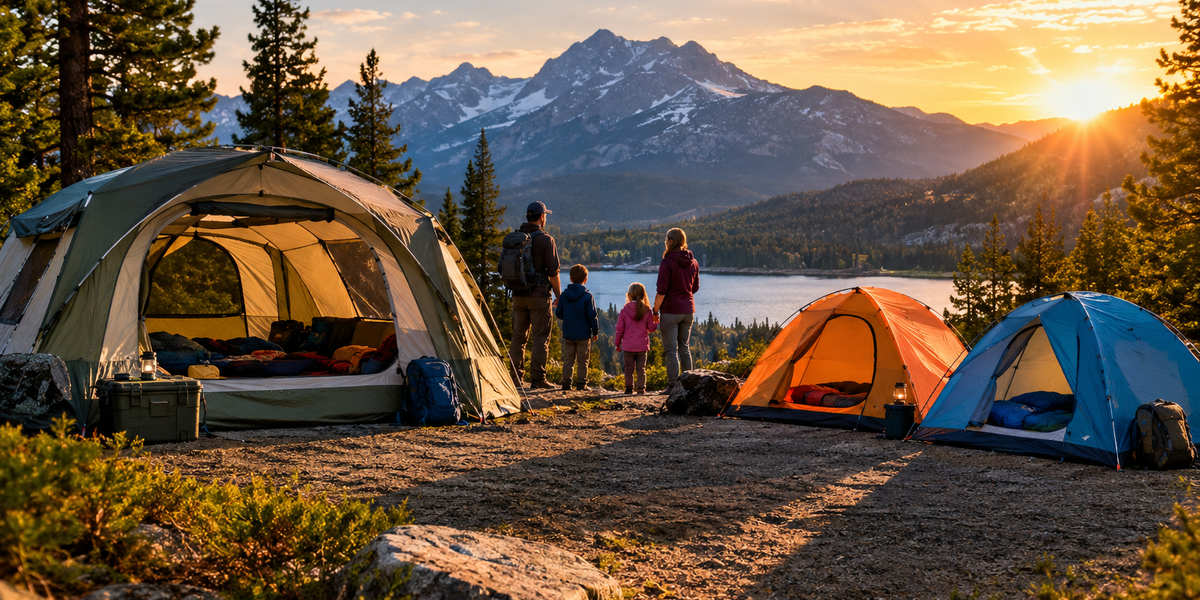
You're planning your family camping trip, scrolling through tent options, and hitting the same wall every parent faces: do we cram everyone into one giant tent, or split the crew across two smaller ones? It's not just about square footage. It's about 3 AM bathroom runs, snoring partners, restless toddlers, and whether you'll actually get any sleep on what's supposed to be a relaxing weekend outdoors.
We've researched dozens of family camping setups, compared manufacturer specs, and analyzed thousands of verified buyer reviews to break down the real-world trade-offs. The answer isn't one-size-fits-all — it depends on your kids' ages, your camping style, and what you value most: cost savings, personal space, or logistical simplicity.
In this guide, we'll walk you through the costs, comfort factors, and practical logistics of both approaches so you can make the right call for your family. Whether you're planning car camping trips to state parks or longer adventures where pack weight matters, we'll help you decide which tent strategy actually works.
What to Look For
Total Cost vs. Long-Term Value — One large family tent ($200–$500) often costs less upfront than two quality smaller tents ($300–$1,000+ combined), but consider durability and future flexibility. Two smaller tents give you options as kids grow and want their own space, or when you're camping with another family.
Setup and Breakdown Time — Large family tents with multiple poles and guy lines can take 15–30 minutes to pitch properly, and usually require two adults working together. Two smaller tents might mean double the setup actions, but modern designs like the Big Agnes Copper Spur HV UL2 set up solo in under 5 minutes each — often faster than wrestling one massive shelter into position.
Privacy and Sleep Quality — This is where two tents shine. Parents get their own space away from wiggling toddlers, older kids feel more independent, and everyone sleeps better without a chorus of snoring and midnight stirring. If you're wondering about age considerations, see our guide on what age you can start camping with kids and their developmental readiness.
Weather Protection and Ventilation — Large tents can feel stuffy with multiple bodies generating heat and moisture, leading to condensation issues. Two smaller tents offer better airflow per occupant and isolate weather problems — if one vestibule floods, your gear in the other tent stays dry.
Portability and Pack Weight — Car camping from a parking spot? Weight doesn't matter. Hiking even a quarter-mile to your site? Two lightweight tents (5–6 lbs total) distribute the load between adults better than one 12–15 lb family tent that one person has to shoulder.
Kid Safety and Supervision — Younger children (under 8) generally need to sleep near parents for safety and comfort, especially if they're scared of the dark — our guide on helping toddlers who are scared of the dark while camping covers nighttime strategies. Tweens and teens often prefer their own tent, which works fine when you're camping in established sites with nearby facilities.
Big Agnes Copper Spur HV UL2: Best for Lightweight Family Splits
| Criteria | Score |
|----------|-------|
| Weight (packability) | 9/10 |
| Setup Speed | 9/10 |
| Weather Resistance | 8/10 |
| Value for Money | 7/10 |
At 2.6 lbs and packing down smaller than a Nalgene bottle, the Copper Spur HV UL2 makes the two-tent strategy viable even when you're hiking to your campsite. The dual-door, dual-vestibule design means each person has their own entry and gear storage — a game-changer when camping with kids who inevitably need to pee at 2 AM. The pre-bent poles and color-coded clips let one parent set up each tent in under 5 minutes, even in fading light or wind.
Based on verified buyer reviews, the Copper Spur handles three-season weather confidently. The silicone-treated nylon fly sheds rain effectively, and the high-volume hub design maximizes headroom without adding weight. Parents appreciate that the footprint (sold separately) adds a layer of protection on rocky sites without significant bulk.
The price is the sticking point. At $549.95 per tent, outfitting two means spending over $1,000 before you add sleeping bags and pads. But for families who backpack or value pack weight, the investment pays off in comfort and flexibility over years of trips.
✅ Pros:
- Ultra-light 2.6 lbs makes carrying two tents feasible for hiking families
- Dual doors eliminate the "climb over your tentmate" problem entirely
- Fast, intuitive setup even for one parent working alone
- Excellent ventilation reduces condensation with multiple occupants
❌ Cons:
- Premium price point — buying two strains most camping budgets
- Two-person capacity means no room for a third kid without getting a larger model
💡 Pro Tip: If you're splitting kids across tents, put the earliest riser with the parent who wakes up easiest. It minimizes the 6 AM chaos when one tent is ready to start the day and the other wants to sleep in.
MSR Hubba Hubba NX 2: The Weather-Beating Workhorse
| Criteria | Score |
|----------|-------|
| Weather Resistance | 10/10 |
| Durability | 9/10 |
| Ease of Setup | 8/10 |
| Weight | 7/10 |
The Hubba Hubba NX 2 has earned its reputation as the tent that just works, trip after trip, in rain, wind, and unpredictable spring weather. The freestanding design means you can set it up on any surface — sand, rock, hard-packed dirt — and reposition it after pitching if you need to dodge a tree root or level out your site. The full-coverage rainfly and taped seams keep everyone dry even in sustained downpours.
Buyer reviews consistently highlight the tent's packability relative to its interior space. At 20 oz packed weight, it's not the lightest option, but it's remarkably compact considering the 29 square feet of floor space. The vertical walls maximize usable room, so two adults or one adult and two small kids fit comfortably without feeling cramped.
For families choosing the two-tent route, the Hubba Hubba's reliability means you're not worrying about gear failure when you've got kids depending on you. It's the tent that performs exactly as expected, which matters more than flashy features when you're responsible for keeping your crew dry and comfortable.
✅ Pros:
- Freestanding design sets up anywhere without hunting for stake-able ground
- Exceptional rain performance keeps gear and occupants bone-dry
- Durable materials hold up to years of family camping abuse
- Proven track record across thousands of campers in real-world conditions
❌ Cons:
- At $499.95 per tent, buying two still requires significant budget
- Smaller vestibule space compared to competitors means less gear storage per tent
TETON Sports Mountain Ultra: Budget-Friendly Family Solution
| Criteria | Score |
|----------|-------|
| Value for Money | 9/10 |
| Weather Protection | 7/10 |
| Ease of Use | 8/10 |
| Weight | 5/10 |
For families who primarily car-camp and aren't hauling gear beyond the parking lot, the TETON Sports Mountain Ultra makes the two-tent strategy financially accessible. At $89.99, you can buy two tents for less than $180 — a fraction of the cost of one premium family tent or two high-end backpacking shelters. The full fly coverage protects against rain, and the taped seams hold up reasonably well in moderate weather.
Based on buyer feedback, the Mountain Ultra is best understood as a solid entry-level tent that gets families outdoors without requiring a major gear investment. Setup takes about 10 minutes per tent with color-coded poles and clips. The materials are heavier and less technical than premium options — expect around 6–7 lbs per tent — but weight doesn't matter when you're camping 50 feet from your vehicle.
The trade-off is durability. These tents will serve you well for 2–3 seasons of regular use, but they won't last a decade like a Big Agnes or MSR. For families just starting out or unsure how much they'll camp, that's a reasonable compromise. You're spending less upfront, learning what you actually need, and can always upgrade later if camping becomes a regular family activity.
✅ Pros:
- Budget-friendly price makes buying two tents achievable on most family budgets
- Full fly coverage provides adequate protection for three-season camping
- Straightforward setup with color-coded components and clear instructions
- Good starter tent for families testing whether camping is their thing
❌ Cons:
- Heavier weight (6–7 lbs each) makes them impractical for any hiking beyond car camping
- Lower-grade materials mean shorter lifespan compared to premium tents
- Ventilation isn't as sophisticated, leading to more condensation in humid conditions
One Large Family Tent: When It Makes Sense
The one-tent approach isn't wrong — it's right for specific family situations. If you have very young children (under 5) who need constant supervision at night, keeping everyone under one roof makes practical sense. You can hear if someone's getting cold, needs comfort after a bad dream, or is trying to unzip the door and wander off at dawn.
Large family tents also win on cost if you're buying quality. A well-designed 6-person tent from REI or Coleman runs $250–$400, compared to $600–$1,000+ for two premium smaller tents. The single setup and breakdown saves time at the campsite, and you only need to find one good tent spot instead of two.
The downside? Comfort and flexibility. Everyone shares the same air space, which means snoring, different sleep schedules, and limited privacy. When kids hit the tween years and want independence, or when parents desperately need a break from sharing space 24/7, that one large tent starts feeling restrictive. For strategies on keeping everyone comfortable at night, including temperature regulation, check out our guide on keeping toddlers warm camping without overheating.
💡 Pro Tip: If you go the large tent route, choose one with room dividers or separate sleeping compartments. It mimics some of the privacy benefits of two tents without the extra cost or setup time.
The Hybrid Approach: Best of Both Worlds
Many experienced family campers land on a hybrid strategy that adapts to each trip. They own both a large family tent and two smaller tents, choosing which to bring based on the campsite, weather forecast, and who's coming along.
For a weekend trip to a developed campground with young kids (ages 3–7), they bring the large family tent. Setup is simpler, everything stays together, and the kids are at an age where they want to be near Mom and Dad at night. But for longer trips, wilderness camping, or when the kids are older and have friends along, they bring two smaller tents.
This approach requires more initial investment, but it gives you flexibility across different camping scenarios. It also lets you "test" the two-tent approach on a single trip before committing to buying a second tent. Borrow or rent one additional tent, see how your family handles the split arrangement, then decide whether to invest in making it permanent.
Cost Breakdown: Running the Real Numbers
Let's compare actual costs for a family of four (two adults, two kids ages 8 and 11):
Option 1: One Large Family Tent
- Quality 6-person tent: $300–$450
- Single ground tarp: $25
- One set of stakes and guy lines: $15
- Total: $340–$490
Option 2: Two Smaller Tents (Budget)
- Two TETON Sports Mountain Ultra tents: $180
- Two ground tarps: $50
- Extra stakes and guy lines: $30
- Total: $260
Option 3: Two Smaller Tents (Premium)
- Two Big Agnes Copper Spur HV UL2 tents: $1,100
- Two footprints: $100
- Extra stakes: $30
- Total: $1,230
The budget two-tent option actually costs less than a single quality family tent, while the premium two-tent setup costs significantly more. The question is whether the benefits — privacy, better sleep, flexibility as kids grow — justify the added expense for your family.
Frequently Asked Questions
Can young kids sleep alone in their own tent?
It depends on age and temperament. Most experts recommend keeping children under 8 in the same tent as parents for safety and comfort, especially if they're anxious about the dark or unfamiliar with camping. Kids 8 and older often do well in a separate nearby tent, particularly if they're with a sibling. Start with the tents close together, and gradually increase distance as kids gain confidence.
What about bathroom trips in the middle of the night?
Two tents mean kids might need to exit their tent and enter yours for help with nighttime bathroom runs, adding a step compared to everyone under one roof. Counter this by setting up tents close together (6–10 feet apart) with a small LED lantern hung between them so the path is visible. Older kids (10+) can usually manage solo with a headlamp and a nearby bathroom facility.
Does splitting into two tents make camping feel less like "family time"?
Not if you're intentional about togetherness during waking hours. Two tents primarily affect sleep — you're still cooking, hiking, playing games, and sitting around the campfire as a unit. Many families find that better sleep actually improves daytime family interactions because everyone's less cranky and better rested.
Is it harder to keep track of kids in two tents?
In established campgrounds with defined sites, no. You can position tents so both entrances face each other or a central gathering area. In backcountry or dispersed camping, keeping everyone in one tent offers tighter supervision, but families with older kids (8+) generally have no issues with the two-tent setup as long as you establish clear boundaries and check-in expectations.
Can I use a large tent for parents and a small tent for kids?
Absolutely. This asymmetrical approach works well for families with multiple kids. Parents get a 4-person tent with room to spread out, and kids share a 3-person tent where they can talk and bond without keeping the adults awake. It's often cheaper than buying two identical premium tents, and you can invest more in the adults' tent since it'll get used for couples trips too.
Final Thoughts
The one-tent-versus-two debate comes down to your family's specific needs, not a universal "right" answer. If you have young kids who need close supervision, camp primarily from your vehicle, and want to minimize costs and setup complexity, one quality family tent serves you well. But if you value sleep quality, have older kids who crave independence, or camp in locations where carrying weight matters, two smaller tents deliver flexibility and comfort that one large shelter can't match.
We lean toward the two-tent approach for families with kids aged 8 and up, particularly when investing in lightweight options like the Big Agnes Copper Spur HV UL2. The upfront cost is higher, but the payoff — better sleep, less friction over personal space, and adaptability as your family's needs evolve — makes it worthwhile for families who camp regularly.
Start by honestly assessing how your family sleeps, how much you value privacy, and what your camping style looks like over the next 3–5 years. Borrow or rent tents to test both setups before committing to a purchase. And don't forget the essential gear that makes any tent livable, like a Sawyer Squeeze Water Filter System — because whether you're in one tent or two, clean water is non-negotiable on every camping trip.
Editor's Choice
Big Agnes Copper Spur HV UL2 — The premium pick when splitting your family across two tents without sacrificing comfort, setup speed, or pack weight.
TETON Sports Mountain Ultra Tent — Buy two for under $180 and give your family the two-tent experience without breaking the budget, perfect for car camping families just starting out.
Sawyer Squeeze Water Filter System — At 3 oz and under $30, this filter is essential for every camping trip, ensuring safe drinking water whether you're in one tent or two.