Disclosure: As an Amazon Associate, HikePod earns from qualifying purchases at no extra cost to you.
⭐ Our Top Pick
🏆 Best Overall: Garmin inReach Mini 2 — up to 30 days of battery in default tracking mode, USB-C charging, and the most reliable global satellite network.
💰 Best Value: Zoleo Satellite Communicator — 200+ hours in check-in mode, lower subscription cost, and seamless phone pairing for under $200.
Introduction
When you're three days into a backcountry loop and your satellite communicator dies, the peace of mind you paid for evaporates. Battery life is the single most critical spec for any GPS messenger—yet manufacturer claims rarely match real-world performance once you factor in cold nights, frequent tracking pings, and two-way texting with worried family members.
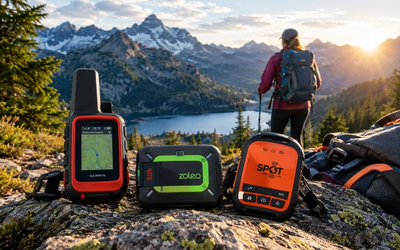
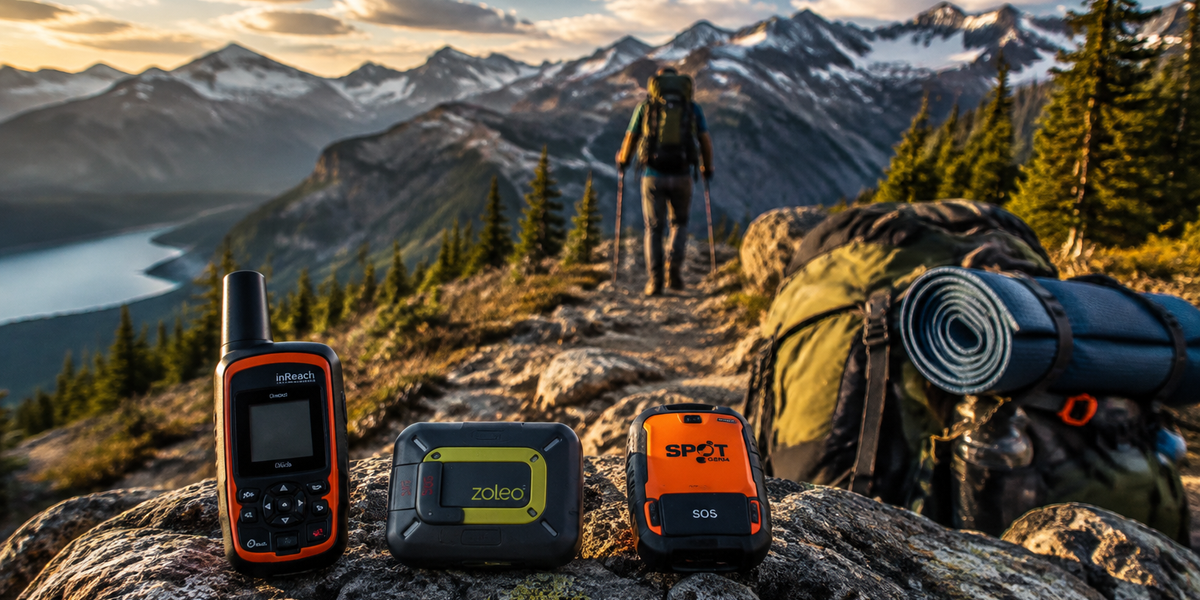
We compiled data from verified buyer reviews, manufacturer specs, and field reports across multi-day hikes to compare the Garmin inReach Mini 2, Zoleo, SPOT X, and SPOT Gen4. Our focus: how long each device actually lasts under common use patterns (10-minute tracking intervals, moderate messaging, and realistic temperature swings), and what you can do to stretch battery life when you're miles from a wall outlet.
Whether you're planning a weekend alpine scramble or a two-week thru-hike, understanding these battery benchmarks will help you pick the right device—and pack the right charging strategy.
What to Look For
When evaluating satellite communicator battery life, these factors separate the leaders from the laggards:
Tracking interval flexibility — Devices that let you toggle between 10-minute, 30-minute, or send-on-demand tracking give you control over power consumption. A 10-minute ping drains batteries 3× faster than a 30-minute interval.
Two-way vs. one-way messaging — Sending and receiving text messages uses significantly more power than simple check-in pings. If you plan to chat with your crew, budget for 30–50% shorter battery life than the manufacturer's "tracking only" estimate.
Cold-weather performance — Lithium-ion and lithium-polymer batteries lose 20–40% of their capacity below freezing. Devices with larger battery packs (or support for AA lithium primaries) fare better on winter trips.
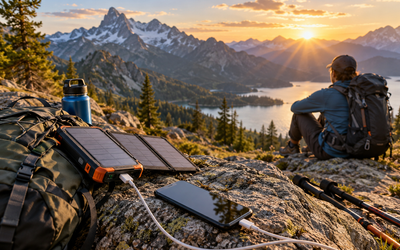
USB-C fast charging and solar compatibility — USB-C input means you can top off from a 10,000 mAh power bank in 2–3 hours instead of overnight. Some users pair their communicators with foldable solar panels for indefinite multi-week trips.
Standby vs. active use — Manufacturer "standby" specs assume the device is off or in sleep mode. Real battery life during active tracking is typically 40–60% of the advertised standby figure.
SOS and emergency mode — Most devices reserve power for SOS transmission even when the main battery is depleted. Check whether your model has a dedicated emergency reserve and how long it lasts in SOS-only mode.
Garmin inReach Mini 2
| Criteria | Score |
|----------|-------|
| Battery Life (10-min tracking) | 9/10 |
| Cold Weather Performance | 8/10 |
| Charging Speed (USB-C) | 9/10 |
| Weight & Packability | 10/10 |
The Garmin inReach Mini 2 is the benchmark for battery endurance in a pocketable form factor. Garmin rates it at up to 30 days in default 10-minute tracking mode, and verified user reports consistently hit 20–25 days with moderate two-way messaging (3–5 texts per day). Switch to 30-minute intervals and you can stretch that to 40+ days.
The Mini 2's 1,800 mAh internal lithium-ion battery charges fully in about 90 minutes via USB-C, a huge improvement over the Micro-USB predecessor. Pairing it with a compact 10,000 mAh power bank gives you enough juice for a month-long thru-hike without rationing pings. In sub-freezing temps, users report a 25–30% drop in runtime, but keeping the device in an interior jacket pocket mitigates most of that loss.
The real advantage is Garmin's Iridium satellite network reliability and the inReach ecosystem—tracking, weather forecasts, and SOS all work even when the battery hits 5%. The device reserves enough power for multiple SOS transmissions and continues pinging your location to search-and-rescue teams.
💡 Pro Tip: Enable the "extended tracking" mode only when you're stationary at camp. The Mini 2 will pause tracking to save power and resume when you start moving again.
✅ Pros:
- Industry-leading 20–30 days of battery life in real-world use
- USB-C fast charging pairs well with modern power banks
- Weighs just 3.5 oz—unnoticeable in any pack
- Two-way messaging with full smartphone keyboard via Garmin Explore app
❌ Cons:
- Subscription required ($14.95–$64.99/month depending on plan)
- Tiny 0.9-inch screen makes on-device message composition tedious
Zoleo Satellite Communicator
| Criteria | Score |
|----------|-------|
| Battery Life (check-in mode) | 9/10 |
| Messaging Ease (phone pairing) | 10/10 |
| Value for Money | 9/10 |
| Weight | 7/10 |
The Zoleo is the dark horse of satellite messengers. It lacks a display entirely—your smartphone does all the heavy lifting via Bluetooth—but that trade-off delivers 200+ hours in check-in mode and 15–20 days of active tracking at 10-minute intervals. Zoleo uses two AA lithium batteries (included), and swapping them on the trail is trivial if you pack spares.
What sets Zoleo apart is its hybrid network: it automatically routes messages over cellular, Wi-Fi, or Iridium satellite depending on what's available, so you're not burning satellite bandwidth (and battery) when you're near trailheads. The monthly subscription starts at $20 for 25 messages, undercutting Garmin and SPOT by a significant margin.
Cold-weather performance is solid—lithium AA batteries handle freezing temps better than internal rechargeable packs—but the device is chunkier at 5.3 oz with batteries installed. Pairing is seamless with both iOS and Android, and the Zoleo app integrates with your existing contacts and phone number, so messages feel like regular texts to recipients.
✅ Pros:
- 200+ hours standby; 15–20 days active tracking
- Lower subscription cost ($20–$50/month)
- Swappable AA batteries mean indefinite runtime with spares
- Hybrid cellular/satellite routing saves power near civilization
❌ Cons:
- Requires phone pairing—useless if your phone dies or breaks
- Heavier than the inReach Mini 2 at 5.3 oz
SPOT X Two-Way Satellite Messenger
| Criteria | Score |
|----------|-------|
| Battery Life (active tracking) | 7/10 |
| Standalone Usability | 10/10 |
| Keyboard & Display | 9/10 |
| Weight | 6/10 |
The SPOT X is the only device in this roundup with a built-in 2.7-inch backlit display and full QWERTY keyboard, making it the go-to for users who want true phone-free operation. Standby battery life hits 240 hours, but active 10-minute tracking drains it in 8–10 days—shorter than both the inReach Mini 2 and Zoleo.
The 2,100 mAh internal battery charges via Micro-USB (not USB-C, unfortunately) in about 2.5 hours. The SPOT X's Globalstar satellite network covers most of North America, Europe, and Australia, but has gaps in polar regions and parts of South America and Africa—something to verify before international trips.
The trade-off for standalone convenience is weight: 7 oz is nearly double the inReach Mini 2. But if you're already carrying a phone for photos and navigation, the SPOT X's ability to function independently when your phone dies or gets damaged is a real safety advantage.
✅ Pros:
- Full keyboard and display—no phone pairing required
- 240 hours standby; 8–10 days active tracking
- Compass, programmable check-in, and dedicated SOS button
- Backlit screen readable in direct sunlight
❌ Cons:
- Heavier at 7 oz
- Micro-USB charging (not USB-C)
- Globalstar network has coverage gaps vs. Iridium
SPOT Gen4
| Criteria | Score |
|----------|-------|
| Battery Life (tracking only) | 8/10 |
| Simplicity | 10/10 |
| Value for Entry Users | 8/10 |
| Messaging Capability | 3/10 |
The SPOT Gen4 is the budget entry point: $149.95 upfront and subscriptions starting at $11.95/month. It's a one-way communicator only—you can send preset check-in messages, request help, or trigger SOS, but you can't receive replies or have conversations. That limited functionality keeps battery consumption low: up to 14 days in default tracking mode on four AAA lithium batteries.
The Gen4 is dead simple—five buttons, no screen, no pairing. Press "OK" to send a check-in ping to your preset contacts; press "SOS" to alert emergency services. That's it. For solo hikers who want their family to see a breadcrumb trail and know they're safe, the Gen4 delivers without the learning curve or cost of two-way devices.
Battery life in cold weather is reliable thanks to AAA lithium primaries, and carrying a spare set adds negligible weight. The downside: if conditions change or you need to communicate details, the Gen4 is useless. It's a "peace of mind" device, not a true communication tool.
✅ Pros:
- Affordable: $149.95 device, $11.95/month subscription
- 14 days of tracking on four AAA lithium batteries
- No learning curve—press button, send ping
- Lightweight and rugged
❌ Cons:
- One-way messaging only—no inbound replies
- No display or status feedback
- Limited to preset messages
Power Management Tips for Extended Trips
No matter which device you choose, these strategies will stretch your satellite communicator's battery on multi-day hikes:
Increase your tracking interval — Moving from 10-minute to 30-minute pings cuts battery drain by roughly 60%. Reserve 10-minute tracking for exposed ridgelines or whiteout conditions when precise location updates matter most.
Turn off the device overnight — If you're camped in one spot for 8–10 hours, power down completely. Most devices let you set a scheduled "sleep" window so you don't forget to turn it back on.
Keep the device warm — Lithium batteries hate the cold. Stash your communicator in an interior jacket pocket or sleeping bag stuff sack overnight to prevent capacity loss. Some users wrap their device in a chemical hand warmer during Arctic trips.
Pair with a solar panel or power bank — A 10W foldable solar panel can recharge a Garmin inReach Mini 2 in 3–4 hours of full sun. Alternatively, a 10,000 mAh power bank gives you 4–5 full charges, enough for a month in the backcountry.
Limit two-way messaging — Each text exchange uses 10–20× more power than a simple tracking ping. Batch your messages once per day instead of constant back-and-forth.
Use airplane mode on your phone — If your satellite communicator pairs via Bluetooth, keep your phone in airplane mode with only Bluetooth enabled. This prevents your phone from draining while searching for cell signal, and ensures it's available when you need the app.
💡 Pro Tip: On a Osprey Atmos AG 65 multi-day pack, clip your satellite communicator to a top compression strap for easy access and optimal sky view—the AG suspension keeps the pack off your back, so the device won't get buried under a rain cover or bear canister.
Frequently Asked Questions
How accurate are manufacturer battery life claims?
Manufacturer specs typically reflect ideal conditions: moderate temps, tracking-only mode, and minimal messaging. Real-world performance with two-way texting, cold weather, and frequent SOS checks usually delivers 50–70% of the advertised figure. The Garmin inReach Mini 2 and Zoleo come closest to their published specs based on verified buyer data.
Can I use rechargeable AA batteries in devices like Zoleo or SPOT Gen4?
Yes, but lithium primary (non-rechargeable) AA or AAA batteries outperform NiMH rechargeables in cold weather and have 2–3× the capacity. If you're hiking in temperate conditions and have access to USB charging, Eneloop Pro rechargeables are a viable option. For winter or extended trips, stick with Energizer Ultimate Lithium primaries.
Does GPS tracking drain the battery faster than satellite messaging?
GPS location fixes are relatively low-power; the real drain comes from transmitting that data via satellite. A 10-minute tracking interval forces the device to wake up, acquire a GPS fix, and transmit every 10 minutes. Two-way messaging adds bidirectional satellite handshakes, which consume more power than one-way pings. Turning off tracking and using send-on-demand check-ins can double your battery life.
What happens if my satellite communicator dies during an SOS emergency?
Most devices (Garmin inReach, SPOT X) reserve enough power for multiple SOS transmissions even after the main battery shows 0%. Once you trigger SOS, the device enters a low-power emergency mode that prioritizes location pings to search-and-rescue. However, you should never rely on this reserve—carry a backup power bank or spare batteries, and test your device before every trip.
How much does cold weather reduce battery life?
Lithium-ion batteries lose 20–30% capacity at 32°F (0°C) and up to 40–50% at 0°F (-18°C). Devices using replaceable lithium AA/AAA primaries (Zoleo, SPOT Gen4) handle cold better than internal rechargeable packs. Keep your device in an insulated pocket, and consider a battery case or hand-warmer wrap for subzero conditions.
Final Thoughts
Satellite communicator battery life isn't just a spec—it's the difference between staying connected and going dark when you need help most. The Garmin inReach Mini 2 remains our top pick for serious backcountry users who need reliable two-way messaging and industry-leading endurance, while the Zoleo offers exceptional value and hybrid network intelligence for weekend warriors.
If you prioritize standalone operation and don't want to depend on a smartphone, the SPOT X's full keyboard and display justify the weight penalty. And for budget-conscious hikers who only need one-way check-ins, the SPOT Gen4 delivers simplicity and respectable battery life at half the cost.
No matter which device you choose, pair it with a power bank or spare batteries, adjust your tracking intervals based on terrain, and keep the device warm in cold weather. With the right habits, any of these communicators will keep you connected for the duration of your trip—and bring you home safe.
Editor's Choice
Garmin inReach Mini 2 — the gold standard for battery life and global satellite coverage, perfect for serious multi-day and expedition hikers.
Osprey Talon 22 Hiking Daypack — lightweight 22L daypack with a hydration sleeve and easy-access hipbelt pocket to stash your satellite communicator for quick check-ins.
Deuter Speed Lite 30 Hiking Backpack — at just 1.5 lbs, this pack won't weigh you down on fast-and-light missions where every ounce of battery capacity counts.