Disclosure: As an Amazon Associate, HikePod earns from qualifying purchases at no extra cost to you.
⭐ Our Top Pick
🏆 Best Overall: Nemo Helio Pressure Shower — foot-pump pressure system works anywhere, no sun or batteries required.
💰 Best Value: Advanced Elements Summer Shower — reliable solar heating and 5-gallon capacity at half the price of premium models.
Introduction
Nothing beats a warm shower after a dusty trail ride or a long day setting up camp. But when you're miles from civilization, your shower options narrow to solar bags that dangle from trees or battery-powered gadgets that promise luxury in the backcountry. After comparing dozens of portable camp showers based on verified specs and thousands of buyer reviews, we've identified the key differences between solar and battery-powered systems — and which models actually deliver.
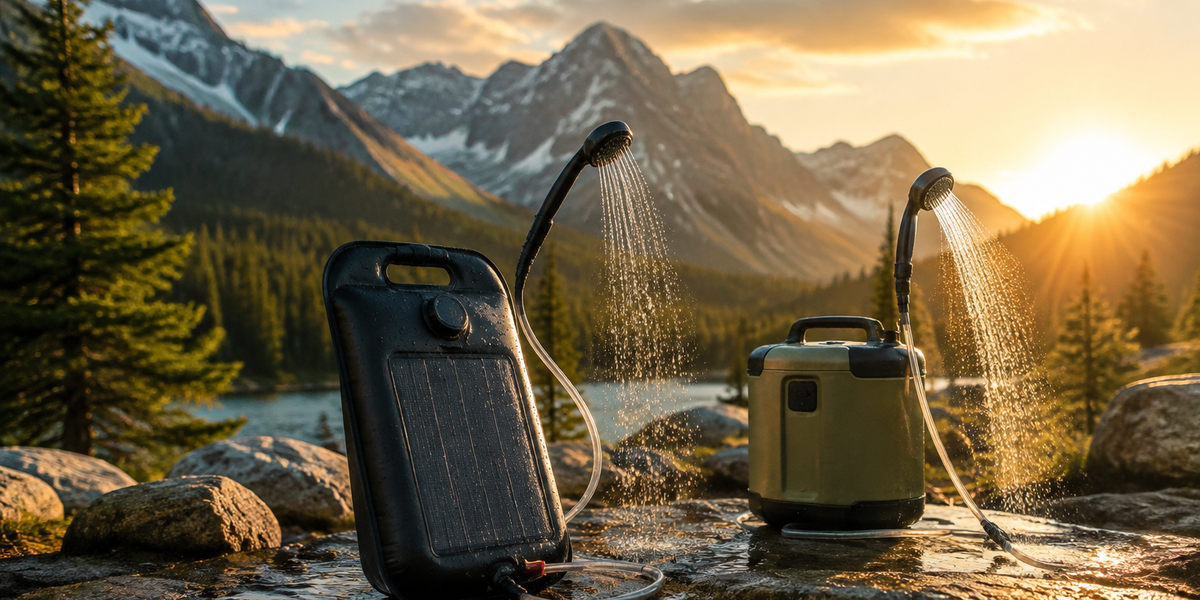
The camp shower market has evolved significantly. Solar showers remain the lightweight, budget-friendly standard for weekend warriors, while battery-powered pressure showers have become the go-to for overlanders and van-lifers who want consistent hot water without waiting for the sun. Both technologies have their place, and the right choice depends on your camping style, vehicle space, and tolerance for setup time.
This guide breaks down what separates a great camp shower from a frustrating one, reviews the top models in each category, and helps you choose the system that fits your outdoor routine.
What to Look For
Flow Rate and Pressure — Solar showers rely on gravity, delivering 0.5-1.5 GPM depending on elevation and bag fullness. Pressure showers (foot-pump or battery) maintain 1.5-2.5 GPM throughout the tank. If you're washing off salt water or rinsing gear, pressure matters more than capacity.
Heating Method — Solar bags heat passively in 2-4 hours of direct sun, reaching 90-110°F on clear days. Battery-powered models with heating elements warm water in 20-40 minutes but drain power fast. Insulated reservoirs hold heat longer if you pre-warm water at camp.
Capacity vs Weight — A 5-gallon solar shower weighs 40+ lbs when full but offers multiple rinses. An 11-liter pressure shower is easier to carry and refill but requires more frequent trips to the water source. Match capacity to your group size and water availability.
Portability and Packability — Backpackers prioritize sub-5-oz solar bags that compress to fist-size. Car campers can afford rigid tanks with built-in pumps. Overlanders want durable, vehicle-mounted systems that survive washboard roads.
Durability and UV Resistance — Cheap PVC solar bags crack after one season of UV exposure. Look for reinforced TPU construction, welded seams, and replaceable nozzles. Battery housings should be IPX7-rated if you're showering near the unit.
Setup and Ease of Use — Gravity showers need a 6+ ft hanging point (tree branch, roof rack, tripod). Pressure showers sit on the ground but require pumping or charging. Consider your typical campsite layout and whether you'll have overhead rigging options.
💡 Pro Tip: Pre-fill your solar shower before leaving home and let it heat on your dashboard during the drive. You'll arrive at camp with hot water ready, no sun-waiting required.
Nemo Helio Pressure Shower
| Criteria | Score |
|----------|-------|
| Pressure Consistency | 9/10 |
| Portability | 8/10 |
| Ease of Use | 9/10 |
| Value | 7/10 |
The Nemo Helio stands out because it eliminates the solar shower's biggest weakness — inconsistent flow — without adding batteries to the packing list. You pump the foot pedal 8-10 times to pressurize the 11-liter tank, then get 5-7 minutes of steady spray at around 2 GPM. That's enough for a full body rinse or washing two people's hair without re-pumping.
The system packs down to the size of a 2-liter bottle and weighs just 24 oz empty, making it viable for moto camping and overland rigs where every cubic inch counts. The wide-mouth opening accepts water from streams, spigots, or pre-heated pots. Buyers consistently praise the valve quality and cite 3+ seasons of use without leaks.
The trade-off is manual labor and ambient water temperature. You'll pump every few minutes during longer showers, and unless you pre-heat water on a camp stove, you're showering cold. But for reliability across all weather conditions and zero battery anxiety, the Helio is hard to beat.
✅ Pros:
- Foot pump delivers consistent pressure without batteries or charging
- Compact design fits in panniers or roof boxes
- Works in overcast, shaded, or cold-weather camps where solar fails
❌ Cons:
- No heating element, water stays ambient unless pre-warmed
- Requires periodic re-pumping during use
Advanced Elements Summer Shower
| Criteria | Score |
|----------|-------|
| Heating Speed | 7/10 |
| Flow Rate | 5/10 |
| Capacity | 8/10 |
| Value | 9/10 |
For car campers on a budget, the Advanced Elements Summer Shower hits the sweet spot between price and performance. The 5-gallon black PVC bag features a reflective side panel that focuses sunlight for faster warming — verified buyers report 100°F+ water after 3 hours in direct summer sun. The roll-top closure is foolproof, and the reinforced hang loops tolerate rough handling.
Flow is purely gravity-dependent, so expect a trickle rather than a spray. The included shower head has an on-off valve but no pressure adjustment. This works fine for rinsing off at the beach or washing dogs, but falls short if you want a proper hair-washing experience. The material is thin enough to puncture on sharp branches, though Advanced Elements sells patch kits.
At under $50, this is the gateway solar shower that convinces skeptics the category is worth exploring. Just manage your expectations around flow rate and don't expect multi-season durability from the basic construction.
✅ Pros:
- Affordable entry point for solar shower category
- Reflective panel speeds heating compared to standard black bags
- Large 5-gallon capacity handles multiple quick rinses
❌ Cons:
- Gravity-only flow is weak, especially as bag empties
- Thin PVC material prone to punctures and UV degradation
RinseKit PRO Portable Shower
| Criteria | Score |
|----------|-------|
| Hot Water Duration | 9/10 |
| Pressure Consistency | 9/10 |
| Portability | 6/10 |
| Value | 6/10 |
The RinseKit PRO is the camp shower for overlanders who refuse to compromise on comfort. The insulated 2-gallon tank holds pre-heated water at temperature for 2+ hours, and the rechargeable battery powers a spray nozzle with adjustable flow settings. You get genuine shower-at-home pressure without pumping, and the dual spray modes (wide shower / focused jet) handle everything from body rinsing to muddy bike washing.
Setup is dead simple: fill with hot water from your camp stove or vehicle water heater, charge the battery via USB-C, and spray. The unit sits on the ground, so no tree-hunting or rigging required. Buyers with roof-top tents and camper vans especially appreciate the self-contained design.
The downsides are weight and price. At 5.2 lbs when full, this isn't a backpacking option. And $300 buys a lot of solar showers or campground day passes. But for the van-life crowd who want hot showers on multi-week trips without RV hookups, the RinseKit PRO justifies its premium positioning.
✅ Pros:
- Insulated reservoir keeps water hot for extended use
- Battery-powered spray nozzle delivers consistent high pressure
- Ground-sitting design works without overhead hanging points
❌ Cons:
- Heavy and bulky compared to solar alternatives
- High price point limits accessibility for casual campers
Sea to Summit Pocket Shower
| Criteria | Score |
|----------|-------|
| Packability | 10/10 |
| Weight | 10/10 |
| Durability | 6/10 |
| Capacity | 7/10 |
When every ounce counts, the Sea to Summit Pocket Shower becomes the only viable option. At 4.9 oz and the size of a tennis ball when packed, this 10-liter solar shower disappears into a backpack side pocket. The roll-top closure and welded seams prevent leaks, and the compact shower head has a twist valve for flow control.
This is a minimalist tool that does one job: provide a gravity-fed rinse after multi-day treks. The material is noticeably thin — you'll baby this thing to avoid snags — but that's the trade-off for sub-5-oz weight. Heating happens through passive solar absorption, so plan for 3+ hours of sun exposure. The flow rate is anemic, but sufficient for washing hair or wiping down with a camp towel.
If you're fastpacking, bikepacking, or doing lightweight backpacking where a Black Diamond Spot 400-R Rechargeable Headlamp is already a luxury item, the Pocket Shower is your only realistic camp shower option. Car campers and overlanders should look at higher-capacity, more durable models.
✅ Pros:
- Ultralight 4.9 oz weight ideal for backpacking
- Compresses to tennis-ball size for minimal pack space
- 10-liter capacity adequate for solo trekkers
❌ Cons:
- Thin material requires careful handling to avoid tears
- Low gravity-only flow rate feels slow compared to pressure systems
Solar vs Battery-Powered: Which System Wins?
Solar showers win on simplicity, weight, and cost. They require no charging, no pumping (if gravity-fed), and no moving parts to break. The disadvantages are weather dependency, slow heating, and weak flow. If you're car camping in summer and have 3+ hours of sunlight to spare, solar makes sense.
Battery-powered showers win on pressure, convenience, and consistency. They work in overcast weather, don't require hanging points, and deliver shower-at-home flow rates. The downsides are weight, cost, and battery management. If you're overlanding with vehicle power or doing extended trips where comfort matters, battery-powered is worth the investment.
Pressure showers with foot pumps (like the Nemo Helio) split the difference — they offer pressure without batteries, but require manual pumping and don't heat water. This middle ground works well for adventure motorcyclists, bikepacking campers, and minimalist overlanders who want reliable flow without electrical dependencies.
💡 Pro Tip: If you're torn between systems, start with a budget solar shower for weekend trips. If you find yourself frustrated by flow rate or heating time, upgrade to a pressure or battery model. Most campers discover their preference after two or three outings.
Frequently Asked Questions
How long does it take to heat a solar shower?
Most black PVC solar showers reach 90-110°F after 2-4 hours in direct sunlight, depending on air temperature and starting water temp. Reflective panels can cut heating time by 30-45 minutes. On cloudy days, expect lukewarm water at best. Pre-filling with warm tap water before leaving home is the fastest heating hack.
Can I use a camp shower for washing dishes or gear?
Absolutely. Pressure showers with jet nozzles excel at blasting mud off boots, rinsing wetsuits, or pre-washing cookware. Solar showers work fine for dishes but the weak flow makes scrubbing take longer. Just avoid using soapy water near natural water sources — pack out gray water or use biodegradable soap 200+ feet from streams.
How do I hang a solar shower without trees?
Portable shower tripods work on beach campsites or desert camps. Roof racks, awning poles, and tailgate mounts also provide hanging points. Some overlanders install permanent shower brackets on their rig's exterior. Ground-sitting pressure showers eliminate the hanging problem entirely.
Are battery-powered camp showers worth the cost?
For weekend car campers, probably not. For overlanders, van-lifers, or anyone doing multi-week trips where comfort improves quality of life, yes. The convenience of on-demand hot water and high pressure justifies the $200-300 price if you're showering 3+ times per week on the road.
What's the best way to clean a camp shower?
Rinse thoroughly after each trip to prevent mildew and mineral buildup. Once a season, fill with a vinegar-water solution (1:10 ratio), let sit 30 minutes, then rinse completely. Store dry with the cap off to allow air circulation. UV exposure degrades materials over time, so keep solar showers out of direct sun when not in use.
Final Thoughts
The best camp shower for you depends on how you camp. Backpackers need ultralight solar options like the Sea to Summit Pocket Shower. Car campers on a budget should start with the Advanced Elements Summer Shower. Overlanders and van-lifers who want reliable pressure should invest in the Nemo Helio or step up to the RinseKit PRO if hot water on demand matters.
We recommend starting with the Nemo Helio Pressure Shower for its versatility across camping styles. It works in any weather, doesn't require batteries, packs small, and delivers the consistent flow that makes showering feel like showering rather than a lukewarm trickle. Pair it with a pre-heated water source and you've got a reliable backcountry hygiene system that doesn't depend on the sun cooperating.
Whatever system you choose, having a camp shower transforms multi-day trips from gritty endurance tests into sustainable adventures. Your trail partners will thank you.
Editor's Choice
If you're building out your camp kitchen or sleep system, these HikePod favorites pair well with a portable shower setup:
Big Agnes Copper Spur HV UL2 Backpacking Tent — ultra-light shelter that sets up fast when you're eager to shower and crash after a long day hiking.
Black Diamond Spot 400-R Rechargeable Headlamp — waterproof headlamp with red night-vision mode, perfect for evening showers without disturbing campsite neighbors.