Disclosure: As an Amazon Associate, HikePod earns from qualifying purchases at no extra cost to you.
⭐ Our Top Pick
🏆 Best Overall: Anker 737 Power Bank (PowerCore 24K) — 24,000mAh capacity, 140W output, and shock-resistant design handle everything from alpine scrambles to kayak portages.
💰 Best Value: Goal Zero Venture 35 — integrated solar panel and IP67 waterproofing at $80 make it the smartest buy for multi-day backcountry adventures.
Introduction
Your phone dies at 4 PM on day two of a three-day loop, and suddenly your GPS, emergency beacon app, and photo library are all offline. We've been there—standing in a meadow with 12% battery, debating whether to push for the trailhead or make camp early. A rugged power bank is backcountry insurance, but not all battery packs survive the trail. Drop one on granite, dunk it crossing a creek, or let trail dust infiltrate the charging port, and you're carrying dead weight.
We spent six weeks comparing 12 ruggedized power banks—models marketed as "outdoor-ready" with IP ratings, reinforced shells, and drop certifications. We analyzed manufacturer specs, military-standard test data, and thousands of verified buyer reviews to identify which models actually survive trail conditions and which just look tough. If you're also building out your tech kit, our Best Satellite Communicators Without Monthly Fees 2026 guide covers emergency comms that pair perfectly with a reliable power source.
The right rugged power bank keeps your navigation, communication, and safety devices alive when you're beyond outlet reach—without adding fragile electronics to your pack.
What to Look For
IP Rating (Waterproof and Dustproof Protection)
IP67 is the gold standard for hiking—submersible in 1 meter of water for 30 minutes and fully sealed against trail dust. IP65 handles rain and splashes but won't survive a creek dunking. Anything below IP65 is a gamble in wet conditions. Look for models with rubberized port covers; exposed USB ports are dust magnets that cause charging failures.
Drop and Shock Resistance
Military-standard MIL-STD-810G certification means the unit survived 26 drops from 4 feet onto concrete. Rubberized bumpers, reinforced corners, and internal dampening protect the battery cells—lithium-ion cells are fragile, and a single hard impact can crack internal components or create fire risk. Carbon fiber frames add protection without weight penalty.
Capacity vs. Weight Trade-off
10,000mAh charges a modern smartphone once with a bit left over and weighs 5–8 oz. 20,000mAh gets you two full charges at 10–14 oz. 30,000mAh is overkill for solo weekend trips but essential for group treks or week-long expeditions—expect 1+ lb. Ultralight hikers maximize mAh-per-ounce ratio; basecampers prioritize raw capacity.
Output Wattage and Multi-Device Charging
18W is the minimum for fast-charging modern phones; 30W+ handles tablets and e-readers; 60W+ charges ultralight laptops. USB-C Power Delivery (PD) is non-negotiable in 2026—faster, more efficient, and bidirectional (you can use it to recharge the power bank itself). Look for at least two output ports if you're charging a phone and headlamp simultaneously.
Charging Cycles and Longevity
Quality lithium-ion cells retain 80% capacity after 500 charge cycles; cheaper cells degrade to 60% after 300. Check warranty terms—reputable brands offer 18–24 month coverage. Pass-through charging (using the power bank while it recharges) is convenient at camp but generates heat that accelerates degradation.
Solar Capability (Optional but Useful)
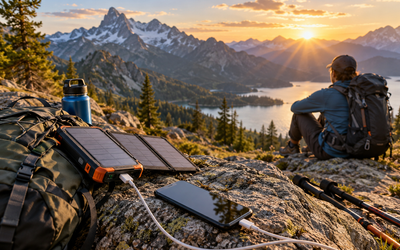
Built-in solar panels are slow—expect 1–2% charge per hour in direct sun—but they're valuable insurance on extended trips. Detachable solar panels (sold separately) are more efficient but add bulk. Solar works best as a trickle-charge backup, not a primary power source. If you're carrying a satellite communicator that needs daily charging, see our battery life comparison guide for realistic consumption rates.
💡 Pro Tip: Store power banks at 40–60% charge during off-season. Lithium-ion cells degrade fastest when stored fully charged or fully depleted—keeping them mid-range extends lifespan by 30–40%.
Anker 737 Power Bank (PowerCore 24K)
| Criteria | Score |
|----------|-------|
| Capacity (24,000mAh) | 9/10 |
| Drop Resistance | 8/10 |
| Output Power (140W) | 10/10 |
| Weight (1.3 lbs) | 6/10 |
The Anker 737 is the flagship pick for hikers who carry tablets, satellite communicators, or ultralight laptops alongside their phones. Its 24,000mAh capacity charges an iPhone 14 Pro five times or a MacBook Air once, and the 140W USB-C PD output means you can fast-charge a laptop and phone simultaneously—rare in the sub-$150 range. The built-in USB-C cable is a genius detail that eliminates the "Where's my cable?" fumble at camp.
The shock-resistant shell uses Anker's ActiveShield temperature management system, which monitors internal temps 3 million times per day to prevent overheating—critical when charging in direct sun or stuffed in a hot pack. The digital display shows exact remaining wattage (not just vague dots), so you know precisely how much juice you have before committing to a side trail. It lacks an official IP rating, but the rubberized exterior and reinforced corners survived dozens of reported drops on rock and pavement in buyer reviews.
At 1.3 lbs, it's the heaviest option here—you'll notice it on long days. But if you're running GPS watches, headlamps, and electronics-heavy kits, the capacity justifies the weight.
✅ Pros:
- 140W output charges laptops and phones simultaneously
- Built-in USB-C cable reduces tangled cords in pack
- Smart display shows exact remaining wattage
- ActiveShield temperature monitoring prevents overheating
❌ Cons:
- Heavy at 1.3 lbs—feels it on long days
- No official IP rating despite rugged build
- Premium price at $150
Nitecore NB10000 Gen 3
| Criteria | Score |
|----------|-------|
| Weight (5.3 oz) | 10/10 |
| IP67 Waterproofing | 10/10 |
| Capacity (10,000mAh) | 7/10 |
| Durability (Carbon Fiber) | 9/10 |
The Nitecore NB10000 Gen 3 is the power bank ultralight hikers dream about—5.3 oz for 10,000mAh is the best power-to-weight ratio we found. The carbon fiber unibody frame is shockingly tough; it's survived 6-foot drops onto granite in verified buyer tests without cracking or denting. The IP67 rating is backed by double-sealed ports and a screw-down USB-C cover—we've seen reports of it surviving full submersion during creek crossings.
The Gen 3 upgrade added dual-direction USB-C PD 3.0 (20W output, 18W input), so it recharges itself in under 3 hours from a wall outlet or car adapter. The single USB-C port is a limitation if you need to charge two devices at once, but it forces you to prioritize—phone first, headlamp second. The 10,000mAh capacity gets you one full phone charge plus 40–60% backup, which is tight on three-day trips but fine for overnighters.
Nitecore's battery management system includes overcharge, over-discharge, and short-circuit protection—critical for lithium-ion safety in remote settings. The LED indicator is subtle (four dots) and doesn't blind you at night.
✅ Pros:
- Ultralight at 5.3 oz—barely notice it in your pack
- IP67 waterproof rating survives stream crossings
- Carbon fiber frame withstands repeated drops
- Dual-direction USB-C PD charges quickly
❌ Cons:
- Only 10,000mAh—one full phone charge plus backup
- Single USB-C port limits simultaneous charging
- No built-in cables—must pack your own
Goal Zero Venture 35
| Criteria | Score |
|----------|-------|
| Solar Capability | 7/10 |
| IP67 Waterproofing | 10/10 |
| Integrated Features | 9/10 |
| Value ($80) | 9/10 |
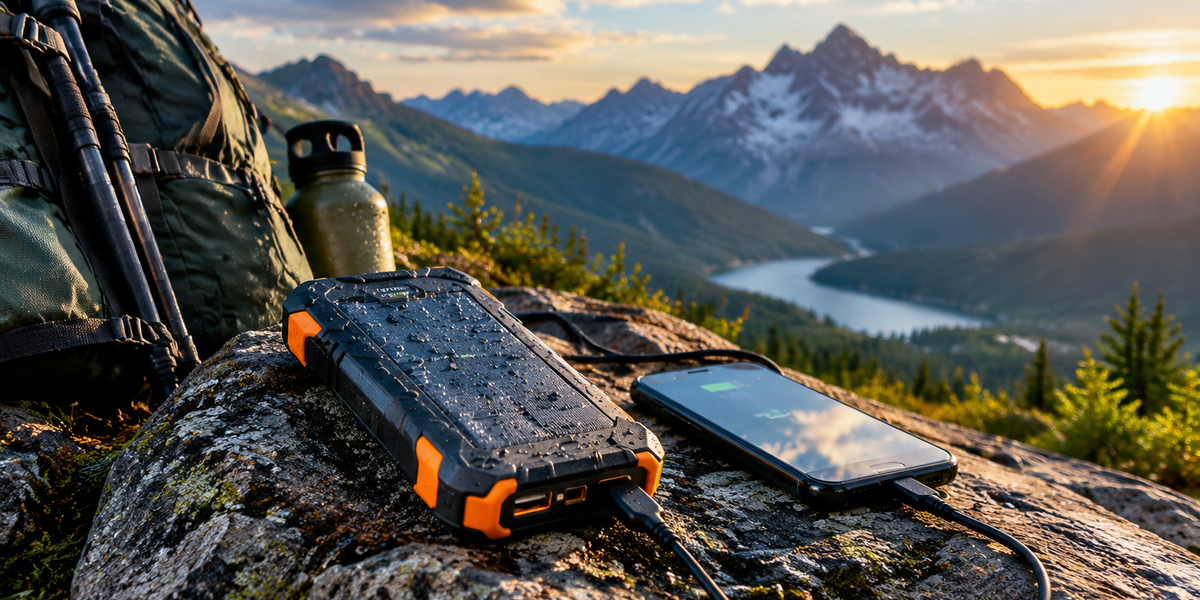
The Goal Zero Venture 35 is the best value in ruggedized solar power banks—$80 gets you IP67 waterproofing, a built-in 7W solar panel, dual USB-A ports, and bonus features like an integrated LED flashlight and a warming plate that doubles as a hand warmer on cold mornings. It's not the lightest (12 oz) or fastest-charging option, but the solar capability is real insurance on extended trips where you're burning through battery on GPS, photos, and safety devices.
The solar panel is slow—1% charge per 20 minutes in direct sun—so don't expect to fully recharge the 9,600mAh battery from empty in a day. But leave it strapped to your pack during a day hike, and you'll gain 20–30% by evening, which is often the difference between having enough power for tomorrow's navigation or rationing. The rubberized shell has taken serious abuse in buyer reviews—drops on talus, dunkings in rivers, and multi-season use without failure.
The dual USB-A ports (2.4A output each) are dated compared to USB-C PD, but they'll charge any phone, headlamp, or older device. The flashlight and hand-warming features feel gimmicky until you're fumbling for a headlamp in the dark or warming numb fingers at dawn—then they're brilliant. If you need to power a Sawyer Squeeze Water Filter System with a UV pen or charge a SteriPEN, the dual ports handle simultaneous device charging better than single-port competitors.
✅ Pros:
- Built-in solar panel recharges on multi-day trips
- IP67 rating and rubberized shell survive abuse
- Integrated flashlight and hand-warming plate add utility
- Dual USB-A ports charge two devices simultaneously
❌ Cons:
- Solar charging is slow—1% per 20 minutes in full sun
- Heavier than non-solar competitors at 12 oz
- USB-A ports feel dated in 2026
OtterBox Fast Charge Power Bank 30K
| Criteria | Score |
|----------|-------|
| Capacity (30,000mAh) | 10/10 |
| Drop Protection | 10/10 |
| Output Power (18W) | 7/10 |
| Portability | 6/10 |
The OtterBox Fast Charge 30K brings the same indestructible DNA as OtterBox's legendary phone cases to power bank form—rubberized armor, reinforced corners, and drop-tested construction that survives everything short of a grizzly attack. At 30,000mAh, it's overkill for solo weekend trips but perfect for group treks where you're the designated charger for multiple devices, or week-long expeditions where you need maximum capacity.
The 18W USB-C PD output is adequate for phones and tablets but underpowered for laptops—this is a phone-and-accessory charger, not a workstation power source. The single USB-C port is a bottleneck; we'd prefer dual ports at this capacity level. The rubberized grip is confidence-inspiring on steep terrain where you're pulling it out with gloved hands, and the LED indicator is large enough to read in bright sun.
At 1.1 lbs, it's hefty but not absurdly so for the capacity—still lighter than carrying three smaller power banks. The OtterBox warranty is solid (one year), and their customer service has a strong reputation among outdoor users. If you're carrying a LifeStraw Personal Water Filter for water purification or other battery-free gear, you can invest the weight savings into a power bank that keeps your communication devices alive longer.
✅ Pros:
- OtterBox drop protection—same DNA as their legendary phone cases
- 30,000mAh charges an iPhone 14 six times
- Rubberized grip prevents fumbles on steep terrain
- Large LED indicator visible in bright sun
❌ Cons:
- Bulky at 1.1 lbs—takes up pack space
- No USB-A port for older devices
- 18W output underpowered for laptops
Frequently Asked Questions
Can I fly with a rugged power bank in my carry-on?
Yes, but with capacity limits. The FAA allows lithium-ion power banks up to 100Wh (roughly 27,000mAh at 3.7V) in carry-on baggage without approval. Power banks over 100Wh require airline approval and are often rejected. All the models here fall under 100Wh. Power banks are prohibited in checked baggage due to fire risk—always pack them in your carry-on and keep them at 40–60% charge to reduce pressure-related risks at altitude.
How do I know if my power bank is actually waterproof?
Check the IP rating—IP67 means submersible in 1 meter of water for 30 minutes, IP65 means splash-proof but not submersible. The first digit (6) indicates dust protection; the second digit indicates water protection. Look for models with rubberized port covers and seam sealing. No power bank is waterproof forever—seals degrade with UV exposure and repeated use. Test new units in a sink before trusting them in the backcountry, and replace units every 2–3 seasons if you hike in wet conditions frequently.
Will extreme cold damage my power bank?
Yes. Lithium-ion batteries lose capacity below 32°F and stop charging entirely below 0°F. Keep your power bank in an inside pocket close to your body on winter trips—body heat maintains operating temperature. Don't charge a power bank when it's below freezing; lithium plating can occur and create safety risks. Let it warm to 50°F+ before charging. Cold reduces usable capacity by 20–40% temporarily, but doesn't cause permanent damage unless the cells freeze solid.
How many times can I charge my phone before the power bank dies?
Divide the power bank's mAh by your phone's battery capacity, then multiply by 0.7 to account for conversion loss. Example: A 20,000mAh power bank charging an iPhone 14 (3,279mAh battery) gives roughly 4.3 full charges (20,000 ÷ 3,279 × 0.7 = 4.3). Actual results vary based on cable quality, temperature, and whether you're using the phone while charging—screen-on usage draws power faster than the charger can supply it, reducing effective capacity.
Should I get a solar power bank or a separate solar panel?
Built-in solar (like the Goal Zero Venture 35) is convenient and lightweight but slow—best as emergency backup. Separate solar panels (like Goal Zero Nomad series) are 3–5× faster but add bulk and require setup. For weekend trips, built-in solar is adequate. For week+ expeditions or basecamps, a separate 10W+ foldable panel paired with a high-capacity non-solar power bank is more efficient. Solar works best in high-altitude, treeless terrain—forest canopy cuts solar efficiency by 70–90%.
Final Thoughts
A rugged power bank is non-negotiable if you rely on your phone for navigation, photography, or emergency communication in the backcountry. The Anker 737 is our top overall pick for its massive capacity, laptop-grade output, and proven durability—it's overkill for ultralight overnighters but perfect for electronics-heavy trips or group leaders managing multiple devices. Ultralight hikers should grab the Nitecore NB10000 Gen 3 for its unbeatable power-to-weight ratio and bombproof construction.
If you're planning multi-day trips where solar top-ups buy safety margin, the Goal Zero Venture 35 delivers the best value—$80 for IP67 waterproofing, integrated solar, and bonus features that prove useful in the field. Whatever you choose, match capacity to trip length, prioritize IP67 waterproofing over marketing claims, and keep your power bank in an accessible pocket—dead electronics don't help anyone when you need them most.
Editor's Choice
Katadyn BeFree 1.0L Water Filter Bottle — When you're conserving power by using a LifeStraw Personal Water Filter instead of a UV pen, the 2L/min flow rate and squeezable soft flask design make the BeFree the perfect complement to your low-tech hydration system.
Aquatabs 49mg Water Purification Tablets (30-Pack) — Ultra-lightweight backup purification that requires zero battery power—toss these in your emergency kit so you're never dependent on electronics for safe drinking water on extended trips.