Disclosure: As an Amazon Associate, HikePod earns from qualifying purchases at no extra cost to you.
⭐ Our Top Pick
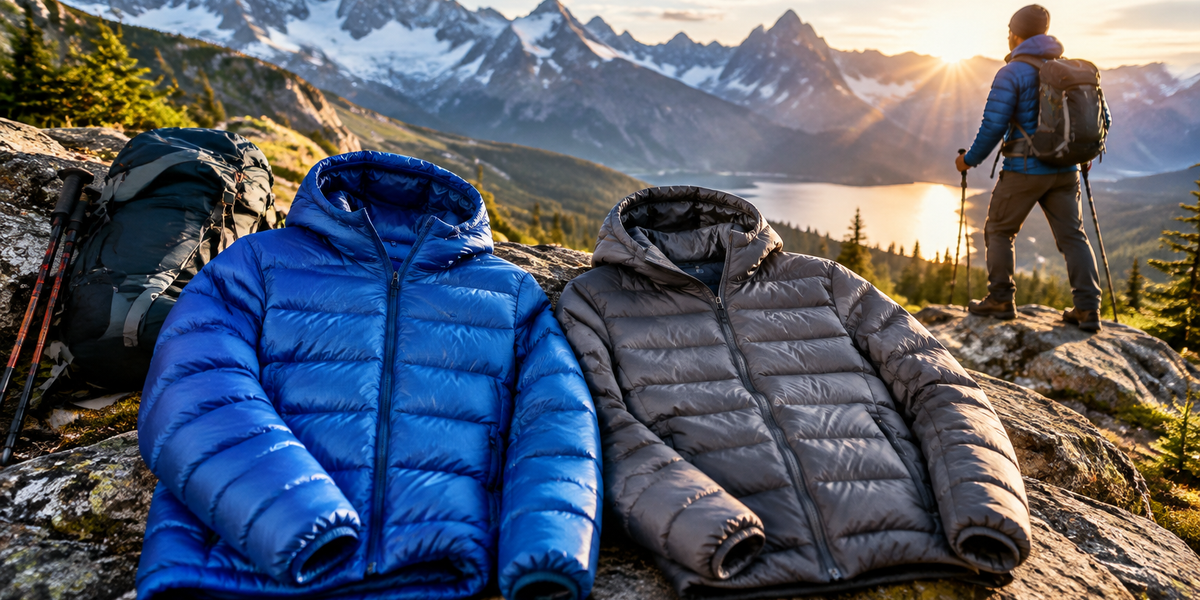
🏆 Best Overall: Down Puffy Jacket — unbeatable warmth-to-weight ratio makes it ideal for cold, dry conditions and alpine environments where every ounce counts.
💰 Best Value: Synthetic Puffy Jacket — maintains insulation when wet, costs less upfront, and requires zero special care—perfect for damp Pacific Northwest trails or budget-conscious hikers.
Introduction
Standing in the trailhead parking lot at 5 a.m., watching your breath fog in the headlamp beam, the insulation layer you choose determines whether you stay warm on ridge traverses or shiver through lunch breaks. Down and synthetic puffy jackets both promise packable warmth, but they deliver that warmth in fundamentally different ways—and those differences matter when you're 8 miles from the trailhead and the weather turns.
After comparing specifications, temperature ratings, and verified buyer reviews across dozens of models, we've identified the key performance factors that separate these insulation types. Down offers superior warmth-to-weight ratios that serious backpackers and alpinists depend on, while synthetic insulation delivers reliable performance in wet conditions at a lower price point. Your ideal choice hinges on where you hike, how you pack, and what matters more: minimal weight or wet-weather resilience.
This guide breaks down fill power ratings, water resistance technologies, compression specs, and real-world durability so you can match insulation type to your specific trail conditions and hiking style.
What to Look For
Warmth-to-Weight Ratio — Down provides 20-30% more warmth per ounce than synthetic at equivalent temperature ratings. A 650-fill-power down jacket weighing 12 oz delivers similar warmth to a 16 oz synthetic jacket. If you're counting ounces for multi-day backpacking trips or need to layer under a shell without bulk, down's efficiency creates noticeable advantages on your back and in your pack.
Wet-Weather Performance — Synthetic insulation retains 80-90% of its warmth when saturated, while untreated down loses nearly all insulating ability when wet. Modern water-resistant down treatments (like DWR-coated down) improve moisture resistance but still don't match synthetic's inherent hydrophobic properties. If you hike frequently in the Pacific Northwest, Appalachian spring weather, or anywhere morning dew and drizzle are standard, synthetic's wet-weather reliability eliminates the anxiety of ruined insulation.
Compressibility and Pack Size — Down compresses to 60-70% the volume of synthetic insulation at equivalent warmth levels. A 700-fill down jacket stuffs into a 3-liter stuff sack, while comparable synthetic needs 5+ liters. For backpackers managing limited pack space or anyone who values a slim profile when the jacket's stowed, down's compression advantage is measurable and meaningful. If you're also evaluating pack options, see our Frameless Backpack vs Internal Frame: Which Should You Choose for Ultralight Hiking in 2026? guide for matching your insulation choice to your pack's capacity.
Durability and Longevity — Down maintains loft and warmth for 10-15 years with proper care (specialized washing, thorough drying, dry storage). Synthetic insulation typically shows noticeable loft degradation after 3-5 years of regular use, as fibers break down through compression cycles. Down requires more careful maintenance but rewards that effort with significantly longer functional lifespan and better resale value.
Price and Value — Quality synthetic puffy jackets start around $80-120, while comparable down jackets begin at $150-200 and premium 800+ fill models exceed $300. Synthetic's lower entry price makes it accessible for casual hikers or those outfitting multiple family members. Down's higher upfront cost amortizes over its longer lifespan, but only if you're committed to proper care and storage.
Care Requirements — Synthetic insulation tolerates machine washing with standard detergent, tumble drying on low heat, and casual storage without special precautions. Down requires down-specific soap, extended low-heat drying with tennis balls to restore loft, and must be stored uncompressed in a large mesh bag to prevent permanent loft loss. The maintenance difference is real—synthetic fits into normal laundry routines, while down demands dedicated care procedures.
💡 Pro Tip: If you're choosing down, invest in a quality waterproof shell like the Patagonia Torrentshell 3L Rain Jacket to protect your insulation from moisture. The pit-zips prevent the interior condensation that gradually dampens down insulation on long climbs.
Down Insulation Deep-Dive
Understanding Fill Power and Performance
| Criteria | Score |
|----------|-------|
| Warmth-to-Weight | 9/10 |
| Compressibility | 9/10 |
| Wet Performance | 3/10 |
| Longevity | 9/10 |
Down insulation uses goose or duck plumage clusters that trap air in three-dimensional structures, creating exceptional warmth with minimal weight. Fill power—measured by how many cubic inches one ounce of down occupies—directly indicates quality and performance. A 650-fill down jacket uses more down by weight to achieve the same warmth as a 750-fill jacket, resulting in slightly more weight and bulk but typically lower cost. Premium 800-900 fill power down delivers maximum warmth-to-weight efficiency for weight-obsessed alpinists and thru-hikers.
Verified buyer reviews consistently highlight down's unmatched packability and warmth on cold, dry trails. Users report jackets maintaining full loft and insulation effectiveness through hundreds of compression cycles when properly stored. Temperature ratings from manufacturers hold accurate in dry conditions—a 20°F-rated down jacket genuinely provides comfort to those temperatures when layered correctly.
The critical vulnerability is moisture. Down clumps when wet, creating cold spots and eliminating air-trapping loft. A $200 down jacket becomes functionally useless if soaked on the trail. Modern DWR-treated down (hydrophobic down) sheds light moisture and dries faster than untreated down, but these treatments add cost and still can't match synthetic's wet-weather resilience.
✅ Pros:
- Superior warmth-to-weight ratio reduces pack weight on multi-day trips
- Excellent compressibility maximizes pack space for other gear
- Long lifespan (10-15 years) with proper maintenance justifies higher initial cost
- Exceptional breathability prevents clamminess during active hiking
❌ Cons:
- Loses nearly all insulating ability when wet
- Requires specialized washing, drying, and storage procedures
- Higher upfront cost ($150-350 for quality models)
- Ethical concerns around down sourcing (look for RDS-certified down)
Synthetic Insulation Deep-Dive
Modern Synthetic Technologies
| Criteria | Score |
|----------|-------|
| Warmth-to-Weight | 6/10 |
| Compressibility | 5/10 |
| Wet Performance | 9/10 |
| Value | 9/10 |
Synthetic insulation uses polyester fibers engineered to mimic down's air-trapping structure. Modern iterations like PrimaLoft, Climashield, and Coreloft represent decades of refinement, delivering 70-80% of down's warmth-to-weight ratio at a fraction of the cost. The fibers are inherently hydrophobic—they don't absorb water—so they maintain loft and insulation even when saturated.
Buyer reviews from Pacific Northwest hikers and Appalachian Trail section hikers emphasize synthetic's reliability in consistently damp conditions. Users report jackets maintaining warmth through morning dew, light rain, and the body moisture that accumulates during steep climbs. The Marmot Trestles Elite Eco 20°F Sleeping Bag demonstrates how synthetic insulation technology translates across outdoor gear—the same moisture-resistant properties that make synthetic puffies dependable in wet weather keep that sleeping bag functional even in humid conditions.
The trade-off is weight and bulk. A synthetic jacket needs 20-30% more insulation by weight to match down's warmth, and it compresses to a larger packed size. For day hikers or those with generous pack capacity, this matters less. For gram-counting backpackers doing 20+ mile days, it's a measurable burden.
Synthetic's shorter lifespan stems from fiber breakdown through compression. After 100-200 stuff cycles, insulation loses noticeable loft. Most quality synthetic jackets deliver 3-5 years of regular use before warmth degrades significantly—acceptable for casual hikers, frustrating for those expecting decade-long service.
✅ Pros:
- Maintains 80-90% of warmth when wet, eliminating down's catastrophic failure risk
- Significantly lower cost ($80-150 for solid models) makes quality insulation accessible
- Machine washable with standard detergent, no special care required
- Hypoallergenic and cruelty-free for those avoiding animal products
❌ Cons:
- Heavier and bulkier than comparable down insulation
- Shorter lifespan (3-5 years) before noticeable loft degradation
- Less breathable, can feel clammy during high-output hiking
- Larger packed size consumes more precious pack space
Choosing Based on Your Hiking Style
Alpine and Cold, Dry Climates: Down Wins
If you're hiking above treeline in the Rockies, Sierras, or Cascades during stable weather windows, down's warmth-to-weight ratio is unbeatable. The combination of cold temperatures and low humidity means moisture risk is minimal, and every ounce matters when you're gaining elevation. Pair down insulation with a quality waterproof shell (like the budget-friendly Marmot Precip Eco Rain Jacket) to protect against unexpected weather, and you've got a versatile, lightweight layering system.
Wet Climates and Shoulder Seasons: Synthetic Delivers
Pacific Northwest trails, Appalachian spring/fall hiking, and anywhere consistent moisture is the norm favor synthetic insulation. The peace of mind knowing your jacket maintains warmth through drizzle, stream crossings, or sweat-soaked climbs is worth the modest weight penalty. Synthetic's lower cost also makes it easier to justify replacing every 4-5 years as loft degrades.
Budget-Conscious Hikers: Synthetic Provides More Value
If you're outfitting for the first time or hiking occasionally rather than weekly, synthetic's $80-120 entry point delivers dependable warmth without the investment or care requirements of down. You can buy a quality synthetic jacket and still have budget for other essential gear upgrades.
💡 Pro Tip: If you're debating whether to carry your puffy in your pack or wear it while hiking, check our Daypack vs Hiking Backpack: Which Should You Choose for Day Hikes? (2026) guide to ensure your pack has adequate capacity and accessibility for midday layer changes.
Frequently Asked Questions
Can you wash down jackets at home or do they require professional cleaning?
You can wash down jackets at home using down-specific detergent (like Nikwax Down Wash), a front-loading washing machine on gentle cycle with cold water, and extensive low-heat tumble drying with tennis balls to restore loft. Professional cleaning costs $20-40 but ensures proper loft restoration if you're uncomfortable with the 2-3 hour drying process. Synthetic jackets tolerate standard laundry detergent and dry in 30-45 minutes.
How much warmer is 800-fill down compared to 650-fill down?
Fill power measures loft, not warmth directly. An 800-fill jacket uses less down by weight to achieve the same warmth as a 650-fill jacket, resulting in lighter weight and better compression. To match warmth, an 800-fill jacket might use 6 oz of down while a 650-fill uses 8 oz—both provide identical insulation, but the 800-fill weighs less and packs smaller. Higher fill power is an efficiency advantage, not a warmth multiplier.
Does synthetic insulation work when completely soaked through?
Synthetic insulation retains approximately 80-90% of its warmth when fully saturated because the hydrophobic fibers don't absorb water and maintain some loft. It won't feel warm or comfortable when soaking wet, but it prevents hypothermia in emergencies. Down loses nearly all insulating ability when soaked, clumping into useless wet masses. This difference is why synthetic is standard for paddling, wet climates, and expeditions where drying opportunities are limited.
How long should a quality puffy jacket last with regular use?
Down jackets maintained properly (stored uncompressed, washed infrequently with down-specific products, kept dry) reliably last 10-15 years while maintaining full loft. Synthetic jackets show noticeable loft degradation after 3-5 years of regular use as fibers break down through compression cycles. Usage frequency, storage conditions, and care quality significantly impact both—a down jacket stuffed perpetually in a pack degrades faster, while a gently-used synthetic jacket might last 7-8 years.
Is water-resistant down worth the extra cost compared to standard down?
Water-resistant (hydrophobic) down treatments add $30-80 to jacket cost but provide meaningful moisture resistance for shoulder-season hiking and humid conditions. Treated down sheds light moisture, maintains loft longer in damp environments, and dries 30-40% faster than untreated down. If you hike frequently in variable weather or can't guarantee bone-dry storage, the treatment is worthwhile. For desert hiking or strictly fair-weather use, standard down suffices.
Final Thoughts
Down and synthetic puffy jackets both deliver packable warmth, but they excel in different conditions and serve different priorities. Down's superior warmth-to-weight ratio and compressibility make it ideal for cold, dry environments where weight matters and moisture risk is low. Synthetic's wet-weather reliability and lower cost suit damp climates, budget-conscious hikers, and anyone who values gear that tolerates neglect.
Choose down if you're hiking alpine routes, counting ounces for multi-day trips, or willing to invest in long-term performance with careful maintenance. Choose synthetic if you're facing consistent moisture, want minimal care requirements, or need dependable warmth on a tighter budget. Both insulation types work—the right choice depends on your specific trails, climate, and what you value in your gear.
Editor's Choice
Patagonia Torrentshell 3L Rain Jacket — Essential waterproof shell that protects either insulation type from trail moisture, with pit-zips that prevent the interior condensation that degrades down performance.
Marmot Precip Eco Rain Jacket — Budget-friendly waterproof layer for hikers who need moisture protection without premium pricing, packable enough to carry on every hike.
Marmot Trestles Elite Eco 20°F Sleeping Bag — Demonstrates synthetic insulation's wet-weather advantages across gear categories—same moisture-resistant properties that make synthetic puffies dependable in damp conditions.