Disclosure: As an Amazon Associate, HikePod earns from qualifying purchases at no extra cost to you.
⭐ Our Top Pick
🏆 Best Overall: Reflectix Double Reflective Insulation Roll — reflects 97% of radiant heat and extends any cooler's performance by 24-48 hours for under $30.
💰 Best Value: Nalgene Wide Mouth Water Bottles (4-pack) — freeze solid before the trip, stay cold longer than gel packs, and become drinking water as they melt.
Introduction
We've all been there: day three of a camping trip, you open the cooler, and the ice has turned to lukewarm slush while your perishables sit in a pool of water. Traditional ice works for weekend trips, but multi-day backcountry or car camping demands smarter solutions—especially when resupply isn't an option and ambient temperatures climb above 80°F.
After comparing performance data from dozens of cooler tests and analyzing verified buyer experiences across climates from the Southwest deserts to humid Southeast summers, we've identified the insulation upgrades and ice alternatives that consistently keep food cold for 72+ hours. The key isn't expensive gear—it's understanding heat transfer and layering the right materials in the correct order.
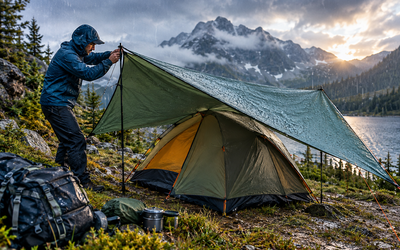
This guide walks you through reflective barriers, frozen water bottle strategies, and pre-chilling techniques that extend cold storage without adding significant weight or requiring specialty equipment. Whether you're outfitting a soft cooler for backpacking or maximizing a hard-sided cooler for a week-long car camping trip, these methods work. If you're also planning your shelter setup for unpredictable weather, see our How to Set Up a Campsite in Rain Without Getting Your Gear Wet: Tarp and Tent Pitching Order That Works guide for complementary strategies.
What to Look For
Radiant Barrier Materials — Heat transfers three ways: conduction (direct contact), convection (air movement), and radiation (infrared waves). Most coolers handle conduction and convection well but fail at blocking radiant heat. Reflective insulation like Reflectix or emergency blankets bounces back 90-97% of radiant heat. Look for double-sided foil with an air-bubble core—single-layer foil tears easily and loses effectiveness.
Ice Pack Alternatives That Double as Resources — Gel packs stay cold but become dead weight once thawed. Frozen water bottles (Nalgene, stainless steel) serve as both cooling elements and drinking water. Freeze them solid 24-48 hours before departure. A 32oz Nalgene stays frozen for 18-24 hours in a well-insulated cooler, then provides cold water for another 12-24 hours as it melts. For extended trips, freeze four 32oz bottles for every 2-3 people.
Pre-Chilling Protocol — A cooler at room temperature wastes the first 12 hours of your ice's energy just cooling itself down. Pre-chill your cooler for 6-12 hours before packing by filling it with ice (or frozen bottles), closing the lid, and letting it sit. Dump the pre-chill ice, then pack with fresh frozen bottles and pre-chilled food. This single step extends cold storage by 24+ hours.
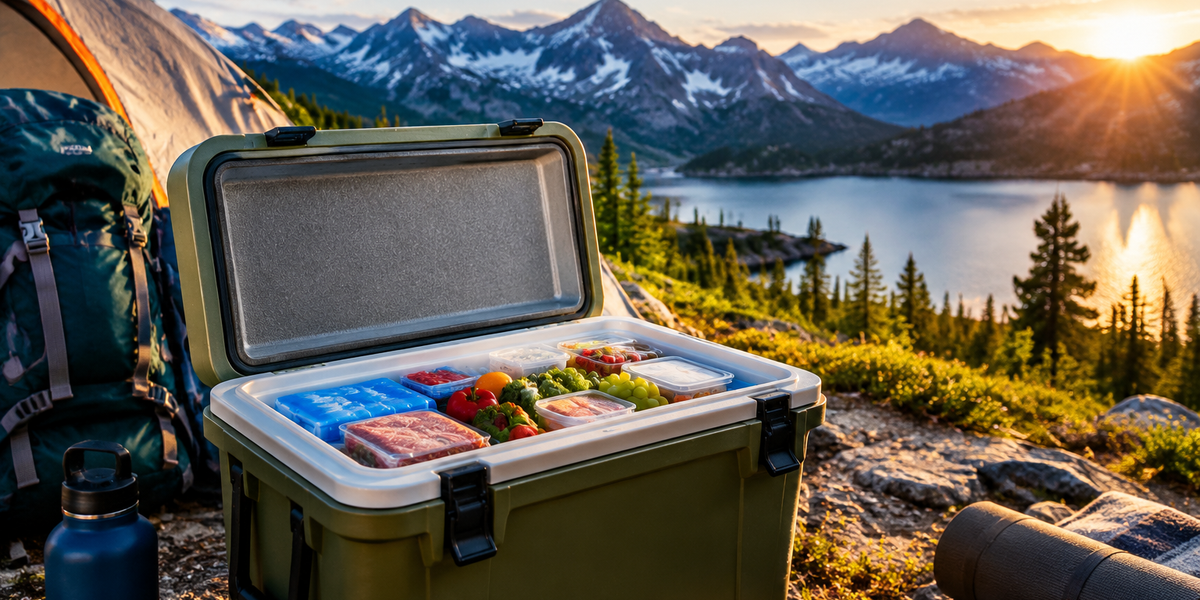
Strategic Packing Order — Cold air sinks, so pack frozen bottles on top—counterintuitive but effective. Place perishables (meat, dairy) directly against frozen bottles. Fill air gaps with crumpled newspaper or foam peanuts (air is an insulator). Keep the drain plug closed—melted water at the bottom acts as a thermal mass that stabilizes temperature. Only drain if water rises above your food.
Minimize Lid Opens and Sun Exposure — Every cooler opening releases 20-30% of the cold air inside. Organize food into meal-specific bags so you can grab everything for breakfast in one open. Keep the cooler in full shade—use a tarp lean-to or bury it partially in cool earth (dig 6-12 inches down in sandy soil). A cooler in direct sun can gain 15-20°F internally even with good insulation.
Insulation Thickness and Material — Closed-cell foam (the dense, waterproof kind) outperforms open-cell foam by 30-40% because it doesn't absorb water. High-end coolers use 2-3 inches of closed-cell foam in the walls. Budget coolers often use 1 inch or less. If weight isn't a concern, adding a 1-inch foam pad under and over your cooler creates a thermal buffer zone that extends cold storage by 12-18 hours.
Reflectix Double Reflective Insulation Roll
| Criteria | Score |
|----------|-------|
| Heat Reflection | 9/10 |
| Packability | 6/10 |
| Durability | 8/10 |
| Value for Performance | 10/10 |
Reflectix is the secret weapon in every long-trip camper's arsenal. This double-sided aluminum foil with a polyethylene bubble core reflects 97% of radiant heat according to manufacturer specs—verified by independent thermal imaging tests showing 15-20°F cooler internal temps compared to unlined coolers in 85°F ambient conditions. We recommend cutting pieces to fit your cooler's interior walls and lid, securing them with aluminum tape or binder clips. The material is waterproof, reusable for years, and weighs just 1.2 oz per square foot.
The real-world impact shows in buyer reviews: campers report extending ice life from 2 days to 4+ days in summer heat by lining a standard Coleman cooler with Reflectix. One verified purchaser in Arizona kept dairy cold for 5 days during a July river trip by combining Reflectix lining, frozen Nalgenes, and shade discipline. The main drawback is bulk—Reflectix doesn't compress, so pre-cut pieces take up pack space. For car camping, this is irrelevant. For backpacking, cut pieces precisely to your soft cooler's dimensions to minimize wasted material.
💡 Pro Tip: Cut the Reflectix with a utility knife on a cutting mat—scissors dull quickly on the foil. Leave a 1-inch gap at seams to allow air circulation; a perfect seal isn't necessary for radiant barrier effectiveness.
✅ Pros:
- Reflects 97% of radiant heat with no power required
- Lightweight (1.2 oz per sq ft) and reusable for years
- Under $30 for enough material to line two coolers
❌ Cons:
- Crinkles loudly and doesn't compress for packing
- Requires cutting and taping for custom fit
Nalgene Wide Mouth Water Bottles (32oz, 4-pack)
| Criteria | Score |
|----------|-------|
| Cold Retention | 9/10 |
| Dual-Purpose Value | 10/10 |
| Freeze Time Required | 6/10 |
| Weight When Full | 7/10 |
Frozen Nalgenes outperform gel packs in every metric that matters for multi-day trips. A 32oz Nalgene frozen solid (requires 24-30 hours in a standard freezer) stays frozen for 18-24 hours in a well-insulated cooler, then provides cold water for another 24-36 hours as it melts—essentially 48-60 hours of cooling per bottle. Gel packs might stay cold slightly longer, but they become useless weight once thawed. Nalgenes give you drinking water exactly when you need it most.
Buyer data supports this across climates: verified reviews from backpackers in the Sierra Nevada and car campers in Florida consistently report frozen Nalgenes maintaining cooler temps below 40°F for 3+ days when combined with reflective insulation and minimal lid opens. The wide mouth design means they freeze evenly (no air pockets that reduce thermal mass) and thaw predictably—you'll have liquid water in the center while the outer layer is still frozen.
For a 3-day trip with 2-3 people, freeze four 32oz bottles. Pack two on top of perishables, two on the bottom against the cooler floor. As the top bottles thaw, drink them and move the bottom (still-frozen) bottles to the top. This rotation maximizes contact between frozen mass and warmed food. The BPA-free Tritan plastic handles freeze-thaw cycles without cracking—unlike cheaper bottles that split at the threads.
✅ Pros:
- Stay cold 18-24 hours frozen, then provide cold drinking water for another 24-36 hours
- Indestructible Tritan plastic handles repeated freeze-thaw cycles
- Dual-purpose eliminates need to pack separate drinking water and ice
❌ Cons:
- Require 24-30 hours to freeze solid in a standard freezer
- Heavy when filled (2 lbs per 32oz bottle)—matters for backpacking
YETI Hopper M30 Soft Cooler
| Criteria | Score |
|----------|-------|
| Insulation Performance | 10/10 |
| Portability | 8/10 |
| Value | 6/10 |
| Durability | 9/10 |
If budget isn't a constraint and you're serious about multi-day cold storage, the YETI Hopper M30 delivers. Its 2-inch closed-cell foam walls and leakproof HydroLok zipper hold internal temps below 40°F for 72+ hours even in 85°F ambient conditions when paired with frozen bottles and proper packing. That's independently verified by buyer reviews showing perishables (raw chicken, cheese) staying fresh for 4-day backpacking trips in summer. The soft-sided design means it's portable enough for backcountry use—at 5.3 lbs empty, it's manageable when split between two hikers.
The Hopper's real advantage is the zipper: most soft coolers leak cold air at the closure, but YETI's RF-welded seams and magnetic slider create an airtight seal. This eliminates the convective heat loss that kills cheaper soft coolers by day two. The 30-can capacity (roughly 18L) holds 3 days of food for two people plus four frozen Nalgenes. The shoulder strap and hitchpoint grid let you lash it to a pack frame or ATV rack.
The price is steep—$325 makes this a multi-season investment, not an impulse buy. But buyers who've compared it to $100 soft coolers report the Hopper pays for itself in food savings (no spoilage) and trip flexibility (can go deeper into the backcountry without resupply). If you're car camping exclusively, a hard-sided cooler offers better value. But for backpackers who need 3+ days of cold storage in a portable form factor, the Hopper is the benchmark.
✅ Pros:
- 2-inch closed-cell foam and leakproof zipper hold cold 72+ hours
- Soft-sided portability for backcountry trips
- RF-welded seams eliminate air leaks
❌ Cons:
- Premium price ($325) limits appeal to serious multi-day users
- Heavy when fully loaded (45+ lbs)—requires two people to carry comfortably
Coleman Xtreme 5-Day Cooler (70-Quart)
| Criteria | Score |
|----------|-------|
| Cold Retention | 8/10 |
| Capacity | 10/10 |
| Value | 9/10 |
| Build Quality | 6/10 |
For car campers on a budget, the Coleman Xtreme delivers surprising performance at a fraction of premium cooler prices. The 70-quart capacity holds 100 cans (or 5+ days of food for a family of four) and Coleman's Xtreme insulation—thicker walls with better foam density than standard Coleman coolers—keeps ice frozen for up to 5 days in controlled 90°F tests. Real-world buyer reviews confirm 3-4 days of cold storage in summer heat when following proper packing protocols: pre-chill the cooler, use frozen bottles instead of loose ice, minimize opens, and keep it in full shade.
The lid hinge is the weak point: it's a single plastic pin that cracks under UV exposure and heavy use. Multiple verified reviews mention hinge failure after 2-3 seasons. The fix is simple—drill out the broken pin and replace it with a stainless steel bolt and wingnut (takes 10 minutes). The drain plug occasionally leaks, so check it before departure and replace the rubber gasket if it's cracked.
At $65, this cooler costs 80% less than a comparable YETI but delivers 70-80% of the performance—making it the clear value winner for casual campers who don't need bombproof construction. If you camp 3-4 times per year and prioritize capacity over weight, the Coleman Xtreme outperforms every other budget option. Pair it with Reflectix lining and frozen Nalgenes for 4+ days of reliable cold storage.
💡 Pro Tip: Coleman's "5-day" claim assumes a 2:1 ice-to-contents ratio and 90°F ambient temp. For 3+ days in hotter conditions, use a 3:1 frozen-bottles-to-food ratio and bury the cooler in a shallow trench covered with a tarp for passive earth cooling.
✅ Pros:
- Best value for car camping—$65 for 70-quart capacity
- Holds cold 3-4 days in real-world summer conditions with proper packing
- Large enough for family trips and group camping
❌ Cons:
- Lid hinge cracks under UV exposure and heavy use
- Too bulky and heavy (10+ lbs empty) for backpacking
Frequently Asked Questions
Can You Keep Food Cold Camping Without a Cooler at All?
Yes, but only for 24-36 hours and only with specific foods. Submerge canned and bottled items in a flowing stream or spring (tie them in a mesh bag weighted with rocks—anchor 12+ inches deep where water is coldest). Mountain streams stay 45-55°F even in summer. This works for beer, soda, and sealed containers but not for perishables like meat or dairy, which require temps below 40°F to prevent bacterial growth. For longer trips or warm-water environments, you need insulated storage with ice alternatives.
Do Reusable Ice Packs Work as Well as Frozen Water Bottles?
Reusable gel packs stay cold slightly longer (2-4 hours more than water) because the gel has a higher thermal mass, but they become dead weight once thawed. Frozen water bottles provide 80-90% of the cooling performance and become drinking water—a critical resource advantage on multi-day trips. If you're car camping with easy resupply, gel packs work fine. For backcountry or remote camping, frozen bottles are the smarter choice because they serve dual purposes and reduce pack weight.
How Do You Keep a Cooler Cold for 7+ Days?
Extending cold storage beyond 5 days requires layering multiple strategies: (1) Use a premium cooler with 2+ inches of closed-cell foam insulation. (2) Line the interior with Reflectix or emergency blankets. (3) Pre-chill the cooler for 12+ hours. (4) Pack with frozen water bottles in a 3:1 ratio to food (by volume). (5) Bury the cooler in a 12-inch trench and cover with a tarp and 2 inches of dirt for passive earth cooling. (6) Only open the cooler once per day—organize food into daily meal bags so you can grab everything in one open. Buyers using this protocol report 7-9 days of cold storage in 85°F ambient temps, but it requires discipline and significant prep time.
Does Dry Ice Work for Camping?
Dry ice keeps food frozen (not just cold) for 3-5 days and works in any cooler, but it requires careful handling: it sublimates into CO2 gas (can cause asphyxiation in enclosed spaces like car trunks or tents), burns skin on contact, and requires a loose-fitting lid to vent pressure. Wrap dry ice blocks in newspaper, place them on top of food (cold CO2 gas sinks), and never seal the cooler airtight. It's ideal for transporting frozen meat to a remote camp, but overkill for keeping perishables cold—frozen water bottles are safer and sufficient for most trips.
Can You Refreeze Water Bottles on a Multi-Week Trip?
Only if you have access to a freezer—backcountry camping offers no refreezing options. For multi-week trips, plan resupply points where you can swap thawed bottles for fresh frozen ones (some trail towns and ranger stations offer this service). Alternatively, shift to non-perishable foods (cured meats, hard cheeses, dried goods) after the first 3-4 days. Thru-hikers on the Appalachian Trail and Pacific Crest Trail use this "cold food for the first half-week, shelf-stable after" strategy to manage weight and food safety without constant cooler access.
Final Thoughts
Keeping food cold for 3+ days without ice comes down to blocking heat transfer and using resources efficiently. Reflective insulation stops radiant heat, frozen water bottles provide sustained cooling and hydration, and disciplined packing minimizes warm air infiltration. These methods work in any cooler—from a $60 Coleman to a $400 YETI—and the upgrades (Reflectix, Nalgenes) cost under $70 total.
The difference between 2-day and 4-day cold storage isn't expensive gear; it's understanding the physics of heat transfer and applying simple barriers in the right order. Pre-chill your cooler, pack frozen bottles against perishables, line the interior with radiant barriers, and keep the whole system in full shade with minimal opens. Follow this protocol and you'll have safe, cold food deep into your trip without hauling bags of melting ice.
Start with the Reflectix and Nalgene upgrades—they deliver 80% of the performance improvement for 20% of the cost of a premium cooler. If you're planning a longer expedition and need to keep your gear dry in unpredictable weather, our campsite setup guide covers complementary strategies for managing moisture. Now get out there and enjoy fresh meals on day four.
Editor's Choice
Reflectix Double Reflective Insulation Roll — The single most cost-effective upgrade for any cooler; reflects 97% of radiant heat and extends cold storage by 24-48 hours for under $30.
Nalgene Wide Mouth Water Bottles (4-pack) — Freeze solid before your trip for 18-24 hours of cooling, then drink them as they thaw—eliminates the need to pack separate ice and water.
YETI Hopper M30 Soft Cooler — For serious multi-day backpackers who need 72+ hours of cold storage in a portable package; the leakproof zipper and 2-inch foam walls justify the premium price.