Disclosure: As an Amazon Associate, HikePod earns from qualifying purchases at no extra cost to you.
⭐ Our Top Pick
🏆 Best Overall: SABRE Frontiersman Bear Spray — 35-foot range and maximum capsaicin concentration give you the stopping power to de-escalate a charging mountain lion before it reaches striking distance.
Introduction
You're two miles into a solo hike in the San Gabriels when movement catches your eye—a tawny shape, low and deliberate, 40 yards upslope. The mountain lion hasn't charged, but it hasn't looked away either. Your pulse spikes. Do you run? Yell? Freeze?
Mountain lion encounters are rare—fatal attacks even more so—but knowing how to de-escalate when you do cross paths can mean the difference between a close call and a tragedy. We've compiled verified response protocols from wildlife biologists, state fish and game agencies, and decades of documented encounters to give you a clear, actionable plan. This isn't about fearmongering; it's about confident preparation. If you're already reviewing gear for predator country, see our Best Bear Spray for Hiking in 2026: Range, Spray Duration, and Holster Options Tested guide for overlap in deterrent tools.
Mountain lions (also called cougars, pumas, or panthers) are solitary ambush predators. They rely on stealth and surprise, which means if you see one, you've already disrupted its hunting advantage. Most encounters end with the lion retreating—but only if you respond correctly. This guide walks you through reading body language, de-escalation tactics, and when deterrents or force become necessary.
What to Look For in Mountain Lion Country
Before we cover encounter response, understand what increases your risk and what tools belong in your pack:
Territory Awareness: Mountain lions inhabit the western U.S., from the Rockies to the Pacific Coast, and pockets of Texas and Florida. They prefer terrain with cover—dense brush, boulder fields, riparian corridors. Dawn and dusk are peak activity windows. Hike in groups when possible; solo hikers and trail runners are statistically more vulnerable.
Deterrent Tools: Bear spray works on mountain lions—capsaicin affects all mammals. Look for canisters rated for 25+ feet of range and 2.0% capsaicin concentration. A holstered canister on your hip belt is useless if you can't deploy it in under three seconds. Practice drawing and aiming at home.
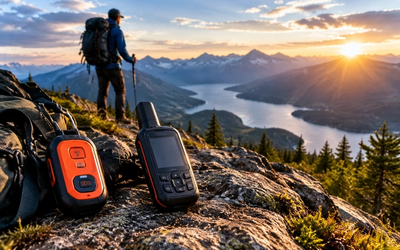
Communication Devices: Cell coverage is unreliable in lion habitat. A satellite communicator like the Garmin inReach Mini 2 lets you trigger SOS and coordinate rescue if an encounter goes sideways. For a deeper comparison of satellite messengers versus traditional PLBs, check our Best Personal Locator Beacons for Hiking in 2026: PLB vs Satellite Messenger for Emergency Rescue breakdown.
First Aid and Emergency Shelter: If you're forced off-trail to evade a stalking lion, or if you sustain injuries, you need basics. The Adventure Medical Kits Ultralight Watertight .7 treats wounds and sprains in a 7-ounce package. Pair it with the SOL Escape Lite Bivvy, an ultralight emergency sleeping bag that reflects 90% of body heat if you're stranded overnight.
Situational Vigilance: Watch for fresh tracks (three-lobed pad, no claw marks), scat, or carcasses stashed under brush. Mountain lions cache kills and return to feed. If you spot a carcass, leave the area immediately—the lion is likely nearby and defensive.
💡 Pro Tip: Keep children and dogs close. Both trigger prey drive. A lion perceives a 40-pound child or unleashed dog as an easy target.
Understanding Mountain Lion Body Language
Mountain lions communicate intent through posture and behavior. Recognizing these signals lets you calibrate your response:
Curious but Non-Aggressive: The lion is visible but at a distance (50+ yards), standing or sitting upright, ears forward, tail relaxed or twitching at the tip. It's assessing you. This is the most common scenario and usually resolves with the lion leaving once it determines you're not prey.
Stalking Behavior: The lion crouches low, ears flattened, eyes locked on you. It may move laterally to cut off your escape route or slink closer through cover. This is predatory behavior. The lion is testing whether you'll run or fight.
Defensive Aggression: The lion hisses, snarls, or swats the ground. Ears are pinned back, body is tense. This typically happens if you've surprised a lion near a kill site or den. The lion wants you gone, not dead—but it will attack if you don't retreat.
Imminent Attack: The lion's body coils, hindquarters lowered, tail rigid. The gaze is fixed and unblinking. Vocalizations stop. This is the split second before a charge. You have one to three seconds to deploy deterrents or prepare to fight.
De-escalation Tactics: The Moment You Spot a Mountain Lion
Step 1: Stop and Stand Tall
| Criteria | Score |
|----------|-------|
| Effectiveness | 9/10 |
| Ease of Execution | 10/10 |
| Predator Recognition | 8/10 |
| Injury Risk | 10/10 |
The instant you see a mountain lion, freeze. Do not run. Running triggers chase instinct—mountain lions can sprint 50 mph in short bursts, and you cannot outrun one. Instead, stand upright, square your shoulders, and make yourself as large as possible. If you're wearing a jacket, hold it open like wings. Raise your arms overhead. The goal is to appear non-prey: too big, too aggressive, not worth the risk.
If you're with others, bunch together. A group of humans standing tall reads as a single large organism to a lion's visual cortex.
✅ Pros:
- Disrupts the lion's predatory assessment immediately
- Requires no gear or advanced skills
- Effective in the majority of encounters
❌ Cons:
- Does not work if the lion has already committed to a charge
- Requires calm under pressure—instinct says run
💡 Pro Tip: If you're wearing a backpack, keep it on. It adds bulk to your silhouette and can shield your neck and spine if the lion attacks from behind.
Step 2: Make Noise and Maintain Eye Contact
| Criteria | Score |
|----------|-------|
| Intimidation Value | 8/10 |
| Ease of Execution | 9/10 |
| Predator Deterrence | 7/10 |
| Panic Control | 6/10 |
Start talking in a loud, firm voice. Yell, shout, clap your hands. Use aggressive language: "Get out of here! Go!" The volume and tone matter more than the words. You're signaling dominance, not fear. Some wildlife agencies recommend waving your arms slowly while yelling to reinforce the size illusion.
Maintain eye contact. Breaking eye contact or turning your back signals submission and vulnerability. However, do not stare in a fixed, confrontational way—this can be read as a threat by a defensive lion near a den. Instead, keep the lion in your peripheral vision while scanning for escape routes.
✅ Pros:
- Auditory and visual signals combine to override predatory instinct
- Works across most mammal species—not lion-specific knowledge required
- Can alert nearby hikers to your situation
❌ Cons:
- Noise may not deter a starving or habituated lion
- Requires vocal stamina if the standoff lasts minutes
Step 3: Back Away Slowly—Do Not Turn Your Back
| Criteria | Score |
|----------|-------|
| Safety | 9/10 |
| Difficulty | 7/10 |
| Speed of Escape | 5/10 |
| Risk of Stumbling | 6/10 |
If the lion hasn't retreated after 30–60 seconds of noise and size display, begin backing away. Take slow, deliberate steps. Keep your body facing the lion. Do not crouch, bend, or turn around. If you trip or fall, you become prey-sized and trigger an attack.
Put distance between you and the lion—aim for 100+ yards before you consider turning sideways to navigate terrain. If the lion follows, stop backing away and escalate your noise and size display. The lion is testing your resolve.
✅ Pros:
- Removes you from the encounter zone without triggering chase
- Maintains psychological dominance
- Allows you to monitor the lion's response continuously
❌ Cons:
- Slow process—can take 10+ minutes to reach safety
- Difficult on uneven or steep terrain
- If the lion charges mid-retreat, you have less time to deploy deterrents
💡 Pro Tip: If you're on a narrow trail with a drop-off, angle your retreat to keep solid ground behind you. A backward stumble off a ledge is as dangerous as a lion attack.
When to Deploy Bear Spray
| Criteria | Score |
|----------|-------|
| Stopping Power | 10/10 |
| Effective Range | 8/10 |
| Ease of Use | 7/10 |
| Collateral Risk | 6/10 |
If the lion closes to within 30 feet and shows stalking behavior—crouched, moving toward you, or circling—deploy bear spray. Aim for the face and eyes. Spray in a sweeping horizontal arc, not a single stream. You want a cloud of capsaicin the lion runs into. Most canisters discharge in 6–9 seconds, so use controlled bursts.
Bear spray has a 90%+ success rate in stopping bear charges, and verified reports show it works on mountain lions too. The capsaicin causes intense mucous membrane pain, temporary blindness, and respiratory distress. The lion will retreat to clear its eyes and sinuses.
Do not spray preemptively at 50+ yards. You'll waste your canister and potentially drift spray into your own face if the wind shifts. Wait until the lion is committed to approach.
✅ Pros:
- Non-lethal deterrent with proven field results
- Longer effective range than hand-to-hand combat
- Works in low visibility or surprise encounters
❌ Cons:
- Wind can blow spray back at you
- Canister must be accessible—hip holster, not buried in pack
- Expired spray loses pressure and range
Fighting Back: Last-Resort Defense
If the lion attacks—makes contact with claws or teeth—fight with everything you have. Mountain lions are ambush predators, not prolonged fighters. They expect prey to collapse. If you fight back hard, the lion often disengages.
Target the eyes, nose, and throat. Gouge, punch, kick. Use rocks, trekking poles, or a knife if you carry one. Protect your neck and head—these are the kill zones a lion targets. If the lion clamps onto a limb, do not pull away; this worsens tearing. Instead, push into the bite to disrupt jaw leverage, then strike the face.
Do not play dead. This works with some bear species but not mountain lions. A motionless human is an easy meal.
Verified survivor accounts emphasize sustained aggression. A 2019 Colorado runner killed a juvenile lion by choking it after a prolonged fight. A 2021 California hiker drove off an adult lion by screaming and stabbing with a pocketknife. The common thread: they fought until the lion decided they were too dangerous to eat.
💡 Pro Tip: If you carry trekking poles, use them as spears. The pointed tip and reach give you a defensive advantage.
After the Encounter: Reporting and Next Steps
Once the lion has left and you're safe, report the encounter immediately to state fish and wildlife authorities. Provide GPS coordinates, time, and a description of the lion's behavior. This data helps agencies track habituated or aggressive individuals.
Check yourself for injuries—adrenaline masks pain. Mountain lion claws and teeth carry bacteria; even minor scratches need cleaning and monitoring for infection. If you sustained bites or deep lacerations, seek medical attention within 24 hours.
Do not return to the encounter site. If the lion was defending a kill, it will return. If it was stalking, it may still be in the area.
Frequently Asked Questions
Should I hike with a firearm instead of bear spray?
Firearms are legal in most western states, but they're not more effective. Studies show bear spray stops charges more reliably than handguns—and it's easier to aim under stress. A gun also requires training, permits, and precision shot placement. Bear spray creates a wide barrier. That said, if you're an experienced shooter and comfortable carrying, a firearm is a valid backup to spray.
What if I'm trail running and surprise a lion at close range?
Stop immediately. Do not continue running past the lion. Turn to face it, make noise, and back away. Trail runners are disproportionately targeted because fast movement and small profiles mimic prey. Some runners carry small air horns clipped to their belts—the noise can startle a lion before it commits to a stalk.
Do trekking poles or noise-making bells prevent encounters?
Trekking poles double as defensive tools if an encounter escalates, but they don't prevent attacks. Bells are designed for bears, which have excellent hearing and often avoid humans. Mountain lions rely more on vision and stealth; a bell won't alert them, and they're less likely to avoid you proactively. The best prevention is hiking in groups and staying alert in high-risk terrain.
Can I bring my dog for protection?
Dogs can deter mountain lions if they're large, trained, and aggressive. But small or untrained dogs are prey. A lion may view a 30-pound dog as easier to kill than you. If you hike with a dog, keep it leashed and close. An off-leash dog that encounters a lion and then runs back to you brings the lion with it.
What time of year are mountain lion encounters most common?
Encounters peak in spring and summer when juvenile lions disperse to find territory. These young lions are less experienced hunters and more likely to test humans as prey. Late fall also sees increased activity as lions hunt deer during migration season. However, mountain lions are active year-round, so vigilance applies in all seasons.
Final Thoughts
Mountain lion encounters test your ability to stay calm and project confidence when your instincts scream "run." The strategies here—stand tall, make noise, back away slowly, deploy spray if needed, fight if attacked—are drawn from decades of wildlife research and survivor accounts. They work because they disrupt the predatory calculus: you stop looking like prey and start looking like a threat.
The odds are overwhelmingly in your favor. Fatal mountain lion attacks average fewer than one per year in North America. But preparation turns that statistical safety into personal agency. Carry deterrents, hike in groups when possible, and trust your response plan. The wilderness belongs to everyone—humans and lions alike. Respecting that shared space means knowing how to coexist without panic.
If you're gearing up for backcountry travel where large predators roam, revisit our What to Do If You See a Mountain Lion While Hiking: Response Steps That Keep You Safe in 2026 guide for additional scenario-based tactics.
Editor's Choice
SABRE Frontiersman Bear Spray — The longest-range, highest-concentration deterrent you can carry legally; stops charging predators before they reach you.
Garmin inReach Mini 2 — Two-way satellite messaging and SOS in true backcountry means help is never more than a button press away.
SOL Escape Lite Bivvy Emergency Sleeping Bag — Ultralight insurance if an encounter forces you off-trail and you need to shelter overnight.