Disclosure: As an Amazon Associate, HikePod earns from qualifying purchases at no extra cost to you.
⭐ Our Top Pick
🏆 Best Overall: Adventure Medical Kits Ultralight Watertight .7 First Aid Kit — the perfect size for teaching kids first aid responsibility without overwhelming them.
Introduction
Your seven-year-old just asked if they can help set up the tent. Your ten-year-old wants to know what to do if they see a bear. These questions signal something important: your kids are ready to learn real wilderness skills, not just tag along on a camping trip.
We researched wilderness education programs, consulted Leave No Trace guidelines, and compiled feedback from hundreds of families who successfully introduced their children to backcountry safety. The goal is simple: teach your kids enough practical knowledge that they feel confident, stay safe, and develop a lifelong respect for the outdoors.
This guide covers the essential wilderness safety lessons to teach before your first family camping trip, structured as age-appropriate activities you can practice at home, in your backyard, and on short day hikes. By the time you reach the trailhead, your kids will know exactly what to do if they get separated, how to identify hazards, and why Leave No Trace principles matter.
What to Look For
Age-Appropriate Skills — A five-year-old needs different lessons than a twelve-year-old. Younger kids (5-7) should master the "hug a tree" principle and basic stranger danger protocols. Older kids (8-12) can learn map reading, first aid basics, and wildlife awareness. Match your teaching to their cognitive development and attention span.
Hands-On Practice — Reading about wilderness safety does nothing. Set up your Big Agnes Copper Spur HV UL2 tent in the backyard and have them practice the setup sequence five times. Role-play getting lost. Make them demonstrate fire safety rules with a camp stove. Muscle memory and repetition create real competence.
Clear Communication Protocols — Kids need simple, memorable rules they can recall under stress. "Stop, hug a tree, blow your whistle three times" works better than a long explanation about search patterns. Establish whistle signals (three short blasts = I need help), teach them to stay put if separated, and practice calling for help loudly.
Leave No Trace Integration — Don't treat environmental ethics as a separate lecture. Weave Leave No Trace into every lesson: when they learn to pack snacks, teach them to pack out wrappers. When they practice going to the bathroom outdoors, explain the 200-foot rule and catholes. Make conservation second nature, not an afterthought.
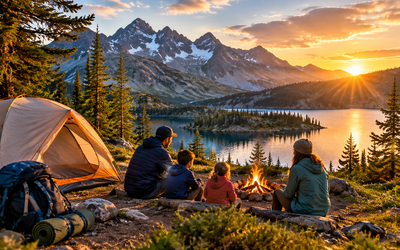
Graduated Exposure — Start with a backyard campout, progress to a night at a developed campground, then attempt backcountry camping. Each step lets kids practice skills in a progressively less forgiving environment. If they struggle with tent setup at home, they're not ready for a remote trailhead.
Emergency Equipment Familiarity — Kids should know where the first aid kit lives and what's inside it. The Adventure Medical Kits Ultralight Watertight .7 weighs only 7 ounces, making it perfect for older kids to carry and manage themselves. Have them inventory it, practice opening bandages, and role-play treating a blister.
💡 Pro Tip: Create a laminated "kid card" with your contact info, campsite location, and what to do if lost. Attach it to their pack with a carabiner.
Teaching the "Hug a Tree" Protocol
The single most important wilderness safety lesson for young children is what to do if they get separated from you. The "Hug a Tree" program, developed by search and rescue teams, has saved countless lives by teaching kids to stay put rather than wander farther from help.
| Criteria | Score |
|----------|-------|
| Ease of Learning | 10/10 |
| Effectiveness | 9/10 |
| Age Appropriateness (5-12) | 10/10 |
| Retention After Practice | 8/10 |
Here's how to teach it: Find a large tree in your yard or a local park. Tell your child to imagine they've lost sight of you on the trail. Their job is to immediately stop walking, find the biggest tree nearby, sit down with their back against it, and stay there. They should blow their whistle three times (the universal distress signal), wait one minute, then repeat.
Practice this scenario multiple times. Make it a game: "You're on the trail and suddenly you can't see me. What do you do?" Have them demonstrate the full sequence: stop, find tree, sit, whistle, wait. Explain that staying in one place makes them easier to find, while wandering creates a moving target for rescuers.
Teach them that trees provide shelter from wind and rain, making them the best "base camp" while waiting for help. Emphasize that you will always come looking for them, so their only job is to stay put and make noise.
✅ Pros:
- Simple enough for young kids to remember under stress
- Prevents the common mistake of wandering while trying to "find the way back"
- Gives kids a concrete action plan that reduces panic
❌ Cons:
- Requires multiple practice sessions to stick
- Kids may feel scared sitting alone, even in practice scenarios
Practicing Outdoor First Aid Basics
| Criteria | Score |
|----------|-------|
| Skill Complexity | 7/10 |
| Practical Value | 10/10 |
| Confidence Building | 9/10 |
| Equipment Requirements | 8/10 |
Kids as young as eight can learn basic first aid that makes them assets, not liabilities, on the trail. Focus on the injuries they're most likely to encounter: blisters, cuts, scrapes, insect bites, and mild dehydration.
Start by showing them the contents of your first aid kit. The Adventure Medical Kits Ultralight Watertight .7 is ideal for this because its DryFlex bag keeps supplies visible and organized. Have them identify bandages, antiseptic wipes, moleskin, and pain relievers.
Teach the blister protocol: recognize hot spots early (that feeling of friction before a blister forms), stop immediately, apply moleskin or a bandage. Practice this at home by having them walk around in hiking boots until they feel a hot spot, then correctly apply preventive padding.
For cuts and scrapes, teach the cleaning sequence: rinse with clean water, apply antiseptic, cover with a bandage. Role-play scenarios: "You tripped and scraped your knee. Show me how you'd treat it." Make them talk through each step out loud.
Discuss when to get adult help immediately: deep cuts that won't stop bleeding, signs of allergic reaction (swelling, difficulty breathing), suspected broken bones, or severe pain. Teach them the difference between "I can handle this" and "I need Mom or Dad now."
✅ Pros:
- Builds genuine competence that transfers to other life situations
- Reduces parent workload when minor injuries occur
- Teaches kids to assess situations calmly rather than panic
❌ Cons:
- Requires parental supervision initially to prevent improper treatment
- Young kids may over-treat minor issues out of enthusiasm
💡 Pro Tip: Create a "field first aid quiz" during your backyard campout. Present scenarios and have kids demonstrate the correct treatment sequence.
Teaching Wildlife Awareness and Response
| Criteria | Score |
|----------|-------|
| Age Appropriateness | 8/10 |
| Behavioral Clarity | 9/10 |
| Practical Application | 10/10 |
| Fear Management | 7/10 |
Wildlife encounters range from curious squirrels to potentially dangerous bears, and kids need clear guidance on how to respond. The key is teaching respect without instilling fear—wildlife is a reason to love camping, not avoid it.
Start with small animals. Teach kids never to feed wildlife, no matter how cute or persistent. Explain that human food makes animals sick and teaches them to approach campers aggressively. Practice the rule at home: "If a squirrel comes to our picnic table, what do we do?" Correct answer: pack food away, don't leave anything accessible.
For larger animals like deer, teach observation from a distance. If you can fit three outstretched arms between you and the animal, you're too close. Practice estimating distances in your yard: "How far is three arms? Show me."
Bear safety requires specific protocols. In bear country, teach kids to:
- Make noise while hiking (sing, talk loudly, clap)
- Never run from a bear (triggers chase instinct)
- If you see a bear, back away slowly while facing it
- If a bear approaches, make yourself look big, wave arms, speak firmly
- If attacked by a black bear, fight back; if attacked by a grizzly, play dead
Role-play these scenarios in the backyard. Have one parent play the bear while kids demonstrate the correct response. Make it memorable: "Show me your big bear voice!" This practice reduces panic if a real encounter occurs.
Teach kids to identify animal signs: tracks, scat, scratch marks on trees. This builds observational skills and awareness that wildlife is present even when not visible.
✅ Pros:
- Replaces vague fear with specific, actionable protocols
- Teaches observation skills that enhance the outdoor experience
- Prepares kids for the most common wilderness scenarios
❌ Cons:
- Bear safety protocols can frighten young children initially
- Requires region-specific knowledge (black bear vs grizzly country)
Introducing Leave No Trace Principles
Leave No Trace isn't just environmental ethics—it's practical wilderness safety. Kids who understand these principles become responsible outdoor stewards and avoid many common hazards.
Teach the seven principles in kid-friendly language:
- Plan Ahead and Prepare — Show them how you planned this trip. Discuss weather, trail difficulty, and what gear you packed. Let them help create a packing checklist.
- Travel and Camp on Durable Surfaces — Explain why we stay on marked trails (prevents erosion, protects plants, reduces the chance of getting lost). Practice trail etiquette on a local hike: stay on the path, step to the side for faster hikers.
- Dispose of Waste Properly — The glamorous topic: poop and trash. Teach the 200-foot rule (camp and water sources should be 200 feet from bathroom areas). Show them how to dig a proper cathole (6-8 inches deep), use toilet paper sparingly, and pack it out in a sealed bag. Practice the "pack it in, pack it out" rule with all trash—make them responsible for checking the campsite before leaving.
- Leave What You Find — This means no picking wildflowers, no taking "souvenirs" like rocks or pinecones from certain protected areas, no carving initials in trees. Teach "take only pictures, leave only footprints."
- Minimize Campfire Impacts — If your campsite allows fires, teach fire safety: never leave a fire unattended, keep water nearby, ensure it's completely out before bed (touch the ashes—they should be cool).
- Respect Wildlife — Covered above, but reinforce: observe from a distance, never feed animals, store food properly.
- Be Considerate of Other Visitors — Teach trail etiquette (uphill hikers have right of way), quiet hours at camp, and respecting other families' space.
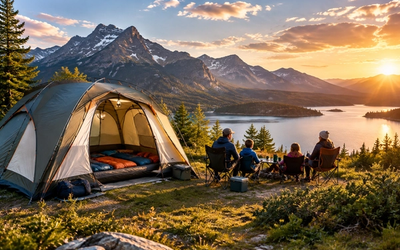
Practice Leave No Trace during your backyard campout. Set up your TETON Sports Mountain Ultra tent on a tarp to simulate camping on a durable surface, have kids pack out everything they bring, and quiz them on the principles.
💡 Pro Tip: Make a "Leave No Trace scavenger hunt" on your first day hike. Can they spot someone's forgotten trash, evidence of off-trail hiking, or campfire remains? Discuss what they should do in each case.
Building Navigation and Trail Awareness Skills
| Criteria | Score |
|----------|-------|
| Skill Development | 8/10 |
| Long-term Value | 10/10 |
| Safety Impact | 9/10 |
| Engagement Factor | 7/10 |
Basic navigation skills prevent kids from getting lost in the first place. Even young children can learn to recognize trail markers, estimate distances, and orient themselves to landmarks.
Start with trail markers. Show kids the different types: painted blazes on trees, cairns (stacked rocks), wooden signs, and trail ribbons. Teach them to look for the next marker before losing sight of the last one. Practice this on a local trail: "You lead. Tell me when you see the next blaze."
Introduce the concept of natural landmarks: distinctive rock formations, creek crossings, meadow entrances. Teach kids to turn around periodically and memorize what the trail looks like heading back—it's never the same view. Practice this awareness: "We just passed a big lightning-struck tree on the left. What will we look for on the way back?"
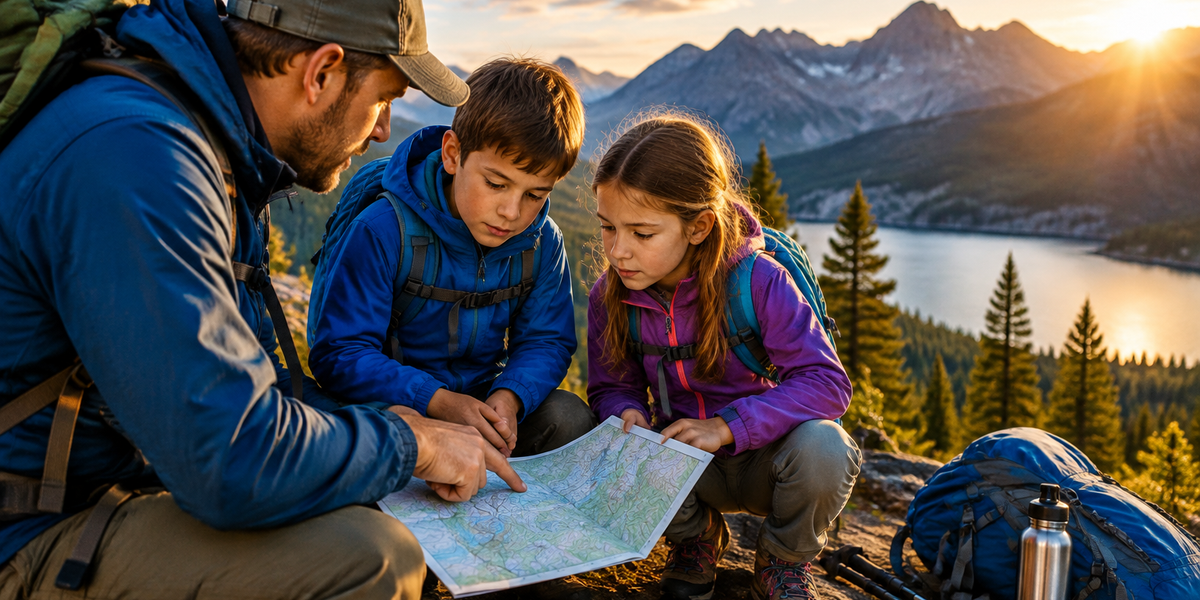
For older kids (10+), teach basic map reading. Show them how to orient a paper map, identify the trail you're on, and estimate distances using the map scale. Give them responsibility: "We're here. The next campsite is there. How far do we need to hike?"
Teach time and distance estimation: at a moderate kid pace, one mile takes about 30 minutes on flat terrain, 45 minutes uphill. Have them practice: "We've been hiking 30 minutes. How far have we probably gone?"
Introduce the concept of "mental breadcrumbs"—paying attention to the route as you hike so you can retrace it if needed. Play a game: every 15 minutes, ask them to describe three things they remember seeing in the past section of trail.
✅ Pros:
- Navigation skills are transferable to urban environments (reduces general "lostness")
- Gives kids ownership of the hike rather than blindly following
- Builds spatial awareness and observation skills
❌ Cons:
- Requires consistent practice over multiple hikes to develop competence
- Can slow down hiking pace as kids learn to navigate
Practicing Weather Awareness and Gear Management
Kids need to understand how weather affects safety and comfort, and how to use their gear properly. These lessons prevent hypothermia, heat exhaustion, and gear failures at critical moments.
Teach the "cotton kills" rule: cotton clothing stays wet and saps body heat. Show them the synthetic or wool layers in their pack and explain why each matters. Have them practice the layering system at home: base layer, insulating layer, waterproof shell.
Introduce weather monitoring basics. Before each outing, check the forecast together and discuss what it means: "It's going to be 45°F and rainy. What should we pack?" Teach them to recognize signs of changing weather: darkening clouds, temperature drops, shifting wind, distant thunder.
Practice gear management in controlled settings. Set up your tent in the backyard during a light rain. Have kids practice keeping sleeping bags dry, organizing gear inside the tent, and using the vestibule for wet items. When you're looking at shelter options, our guide on how to choose a family tent size covers space planning for keeping everyone and their gear comfortable.
Teach hydration awareness: drink before you're thirsty, monitor urine color (pale yellow is good), recognize signs of dehydration (headache, fatigue, dark urine). Practice the discipline of regular water breaks during day hikes.
For sun safety, teach the UV index basics and proper sunscreen application (reapply every two hours, more often if swimming). Make them responsible for their own sun protection—set a timer and have them reapply independently.
💡 Pro Tip: Create a "weather response quiz": "The temperature just dropped 15 degrees and dark clouds are moving in. What do you do?" Correct answer: add a layer, put on rain shell, move tent away from tall trees if camping, consider heading back to the car if not close to your destination.
Frequently Asked Questions
At what age should I start teaching wilderness safety to my kids?
Start as early as age 4-5 with simple concepts like "hug a tree," staying on trails, and never approaching wild animals. By age 7-8, kids can learn basic first aid, Leave No Trace principles, and wildlife protocols. Ages 10-12 are ready for navigation skills, emergency response, and more complex decision-making. Tailor your teaching to each child's maturity level rather than age alone—some six-year-olds have better risk awareness than some ten-year-olds.
How do I teach wilderness safety without scaring my kids away from camping?
Frame safety lessons as "being capable" rather than "avoiding danger." Use positive language: "Here's what you'll do if you see a bear" instead of "Bears are scary." Make practice sessions fun—turn first aid into a game, celebrate when they correctly identify a trail blaze, reward them for packing out all their trash. Emphasize that most camping trips are uneventful; these skills are backup plans, not daily necessities. Your own enthusiasm for the outdoors is contagious—if you're confident and joyful, they will be too.
Should kids carry their own emergency supplies?
Yes, once they're old enough to understand their purpose (usually age 7+). Start with a small daypack containing a whistle, emergency blanket, headlamp, water bottle, snacks, and a basic first aid kit. The Adventure Medical Kits Ultralight Watertight .7 weighs only 7 ounces, making it perfect for kids to carry and manage. Having their own supplies builds responsibility and ensures they're not helpless if separated. Review the contents before each hike and have them show you where everything is located.
What's the best way to practice these skills before our first real camping trip?
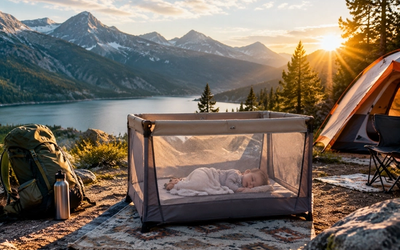
Use a graduated exposure approach. Start with a backyard campout to practice tent setup, bedtime routines, and dealing with darkness. Progress to a night at a developed campground with bathrooms and water nearby—this tests your systems in a forgiving environment. Take several day hikes to practice trail skills, wildlife awareness, and Leave No Trace principles. Only after your kids demonstrate competence in these controlled settings should you attempt backcountry camping. This progression builds confidence systematically and reveals gaps in your teaching before you're miles from the trailhead. If you're planning to bring younger kids along, check out our guide on best camping playpens and baby gear for outdoor naps for keeping little ones safe and comfortable.
How do I teach kids to identify poisonous plants like poison ivy?
Teach the "leaves of three, let it be" rhyme for poison ivy, poison oak, and poison sumac. Show them photos before your trip and point out examples on your practice hikes. Teach them the general rule: avoid touching any plant they don't recognize, especially those with shiny leaves, milky sap, or umbrella-shaped flower clusters. Practice the response protocol: if they think they touched a poisonous plant, wash the area with soap and water within 15 minutes to prevent the rash. Bring photos of local hazardous plants specific to your camping region—poison ivy in the East looks different from poison oak in the West.
Final Thoughts
Teaching kids wilderness safety before their first camping trip isn't about creating fearful, rule-obsessed little robots. It's about building genuine competence that lets them relax and enjoy the outdoors because they know how to handle whatever comes up.
The families who have the best first camping experiences are those who practiced at home. They set up tents in the backyard until setup became automatic. They role-played getting lost until "hug a tree and blow your whistle" was second nature. They took day hikes where the stakes were low and mistakes were learning opportunities.
Your kids will rise to the level of trust you place in them. Give them real responsibilities: navigating a section of trail, managing their own first aid kit, ensuring the campsite meets Leave No Trace standards before you depart. These tasks build ownership and pride, not burden.
Start small, practice consistently, and progress gradually. The wilderness safety skills you teach now will serve your kids for a lifetime of outdoor adventures. And that first camping trip? When you see your child confidently setting up their sleeping area, treating a blister without panic, or correctly identifying a trail marker, you'll know the preparation was worth it.
Editor's Choice
Adventure Medical Kits Ultralight Watertight .7 First Aid Kit — the perfect first aid kit for teaching kids medical response skills, light enough for them to carry and manage independently.
Big Agnes Copper Spur HV UL2 Backpacking Tent — ideal for practicing tent setup at home thanks to its simple pole system and quick 5-minute pitch time that builds kid confidence.
TETON Sports Mountain Ultra Tent — budget-friendly practice tent for backyard camping sessions where kids can make mistakes without risking expensive gear.