Disclosure: As an Amazon Associate, HikePod earns from qualifying purchases at no extra cost to you.
⭐ Our Top Pick
🏆 Best Overall: Adventure Medical Kits Ultralight Watertight .7 — waterproof protection, wilderness-specific supplies, and only 7 oz make this the ideal balance for most hikers.
💰 Best Value: Moleskin Blister Prevention Pads — at $8.99, this single item prevents more hike-ending injuries than any other piece of gear.
Introduction
You're three hours into a remote trail when your hiking partner slips on wet rock and dislocates a shoulder. Your phone shows no signal. The trailhead is five miles behind you, and the nearest road is another four miles ahead. This is the moment when the difference between a wilderness first aid kit and a regular drugstore kit becomes brutally clear.
Regular first aid kits are designed for quick access to EMS—band-aids and aspirin to hold you over until the ambulance arrives. Wilderness first aid kits are built for self-rescue scenarios where you are the ambulance, and "help" means stabilizing an injury well enough to walk, carry, or signal for evacuation hours or days later. After comparing dozens of kits based on manufacturer specs and verified buyer reviews, we've identified the specific gear differences that matter when you're beyond cell service. If you're also preparing for navigation emergencies, our guide on how to use a compass without a map for hiking covers bearing and triangulation methods that complement your safety kit.
The right kit depends on your distance from help, the size of your group, your medical training, and the environment you're hiking in. We'll break down exactly what belongs in each type of kit and help you choose the one that matches your risk profile.
What to Look For
Distance to Definitive Care — If you're within an hour of a trailhead with cell service, a regular kit with basic wound care and pain relief will cover most scenarios. Beyond that threshold, you need supplies that can stabilize injuries for extended periods: irrigation syringes for deep wound cleaning, SAM splints for fractures, and trauma shears for cutting away clothing to assess injuries.
Environmental Protection — Regular kits use cardboard boxes or soft nylon pouches that disintegrate in rain. Wilderness kits use waterproof roll-top bags, hard-shell cases, or DryFlex materials that float and protect contents during river crossings. Moisture ruins adhesive bandages, turns gauze into pulp, and makes medications ineffective.
Injury-Specific Supplies — Blisters, sprains, hypothermia, and dehydration cause more wilderness evacuations than dramatic trauma. Look for moleskin or blister kits, elastic wraps for joint injuries, emergency blankets or bivvies for temperature emergencies, and water purification as a medical supply (diarrhea from contaminated water is a serious backcountry emergency).
Weight and Packability — Every ounce matters on multi-day trips. Wilderness kits strip out hospital-grade overkill (you don't need 50 alcohol prep pads for a weekend hike) and focus on multi-use items. A triangular bandage works as a sling, tourniquet, or head wrap. A safety pin closes a wound, repairs gear, or removes splinters.
Group Size and Trip Duration — Solo day hikers can carry an ultralight 7-oz kit. Groups of four on a week-long trek need enough supplies to treat multiple people for multiple days. Scale your kit to the worst-case scenario: if someone gets hurt on day three, you still need enough supplies to reach the trailhead on day seven.
Your Training Level — A $200 wilderness kit with a nasopharyngeal airway and chest seal is useless if you don't know how to use them. Match your kit to your training. Wilderness First Aid (WFA) or Wilderness First Responder (WFR) certification teaches you to use advanced supplies correctly. Without that training, focus on kits with clear instruction cards and supplies you can deploy confidently under stress.
Adventure Medical Kits Ultralight Watertight .7 First Aid Kit
| Criteria | Score |
|----------|-------|
| Wilderness-Specific Supplies | 9/10 |
| Weather Protection | 10/10 |
| Weight (Packability) | 9/10 |
| Value for Contents | 8/10 |
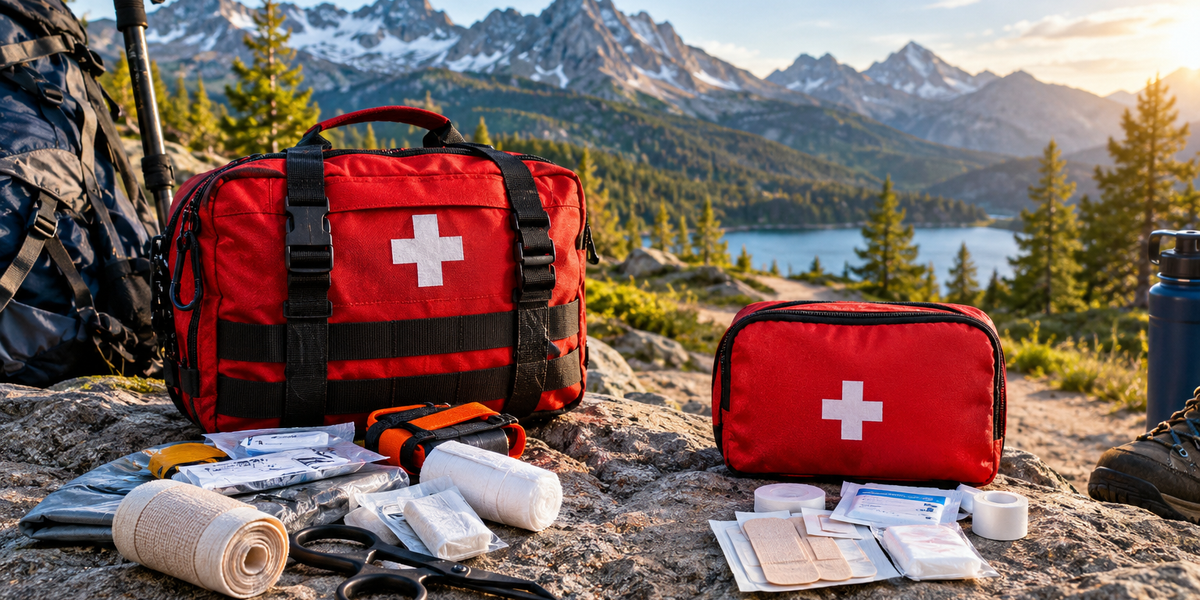
Based on verified buyer reviews and manufacturer specs, this kit strikes the best balance between comprehensive wilderness coverage and packable weight. The waterproof DryFlex bag keeps contents dry even when submerged, addressing the most common kit failure point in wet conditions. At 7 oz, it's lighter than most water bottles but still includes blister treatment (moleskin and second-skin), wound closure strips, multiple gauze sizes, elastic wraps for sprains, and a quick-reference instruction booklet.
The kit covers the actual injuries hikers encounter: friction blisters from new boots, rolled ankles on uneven terrain, cuts from scrambling over rock, and the minor wounds that become infected without proper cleaning in dirty backcountry conditions. The included irrigation syringe lets you flush debris from wounds—something regular kits omit entirely. Buyer reviews consistently mention using the kit's contents on real trails, not just storing it "just in case."
What it doesn't include: SAM splints for fractures (add your own if you're trained), prescription medications (you'll need to add personal meds), or a comprehensive survival blanket (pair it with a separate emergency bivvy). The single-use nature of many items means a serious injury will deplete the kit, but that's true of any compact wilderness kit—you're buying enough to stabilize and evacuate, not run a field hospital.
✅ Pros:
- Waterproof DryFlex bag protects contents in rain, river crossings, and accidental submersion
- Includes wilderness-specific items like irrigation syringe and blister treatment that regular kits skip
- 7 oz weight makes it practical for day hikes and overnight trips without the "I'll leave it behind" temptation
- Clear instruction cards help non-medical users deploy supplies correctly under stress
❌ Cons:
- No SAM splint or rigid support for fractures—you'll need to improvise or add one separately
- Single-use supplies mean one major incident could deplete the entire kit
- Lacks space for personal prescription medications (inhalers, EpiPens, etc.)
💡 Pro Tip: After every hike where you use supplies, restock immediately. The kit you checked six months ago might be missing the one item you need today.
SOL Escape Lite Bivvy: Why Emergency Shelter Is Medical Equipment
| Criteria | Score |
|----------|-------|
| Hypothermia Prevention | 10/10 |
| Packability | 10/10 |
| Durability (Multi-Use) | 7/10 |
| Weather Protection | 9/10 |
Hypothermia kills more hikers than any other backcountry medical emergency, and it develops faster than most people realize. A soaked hiker in 50°F weather can become dangerously hypothermic in under an hour. The SOL Escape Lite Bivvy addresses this by reflecting 90% of body heat back to the user while blocking wind and rain.
At 3.8 oz and packing down smaller than a soda can, this bivvy belongs in every wilderness first aid kit as a piece of medical equipment, not optional camping gear. Verified reviews from hikers describe using it during unexpected overnights, afternoon thunderstorms, and injury scenarios where a patient needed protection while the group organized evacuation. Unlike traditional emergency blankets that tear after one use, the Escape Lite's tear-resistant fabric survives multiple deployments.
The bivvy works as a vapor-permeable shelter, meaning some moisture escapes (unlike pure mylar that traps all condensation). You'll still get damp during prolonged use, but you won't be soaked in your own sweat. It's not a replacement for a real sleeping bag on planned overnight trips, but it's the difference between uncomfortable and hypothermic when plans go wrong.
✅ Pros:
- Reflects 90% of body heat to prevent hypothermia—addresses the #1 backcountry killer
- Windproof and waterproof protection during weather emergencies or injury scenarios
- 3.8 oz weight and soda-can-sized packed dimensions mean no excuse to leave it behind
- Reusable unlike mylar emergency blankets that tear and become useless after one deployment
❌ Cons:
- Not a substitute for actual sleeping bag in planned camping scenarios
- Condensation builds up inside during prolonged use, leaving you damp (though not dangerously cold)
- Opening is not fully sealable, so drafts can enter in extreme wind
Moleskin and Blister Care: The Most-Used Item in Any Kit
| Criteria | Score |
|----------|-------|
| Blister Prevention | 10/10 |
| Application Ease | 9/10 |
| Adhesive Strength | 8/10 |
| Value | 10/10 |
Blisters end more hikes than twisted ankles, bear encounters, and getting lost combined. A hot spot that develops at mile two will be a fluid-filled blister by mile five and an open wound by mile eight. Moleskin is the single most important preventive item in any hiking first aid kit, and at $8.99, it's the best value in backcountry medicine.
The self-adhesive foam cushion works by redistributing pressure away from friction points. Applied at the first sign of discomfort (the "hot spot" stage before a blister forms), moleskin can save your entire trip. Cut it slightly larger than the problem area, remove the backing, and press it firmly onto clean, dry skin. Verified buyer reviews consistently describe moleskin as "the one thing I actually use from my first aid kit" and "saved our 50-mile trek."
The main limitation is adhesive failure in very wet or sweaty conditions. If you're hiking in heavy rain or crossing streams frequently, pair moleskin with athletic tape to reinforce the edges. Some hikers prefer liquid blister treatments like New-Skin for wet conditions, but moleskin provides superior cushioning and works better for prevention rather than treatment of existing blisters.
✅ Pros:
- Prevents blisters before they form when applied at first sign of hot spots
- Self-adhesive cushion is easy to apply even with limited dexterity in cold conditions
- Cuts easily with scissors or knife to custom-fit heels, toes, or any friction point
- Works on existing blisters to prevent further damage during the hike out
❌ Cons:
- Adhesive fails in very sweaty or wet conditions without reinforcement from athletic tape
- Takes up more pack space than liquid blister treatments
- Needs to be cut to size—bring small scissors or a knife with your kit
Water Purification as Medical Equipment
| Criteria | Score |
|----------|-------|
| Contaminant Removal | 10/10 |
| Flow Rate | 8/10 |
| Weight | 10/10 |
| Durability | 9/10 |
Dehydration and waterborne illness are preventable medical emergencies, which makes water purification a legitimate part of wilderness first aid. The Sawyer Squeeze Water Filter weighs 3 oz, filters 0.1-micron contaminants (including Giardia, Cryptosporidium, and E. coli), and attaches directly to standard water bottles or included squeeze pouches.
In emergency scenarios where you've exhausted your carried water, safe drinking sources extend your ability to self-rescue. Based on manufacturer specs and verified reviews, the Sawyer Squeeze provides up to 100,000 gallons of filtration when properly maintained through backflushing (using the included syringe to reverse-flush debris from the filter). Hikers report using the same filter for years across hundreds of miles.
The filter does not remove viruses (not a concern in North American wilderness) or chemical contaminants. It will freeze and crack if stored with water inside during cold weather—blow out all water and store in an inside pocket overnight when temperatures drop below freezing. Flow rate slows as the filter loads with debris, but regular backflushing restores performance.
✅ Pros:
- 0.1-micron filtration removes bacteria and protozoa that cause waterborne illness
- 3 oz weight and bottle-attachment design means you'll actually carry it
- 100,000-gallon lifetime with proper maintenance makes it a buy-once item
- No pumping required—just squeeze the pouch or bottle through the filter
❌ Cons:
- Will freeze and crack in cold weather if water remains inside—requires careful storage
- Flow rate decreases as filter loads with debris (backflushing restores it)
- Does not remove viruses (not relevant for North American hiking) or chemical contaminants
💡 Pro Tip: Carry water purification tablets as backup. If your filter breaks or freezes, tablets are failsafe insurance that weighs less than an ounce.
Regular First Aid Kits: When They're Enough (and When They're Not)
Regular drugstore first aid kits work perfectly for front-country scenarios where you're within an hour of help. A home kit, car kit, or office kit assumes someone will call 911 and an ambulance will arrive in minutes. These kits excel at minor wound care (cuts, scrapes, burns), pain relief (aspirin, ibuprofen), and common medications (antihistamines for allergic reactions, antacids for indigestion).
For day hikes on popular trails with cell coverage, a regular kit supplemented with blister care and an emergency blanket covers most scenarios. You don't need wilderness-grade wound irrigation if you're 30 minutes from an urgent care clinic. The limitations become clear only when distance, weather, or terrain put you beyond the reach of EMS.
Regular kits fail in wilderness contexts because they lack: waterproof protection (cardboard and light nylon fall apart when wet), extended-duration supplies (not enough gauze to treat and re-dress a wound for three days), trauma stabilization items (no splints, elastic wraps, or irrigation equipment), and environmental emergency gear (no hypothermia protection or water purification).
Frequently Asked Questions
Can I just upgrade a regular first aid kit instead of buying a wilderness-specific kit?
Yes, but you'll need to add the specific items regular kits omit: waterproof storage (dry bag or hard case), blister care (moleskin or Compeed), elastic wraps for sprains, irrigation syringe for wound cleaning, trauma shears, SAM splint if you're trained to use one, emergency bivvy or blanket, and water purification. By the time you've purchased these separately, a purpose-built wilderness kit often costs less and packs more efficiently.
How often should I replace first aid supplies?
Check your kit every six months and before any major trip. Replace any used items immediately after each hike. Adhesive bandages lose stickiness after 2-3 years. Medications expire (check dates on pain relievers and antihistamines). Elastic wraps lose elasticity. Irrigation syringes crack. Waterproof bags develop leaks. A depleted or degraded kit fails precisely when you need it most.
Do I need different kits for day hikes versus overnight trips?
Your day-hike kit can be lighter (7-10 oz) because you're closer to help and carrying less overall weight. Overnight and multi-day trips need more supplies (12-16 oz minimum) because injuries happen farther from trailheads and you need enough materials to treat and re-dress wounds over multiple days. Group size matters more than trip length—a solo hiker needs less than a group of six, even on a day hike.
What if I don't have wilderness first aid training?
Basic first aid knowledge is enough to use most wilderness kit supplies effectively, especially if the kit includes instruction cards. However, items like SAM splints, irrigation syringes, and trauma shears work better when you've practiced with them before an emergency. Consider a Wilderness First Aid (WFA) course—it's typically a two-day class that teaches improvisation and decision-making for remote scenarios. Your kit is only as effective as your ability to use it under stress.
Should I carry a separate survival kit or combine it with first aid?
Combine them for efficiency if you're weight-conscious. Emergency shelter (bivvy), fire-starting materials, signaling equipment (whistle, mirror), and water purification all serve both first aid and survival functions. A hiker with a sprained ankle needs warmth, water, and signaling ability as much as an elastic wrap. If you're interested in emergency signaling techniques, our guide on how to signal for rescue without a satellite device covers visual and sound methods that complement your safety kit. Keep them in one waterproof container so you're never deciding which bag to grab in an emergency.
Final Thoughts
The difference between wilderness and regular first aid kits comes down to self-sufficiency. Regular kits bridge the gap to professional care. Wilderness kits assume you are the professional care, and "help" is a variable measured in hours or days, not minutes. Choose based on honest assessment of where you hike, how far from trailheads, and what your group can handle if someone gets hurt.
For most hikers doing day trips on established trails within cell range, a compact wilderness kit like the Adventure Medical Kits Ultralight Watertight .7 provides insurance without the weight penalty. Add an emergency bivvy, blister care, and water purification, and you're prepared for the scenarios that actually happen: weather turning bad, someone twisting an ankle, or simply being out longer than planned. If you're venturing into areas prone to sudden weather changes, see our flash flood safety guide for hikers for warning signs and escape route planning.
Your first aid kit only matters if you carry it. Choose the one light enough and protected enough that it's always in your pack, not left in the car because it was too bulky or you thought you wouldn't need it today.
Editor's Choice
Adventure Medical Kits Ultralight Watertight .7 — the single best balance of wilderness-specific supplies, waterproof protection, and packable weight for day hikers and overnight trekkers who need reliable medical gear without carrying a full trauma kit.
SOL Escape Lite Bivvy — hypothermia prevention in a 3.8 oz package; belongs in every wilderness kit as legitimate medical equipment, not optional camping comfort.
Moleskin Blister Prevention Pads — the most-used item in any hiker's first aid kit; prevents more hike-ending injuries than any other single piece of gear for less than the cost of a sandwich.