Disclosure: As an Amazon Associate, HikePod earns from qualifying purchases at no extra cost to you.
⭐ Our Top Pick
🏆 Best Overall: LuxoGear Emergency Whistle with Lanyard (2-Pack) — pealess dual-chamber design delivers 120 dB that cuts through wind and carries over a mile, even when you're exhausted or injured.
💰 Best Value: Suunto A-10 Field Compass — serves double duty as your navigation tool and improvised signal mirror for visual rescue alerts.
Introduction
Your satellite communicator's battery just died. Your phone has no signal. You've twisted your ankle three miles from the trailhead, and daylight is fading. In moments like these, the difference between a night in the woods and a timely rescue often comes down to one thing: your ability to signal for help using nothing but what's in your pack and around you.
We've spent years analyzing search-and-rescue reports and interviewing SAR professionals who've responded to hundreds of backcountry incidents. The pattern is clear: hikers who understand visual and sound signaling techniques get found faster—sometimes hours or even days sooner than those who simply wait and hope. Modern satellite devices like the Garmin inReach Mini 2 have revolutionized backcountry safety, but batteries fail, subscriptions lapse, and devices get lost or damaged. The low-tech skills in this guide work in any condition, cost almost nothing, and could save your life.
This article walks you through the most effective visual signals (mirror flashes, ground markers, fire and smoke), sound signals (whistles, pattern recognition), and the strategic thinking that makes rescuers notice you faster. You'll also learn what doesn't work—debunking myths that waste precious energy and time.
What to Look For
When you're preparing your signaling toolkit and learning these techniques, focus on these core principles:
Contrast and Movement — Rescuers scan for anything that breaks the natural pattern of the landscape. Bright colors against earth tones, geometric shapes in organic terrain, and rhythmic movement all trigger attention. Your signals should disrupt what searchers expect to see.
The Rule of Threes — Three of anything is the universal distress signal: three whistle blasts, three mirror flashes, three smoke columns, three fires in a triangle. This pattern distinguishes intentional distress from random noise or natural phenomena.
Energy Conservation — Sound signals use far less energy than visual signals that require building, maintaining, or physically creating markers. In an injury or hypothermia scenario (see our guide on recognizing and treating hypothermia on the trail), prioritize methods that preserve your strength.
Visibility Windows — Visual signals only work when someone's looking. Sound travels farther and works day or night, but atmospheric conditions matter—sound carries better in cold, still air and gets absorbed by dense forest, wind, and rain.
Redundancy — Combine multiple signal types. A whistle gets attention; a mirror flash confirms your location. Ground markers guide helicopters in; smoke signals work from miles away. Layering methods dramatically increases your rescue odds.
Preparation Over Improvisation — The best signaling gear weighs ounces and costs less than a tank of gas. A quality emergency whistle like the LuxoGear Emergency Whistle belongs clipped to every pack's sternum strap, not buried at the bottom where you'll fumble for it in crisis.
Sound Signals: Your First Line of Defense
LuxoGear Emergency Whistle with Lanyard (2-Pack)
| Criteria | Score |
|----------|-------|
| Volume Output | 9/10 |
| Reliability in Wet/Cold | 10/10 |
| Ease of Use When Injured | 8/10 |
| Value for Money | 10/10 |
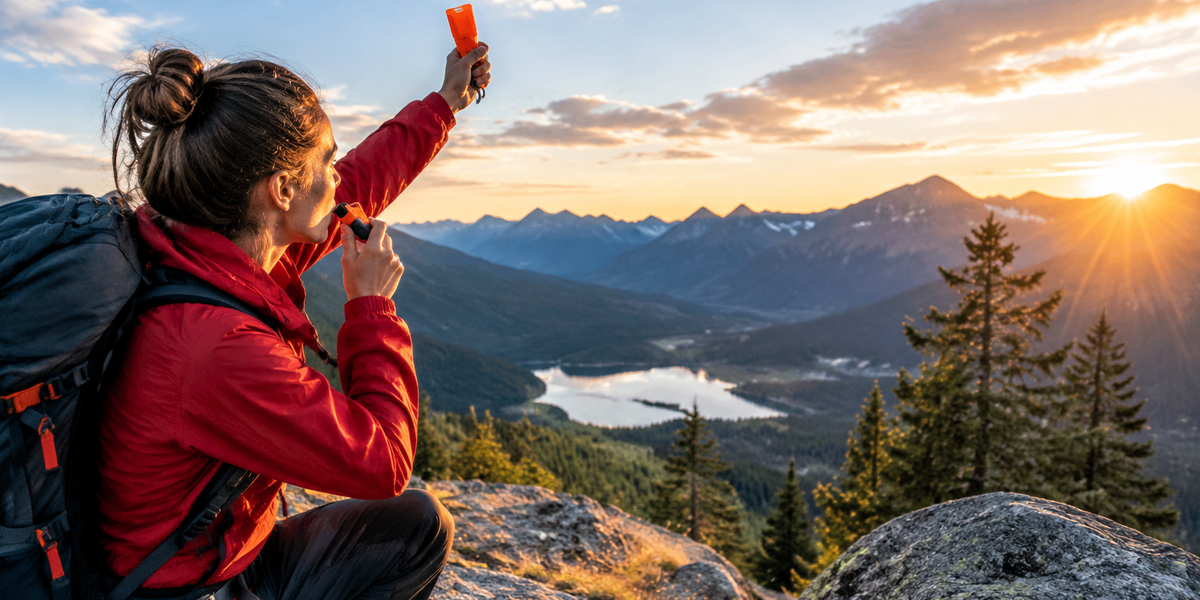
Sound signals are the workhorse of backcountry rescue communication. The human voice carries maybe 100 yards in ideal conditions and exhausts you within minutes. A quality emergency whistle, by contrast, produces 120 decibels—audible over a mile in open terrain—and requires minimal lung capacity even when you're hypothermic or injured.
The LuxoGear Emergency Whistle exemplifies what makes a good rescue whistle: dual chambers produce a piercing tone that cuts through wind, rain, and forest canopy. The pealess design (no moving ball inside) means it works when wet, frozen, or caked with mud—conditions that silence cheaper pea whistles. At $9.99 for a two-pack with breakaway lanyards, there's no excuse not to carry one on every trip.
The standard distress pattern is three sharp blasts, pause, repeat. Blow hard and clean—weak, breathy whistles get mistaken for birdsong or wind. If you hear a response (typically one or two blasts), immediately answer to confirm your position and help rescuers triangulate. Keep signaling every few minutes; sound gives searchers a homing beacon as they approach.
💡 Pro Tip: Clip your whistle to your pack's sternum strap or jacket zipper pull—not buried in a pocket. In a fall or sudden weather event, you need instant access without searching.
✅ Pros:
- Works in any weather, any time of day or night
- Requires minimal physical effort compared to shouting
- Pealess design eliminates mechanical failure points
❌ Cons:
- Sound doesn't carry as far in dense forest or heavy weather
- Requires you to stay conscious and remember the pattern
Vocal Shouts and Yells
Your voice is the signal of last resort. Shouting "HELP!" at full volume exhausts you in under five minutes and damages your throat, leaving you unable to signal when rescuers get close. Worse, the human voice drops to a frequency that blends with natural sounds—wind, water, animals—making it easy for searchers to miss.
If you have no whistle, use short, loud shouts in the three-pattern rule: "HELP! HELP! HELP!" followed by a long pause to listen for response. Cup your hands around your mouth to direct sound. Shout toward open areas, ridgelines, or trails where sound will carry farther.
But here's the hard truth: if you're in a situation where you're relying on your voice alone, you've already made a mistake. A $10 whistle weighs half an ounce. Carry one.
Visual Signals: Being Seen From the Air
Signal Mirrors and Reflective Surfaces
| Criteria | Score |
|----------|-------|
| Daytime Visibility Range | 10/10 |
| Ease of Aiming | 6/10 |
| Durability | 9/10 |
| Weight/Packability | 10/10 |
A signal mirror can flash visible light up to 10 miles away on a clear day—farther than any other non-electronic signal method. Dedicated signal mirrors have an aiming hole in the center that helps you direct the flash toward aircraft or distant searchers, but in a pinch, any reflective surface works: a compass baseplate (like the Suunto A-10 Field Compass), phone screen, foil emergency blanket, even a credit card.
To aim a mirror without a sighting hole: hold the mirror in one hand close to your face, extend your other hand toward the target (aircraft, ridgeline, search party), and angle the mirror until the reflected sunlight hits your outstretched hand. Now slowly move your hand out of the way—the flash is aimed at your target. Flash in groups of three, pause, repeat.
Signal mirrors only work in sunlight, which limits their usefulness in forest cover, overcast weather, or after dark. But when conditions align, they're unbeatable for grabbing attention from aircraft. SAR helicopter pilots report that mirror flashes are often the first confirmation they get of a victim's location.
💡 Pro Tip: Practice aiming your mirror at home before you need it. The coordination feels awkward at first, but muscle memory makes it second nature.
Ground-to-Air Signals
| Criteria | Score |
|----------|-------|
| Visibility from Aircraft | 9/10 |
| Setup Time/Energy | 4/10 |
| Weather Resistance | 7/10 |
| Universality | 10/10 |
When you know aircraft are searching your area (you've heard helicopters or small planes), ground markers dramatically increase your odds of being spotted. The international ground-to-air distress symbols are simple geometric shapes built from high-contrast materials:
- V = "Require assistance"
- X = "Require medical assistance"
- → = "Proceeding in this direction"
Build these symbols at least 10 feet long using whatever creates contrast: arrange logs or rocks on snow, lay out bright clothing on dark earth, stomp down vegetation, use your emergency blanket anchored with rocks. Place markers in open areas—clearings, ridgelines, sandbars—where they're visible from above.
The challenge is energy cost. Building large-scale ground markers when you're injured or hypothermic can dangerously deplete your reserves. Prioritize this method only if you've heard aircraft nearby and have the strength to spare. Otherwise, stick with sound and mirror signals that require far less effort.
Fire and Smoke Signals
| Criteria | Score |
|----------|-------|
| Daytime Visibility | 8/10 |
| Nighttime Visibility | 9/10 |
| Weather Dependency | 5/10 |
| Setup Difficulty | 6/10 |
Fire serves double duty: warmth and signaling. During the day, smoke is your signal; at night, the fire itself becomes a beacon. Three fires arranged in a triangle (the universal distress pattern) is the gold standard, but even a single smoky fire alerts searchers that someone's in the area.
For maximum smoke during daylight, build your fire hot first with dry kindling, then smother it with green vegetation, damp leaves, or slightly wet wood once it's established. The goal is white smoke that contrasts against the landscape—black smoke (from burning plastic or petroleum products) can look like natural forest fire smoke and may not trigger a response.
Fire signaling has serious limitations: it requires matches or a lighter, dry tinder, and enough fuel to sustain. In wet conditions or dense forest, getting a fire going drains energy and time you might not have. Consider fire a secondary signal method unless you're already building one for warmth.
💡 Pro Tip: If you're in a lightning-prone area, review our lightning safety guide before striking a fire in exposed terrain during thunderstorm season.
Strategic Signaling: When and How to Deploy Each Method
Rescue signaling isn't about using every method at once—it's about timing and energy management. Here's the decision framework SAR professionals recommend:
Immediate Actions (First Hour):
- Blow your whistle in three-blast patterns every 5-10 minutes
- If you have cell signal, call 911 and share your last known coordinates (a Garmin eTrex 22x GPS gives you precise lat/long even without cell service)
- Move to high ground or open areas if safely possible—visibility matters
- Put on bright-colored clothing and stay visible
If No Response After 2-3 Hours:
- Establish a ground marker (V or X) in the most visible clearing near you
- Prepare a fire for nightfall, even if you don't light it yet
- Continue whistle signals every 15 minutes to conserve energy
- If you have a signal mirror and sunlight, flash toward any high points, trails, or directions where help might approach
Once Aircraft Are Heard:
- Switch to continuous mirror flashing toward the aircraft
- Add green vegetation to your fire to create thick smoke
- Use your whistle to guide ground crews once aircraft confirm your position
- Stay in place—moving now makes you harder to find
At Night:
- Your fire becomes your primary visual signal
- Whistle signals still work and actually carry farther in cold, still night air
- Use your headlamp or phone flashlight to flash SOS (three short, three long, three short) toward any lights you see
- Conserve battery—don't leave lights on continuously
The key insight: sound signals preserve your energy and work in any condition, so they're your baseline. Layer in visual signals opportunistically when conditions favor them (sunlight for mirrors, open terrain for ground markers, nighttime for fire).
Frequently Asked Questions
How long should I wait before signaling for help?
Don't wait—start signaling as soon as you realize you're in distress. The "wait and see" approach delays rescue and risks hypothermia, dehydration, or worsening injuries. If you're lost, injured, or unable to continue safely, begin whistle signals immediately and stay put unless you're in immediate danger (avalanche path, flash flood zone, etc.).
Will my phone flashlight work as a signal?
Yes, but with major limitations. Phone flashlights are visible maybe a quarter mile in darkness—far less than a fire or mirror. Use the SOS flash pattern (three short, three long, three short) and point it toward any lights or sounds you perceive. But preserve battery—if you have even one bar of cell signal, calling 911 is far more effective than flashlight signaling.
What if I don't have a whistle?
Improvise sound signals by banging rocks together, striking metal objects (trekking poles against a pot), or even clapping in patterns. These won't carry as far as a whistle, but the three-pattern rule still applies. And for your next trip, spend $10 on a LuxoGear Emergency Whistle so you're never in this position again.
How do I know if rescuers have heard my signal?
Searchers typically respond with one or two whistle blasts or light flashes to acknowledge your signal and let you know they're approaching. If you hear or see a response, immediately signal back to confirm your position. Keep signaling every few minutes—this helps rescuers maintain a bearing on you as they navigate terrain.
Should I try to walk toward rescuers once I hear them?
No—stay put and keep signaling. Dense forest, cliffs, and rough terrain make it easy to move in the wrong direction, even when you think you're heading toward voices or lights. Let trained rescuers come to you; they have maps, GPS, and experience navigating to your position safely. Moving increases your risk of further injury and makes their job harder.
Final Thoughts
The most reliable rescue signal is the one you have on you when crisis strikes. A $10 whistle clipped to your sternum strap and a basic understanding of the three-pattern rule gives you a lifeline that works in any weather, any terrain, day or night. Visual signals—mirrors, ground markers, fire—amplify your chances when conditions allow, but sound is your foundation.
Every year, SAR teams respond to hundreds of backcountry incidents where the outcome hinged on whether the lost or injured hiker knew these techniques. We've walked you through the methods that work, debunked the ones that waste energy, and given you the strategic framework for deploying them effectively. Now it's on you: add that whistle to your pack, practice aiming a mirror at home, and commit the three-pattern distress signal to memory. If you're outfitting your backcountry kit, also review our wilderness first aid checklist to ensure you're ready for medical emergencies before rescue arrives.
The skills in this guide cost almost nothing to learn and weigh nothing in your pack. But when the worst happens, they're worth everything.
Editor's Choice
LuxoGear Emergency Whistle with Lanyard (2-Pack) — The single most important $10 you'll spend on backcountry safety; pealess design and 120 dB output make this the rescue signal that works when everything else fails.
Garmin inReach Mini 2 Satellite Communicator — When you're venturing beyond cell coverage, this provides the two-way messaging and SOS button that traditional signals simply can't match.
Suunto A-10 Field Compass — Pulls double duty as your navigation tool and improvised signal mirror, giving you visual signaling capability without carrying extra gear.